Can Bike Lights Be Too Bright?
Yes, and almost always for one of two reasons that have nothing to do with the lumen number: the beam is pointed at people's eyes, or a daylight flash mode is being run after dark.
How this is funded:we earn a commission if you buy through our links, at no extra cost to you. It never changes which product we recommend, and we’ll tell you when we’d skip one. Full disclosure.
Short answer: yes — but the lumen number is almost never the culprit. The rider blinding everyone on the bike path is usually running a perfectly sensible light with its beam pointed at eye level, or running a daytime flash mode at nine in the evening. Both are free to fix, and our pick for solving it in hardware is the cut-off-beam front light in the table below.
It helps to separate two questions that get muddled together. “Is my light too bright for me?” almost never — more light on an unlit road is more information, and the limits are battery life and weight rather than brightness. “Is my light too bright for everyone else?” very possibly, and that depends entirely on where the light goes: the aim, the beam shape and the mode.
There is also a genuine safety argument hiding in the etiquette one. A light that dazzles an oncoming driver makes you harder to locate, not easier, because their eyes adapt to the glare and lose the rest of the scene — including the curb, the parked cars and where exactly you are in the lane. Being considerate and being visible point in the same direction here.
The four variables, in order of how much they matter
- Aim. The single biggest factor and the only one that costs nothing. A high-output light aimed at the road is fine; a modest light aimed at the horizon is not.
- Mode. Daytime flash settings are built to compete with sunlight. After dark they are the main source of complaints.
- Beam shape. A cut-off beam keeps light below the horizontal by design. A round beam always spills some upward.
- Lumens. Last, genuinely. It only becomes the problem once the three above are wrong.
Below are three lights that give you control over those variables — an anti-dazzle front beam, a front light with separate day and night modes, and a tail light with six modes and an adjustable flash rate — with today’s live prices. Underneath: what causes dazzle, how bright is actually enough front and rear, and the five things to change tonight for nothing.
Quick picks
Ranked on published specs, real security and safety standards, and buyer fit.We have not tested these products — here is exactly what we do instead.
| # | Product | Best for | Price |
|---|---|---|---|
| 1 | 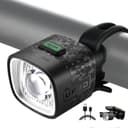 Magicshine URBO FL Cut-off Front Light A 48-gram, StVZO-style cut-off beam that lights the road without blinding oncoming riders and drivers — the considerate commuter's front light. Light, quick-release, and IPX6 for wet rides. | Best anti-dazzle front light | |
| 2 | 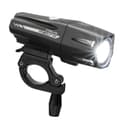 Cygolite Metro 1100 Pro 1100 lumens with day-flash modes and an IP67 rating, at a friendlier price than the NiteRider. The value see-and-be-seen headlight — daytime running flash for traffic, steady beam for the dark stretches. | Best front light with day and night modes | $86.95 · View on Amazon Price as of October 21, 2026. #ad How we’re funded |
| 3 | 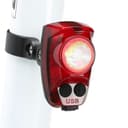 Cygolite Hotshot Pro 200 Tail Light 200 lumens is bright enough to be seen in daylight, not just after dark — the reason the Hotshot is a commuter staple. Six modes, adjustable flash, and a hard mount that stays put on rough roads. | Best rear light with adjustable flash | $31.34 · View on Amazon Price as of October 21, 2026. #ad How we’re funded |
The two things that actually cause dazzle
1. Aim.This is the overwhelming cause and it is free to fix. A headlight has a brightest zone, and the only question that matters is where that zone lands. On the road ten to fifteen feet ahead, it lights your path and nobody else’s eyes. Level with the horizon, it goes straight into the face of everyone approaching — and because the beam travels, a badly aimed light annoys people a hundred yards away who cannot even see your bike yet.
Two things knock a light out of aim without you noticing. Mounts rotate in their rubber or clamp over a few weeks of potholes. And your own weight changes the fork angle, so a light aimed with the bike on a stand sits higher once you are on it. Check it loaded, and check it again after the first wet fortnight. The full method is in how to mount and aim your bike lights.
2. Running a daylight mode after dark.Modern commuter lights ship with dedicated daytime modes — high-output, fast-flashing settings designed to cut through bright ambient light, which is a real safety gain given how many bike-and-car collisions happen in daylight. Those modes are spectacularly unpleasant at night at close range. A rider pedalling down an unlit shared path on a 200-lumen daytime strobe is not being careless about lumens; they are using the right light in the wrong mode.
Beam shape: the spec that solves this in hardware
Lumens measure total light output. They say nothing about where that light goes, and where it goes is the entire question. Two front lights with identical lumen ratings can behave completely differently:
A round beam— the pattern most high-output lights use, inherited from off-road riding — throws light in a cone. Some of that cone always goes above the horizontal, so even a well-aimed round beam spills upward. That is a reasonable trade on a dark trail where there is nobody to dazzle.
A cut-off beam— the StVZO-style pattern used in Germany and increasingly on commuter lights elsewhere — has a sharp horizontal edge, like a car’s dipped headlight. Light goes down onto the road and stops. It is the right answer for anyone who rides shared paths, cycle lanes or busy streets, and it is why the anti-dazzle light in the table above is our pick for considerate city commuting despite not being the brightest option here.
The honest limitation: a cut-off beam is designed for surfaces with some ambient light. On a genuinely black unlit road or trail, a high-output round beam throws further, and that is what best lights for night riding is for. The physics behind all of this — why the brightest light is not always the one that lets you see most — is in lumens vs lux.
How bright is enough, front and rear
| Where you ride | Front | Rear | Mode |
|---|---|---|---|
| Lit city streets, night | 100–400 lm, aimed low | 20–50 lm | Steady, or slow pulse |
| Unlit roads, night | 600–1200 lm | 20–50 lm | Steady |
| Shared paths, night | Cut-off beam, low setting | 20–50 lm | Steady only |
| Daylight, any road | Day-flash mode | 100–200 lm | Flashing |
Read that table as four different jobs rather than one scale, which is why a light with genuine mode control is worth more than a brighter light with two settings. The longer version of the front-light numbers is in how many lumens do you need, and the reason front and rear need different answers at all is in being seen vs seeing.
The rear light nobody talks about
Front dazzle gets the complaints; rear dazzle gets the resentment. A tail light is often mounted on a seatpost at roughly the eye height of a following cyclist, a few feet away, and a 200-lumen fast strobe in that position is genuinely disabling — you cannot judge distance, you cannot see the ground, and after a minute you cannot see much at all.
Three fixes, in order:
- Steady at night. A steady tail light tells a driver where you are and how fast they are closing. A flash tells them something is there and nothing else. Our flashing vs steady page is explicit that the right answer differs front to rear and day to night.
- Use the lower modes.A light with six modes and an adjustable flash rate — like the tail light in the table above — exists precisely so the same unit can be a daylight flasher and a polite night light.
- Angle it down slightly, or mount it lower. A seatstay or rack mount puts the light below following eye level and is often more visible to drivers anyway.
If you want the output and the courtesy at once, two rear lights works well: a bright flasher aimed slightly down for traffic, and a dim steady one for the people right behind you. The whole tail-light category is ranked in best rear bike lights.
What to change tonight, for free
- Stand 30 feet in front of your own bike. If the front light hurts to look at from standing height, drop the aim until it does not.
- Learn which button press gets you out of the daytime mode, and use it when the sun goes down.
- Switch the tail light to steady for night rides, and especially on paths.
- Re-check both mounts for rotation after the first wet week.
- Keep the day-flash modes — just keep them for the day. They are one of the cheapest real safety gains available, as daytime running lights covers.
And know the floor you have to clear legally, which is a minimum rather than a maximum: a front lamp visible from 300 feet and a rear reflector or light visible from 500 feet is California’s wording, and most states are similar in spirit. Nothing in it caps brightness or specifies a beam pattern, so being a considerate rider here is a choice rather than a requirement — the state rules are in bike light laws and California bike light laws.
General guidance, not professional advice. Chain & Charge is written by an enthusiast, not a bike mechanic, and we do not run a test lab. Laws, security ratings and specs change — verify your state’s current e-bike rules and a lock’s current security rating before you rely on them, and set any new gear up per the maker’s instructions.
Frequently asked questions
Can a bike light be too bright?
Yes, but brightness is rarely the real fault. A light becomes a problem when its beam reaches other people's eyes, which is a function of aim, beam shape and mode rather than the lumen rating. A 1100-lumen headlight angled down at the road ten feet ahead is considerate and useful; the same light pointed level at the horizon dazzles every oncoming driver, cyclist and pedestrian on the street. The same goes for the back: a 200-lumen daylight flash is excellent in traffic and genuinely painful on a dark bike path at close range.
How bright should a rear bike light be?
Around 20 to 50 lumens is plenty for a dark road, and 100 to 200 lumens earns its place in daylight, where you are competing with sunlight rather than darkness. The distinction most riders miss is that a tail light has two completely different jobs, and the right output for one is wrong for the other. The practical setup is a light with multiple modes, run bright and flashing during the day and dimmer and steady at night — especially on a shared path, where a close-range high-output flash is the single most complained-about thing in cycling.
How many lumens is too much for a bike headlight?
There is no number, which is the honest answer — a 1200-lumen light aimed properly is better behaved than a 400-lumen light aimed at eye level. What matters is the beam. A cut-off or StVZO-style beam has a sharp horizontal edge, so it floods the road and keeps light out of oncoming faces; a round beam from a mountain-bike-style light spills upward no matter how carefully you aim it. If you ride shared paths or busy streets, the beam pattern is a more useful spec to shop on than the maximum output.
Should I use flashing or steady lights at night?
Steady at night, flashing in daylight, as a default. A flash is excellent at getting you noticed, which is what you need against a bright background. A steady light is better at telling a driver where you are, how far away and how fast you are closing — information a flashing light actively destroys, because each flash is a fresh guess. At night the localisation problem dominates, and a fast flash at close range is also what makes other path users genuinely angry. Many riders run both: a steady light plus a second, dimmer flashing one.
Is there a law against bike lights being too bright?
Lighting law in the US is written as a minimum, not a maximum. California, as one example, requires a front lamp visible from 300 feet and a rear reflector or light visible from 500 feet — rules about being seen, with no upper limit on output and no standard for beam shape. So a dazzling light is almost never illegal; it is just antisocial, and in the specific case of blinding an oncoming driver it is arguably less safe for you than a dimmer, better-aimed one. Check your own state's wording, because the details vary.
How do I aim a bike headlight properly?
Stand the bike up straight on a level surface and point the beam so its brightest part lands on the road roughly 10 to 15 feet ahead, with the top of the beam falling clearly below the eye level of someone walking toward you. Then check it loaded, because a rider's weight changes the fork angle, and check it after the first few rides because mounts rotate. The easiest home test is to stand 30 feet in front of your own bike: if the light is uncomfortable to look at from standing height, it is aimed too high.
Sources
- California Vehicle Code § 21201 — Operation of bicycles: equipment — California's bicycle equipment statute: the white front lamp visible 300 feet, the rear red reflector or solid/flashing red light visible 500 feet, pedal and side reflectors, and the rule that an electric bicycle must carry the rear device during all hours (amended by Stats. 2025, Ch. 36, effective January 1, 2026) (accessed August 18, 2026)
- U.S. NHTSA — Bicycle safety — Federal guidance on bicyclist safety, including being visible to drivers (accessed July 23, 2026)