How to choose a commuter e-bike
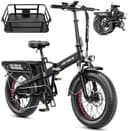
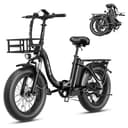
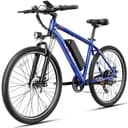
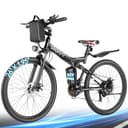
Start with the decision that shapes every other one: how you’ll store and charge the bike. If you live in an apartment, walk up stairs, or want to bring the bike onto transit, a folding e-bike earns its slightly harsher ride and extra weight by fitting in a closet or a trunk. If you have a garage or a hallway, a conventional city e-bike rides better and looks like a normal bike, which some riders prefer for keeping a lower profile at the rack. Either way, a removable batteryis close to essential for a commuter: it lets you carry just the pack indoors to charge, which is both safer and the only practical option if you can’t park next to an outlet.
Next comes range, and this is where listings mislead most. The miles- per-charge figure a maker prints is a best case — lowest assist, flat ground, a light rider, no wind. Your real range on a hilly commute with the assist turned up can be a good deal less, so give yourself margin: if your round trip is on the edge of a bike’s listed range, assume you’ll want to charge daily or carry the charger. Our battery and range guide explains how to read watt-hours and why the cold cuts range, and how far can you commute on an electric bike works through what a daily distance really looks like.
Motor power matters less than the listings suggest, because the big “peak watts” number is a burst figure, not sustained output. What you actually feel is torque on a hill and how smoothly the assist comes in. For flat-to-rolling commutes almost any of these bikes has enough motor; if your route has a real climb, prioritize the bikes we flag for hills and read how many watts you need. And know your class: most commuter e-bikes are Class 1 or 2 (assist up to 20 mph) or Class 3 (pedal-assist to 28 mph), which affects where you can legally ride — our e-bike classes explained page has the plain version.
Frame style is a comfort decision, not a cosmetic one
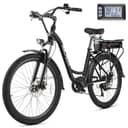
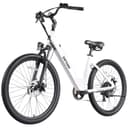
The shape of the frame decides how the bike feels on every ride. A step-throughframe — the low, dipped top tube — is far easier to mount and dismount, which matters more than people expect: it’s kinder to shorter riders, to anyone with less flexibility, and to riding in a skirt, a suit or with a loaded rear rack. A conventional diamond frame is a touch stiffer and lighter for the same money. Fat tires, meanwhile, soak up potholes, curbs and rough pavement and add grip in the wet, but they’re heavier and drag a little more on smooth roads; whether that trade is worth it is exactly the question in are fat-tire e-bikes worth it. If easy on-and-off is your priority, our best step-through e-bikes goes deeper on the low-standover picks.
Be realistic about the parts, too. At these prices the frames and motors are sound, but the finishing kit — brakes, shifters, tires — is budget, and a cheap e-bike rewards a little upkeep. Budget for a first tune-up after the break-in period, keep the tires at pressure and the chain clean, and the bike will serve a daily commute for years. That care matters more on an e-bike than an acoustic one because the motor puts extra load through the drivetrain.
Don’t forget the total cost of a car-free commute
An e-bike is only the start of replacing a car trip. A heavy, valuable e-bike is a prime theft target, so budget for a serious lock from the outset — a cheap cable is no protection for a bike like this. Our best locks for e-bikescover the hardened U-locks and chains that match the value you’re parking. You’ll also want lights for the commute home and a way to carry a bag or groceries without a backpack. Fold those into the decision so the bike you pick has the mounts and the rack compatibility you need.
Finally, weigh the e-bike against the alternatives honestly before you buy. For many commutes an e-bike is transformative; for others a regular bike or transit is the smarter spend. If you’re still deciding whether the assist is worth the money, read are electric bikes worth it for commuting — it lays out who genuinely benefits and who doesn’t. If the answer is yes, pick from the list above by matching the award to your route: overall for a normal commute, range-and-rough-roads for distance and bad pavement, easiest-to-ride for comfort and easy mounting, hills for a real climb, and the two budget picks for trying an e-bike without a big outlay.