What actually decides whether an e-bike climbs
Four things do most of the work, and only one of them is the number on the box.
- Torque, not watts.Torque is twisting force — it’s what pushes the bike up when the wheel is barely turning. Watts describe how fast work gets done, which matters on the flat. A motor with modest wattage and strong low-speed torque will out-climb a higher-wattage motor tuned for top speed. When a maker publishes a newton-meter figure, that is the number to compare.
- Peak versus sustained power.“1400W peak” means the controller will allow that draw briefly. A long climb asks for continuous output, and continuous ratings are usually a fraction of the peak. A higher peak still tells you something — it generally means a bigger motor and a controller willing to push it — but read it as a rough size indicator, not a promise.
- Motor position.Nearly every e-bike at this price is a rear hub motor, which climbs fine on moderate grades but can bog down on a very steep one because it can’t use the bike’s gears. A mid-drive turns the crank and therefore climbs through the cassette, which is why it is the better hill tool — and why it costs more. We lay out the trade in hub motor vs mid-drive.
- Your gears and your legs. A hub-drive e-bike still wants a low enough gear that you can spin rather than stomp. On the steepest pitches you are riding with the motor, not being carried by it, and a bike with a usable low gear will feel dramatically better than one geared for flat-road speed.
The hidden cost of hills: range
Climbing burns battery faster than anything else you do on a bike. A manufacturer’s range figure is a best case — a light rider, low assist, flat ground, mild weather — and a hilly commute is the opposite of every one of those conditions. Plan for meaningfully less than the listed number, and if the listing quotes a range that assumes pedal-assist, assume throttle-only riding on the same route will cut it further. Our guide to e-bike battery and range explains how the figures are generated and how to translate them to a real route, and how far you can commute works through the distances that stay comfortable day after day.
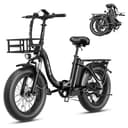
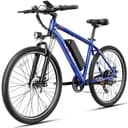
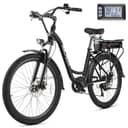
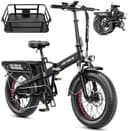
The practical move on a hilly commute is a removable battery. Every bike above has one, which means you carry it inside and charge at your desk instead of rationing assist on the ride home. It turns a range question into a habit question, and it is the single thing we would not compromise on for a hilly route.
Brakes matter as much as the motor
This is the part hill-focused buying guides skip. Every climb has a descent, and you will be going down it on a bike that weighs far more than an ordinary one, often with a load on the rack. Heat builds in the brakes, and a heavy e-bike on a long descent asks a lot more of them than a 15-pound road bike does. Look for disc brakes, keep the pads in good condition, and check them as part of a regular e-bike maintenance routine. Descending confidently is half of what makes a hilly commute pleasant.
How much motor you actually need
Rolling hills and short city ramps are comfortably within reach of any of these bikes at a mid assist level. A sustained steep grade — the kind where you can see the road tilt from a block away — is where the differences show, and where the bigger motor earns its weight. If you are trying to work out what class of power your particular route asks for, our explainer on how many watts you need for commuting walks through the arithmetic without the marketing. And if your hill is steep enough that you want the motor to do essentially all of it, read throttle vs pedal assist first — a throttle is the feature that gets you up a short brutal pitch from a standing start, and it is also the feature that drains a battery fastest.
One last honest note. The flagship commuter brands most often recommended for hills — the mid-drive bikes from Specialized, Trek and Ride1Up — sell brand-direct rather than through Amazon, so they are not listed here with a buy button that would not work. If your commute is genuinely mountainous and your budget stretches, a mid-drive from one of those makers is the better tool, and we would rather say so than pretend otherwise. For the very large middle ground of hilly-but-not-alpine city commutes, the bikes above do the job.