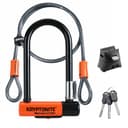
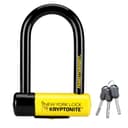
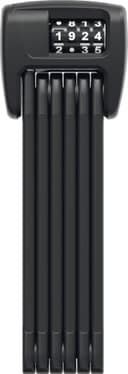
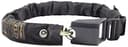
How we picked
Four criteria, in the order they decide the purchase. Notice what is missing: a weight ranking. Several of these listings publish no weight at all, and we are not going to put a figure next to a lock we have never held.
1. Is there an independent grade, or only a house number?This is the first filter and it is the one most buying guides skip. Sold Secure puts a lock in front of a defined set of tools for a defined time and issues a Bronze, Silver, Gold or Diamond grade, so a Gold is a comparable fact across brands. A maker’s own “7 of 10” or “15 of 15” is a statement about that company’s own range and nothing else. Three picks here publish an independent grade and we have said which.
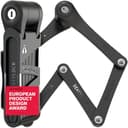
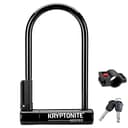
2. How thick is the metal, and is it solid or linked?Shackle diameter is the number that correlates most directly with how long a bolt cutter or a pry bar takes. The minis here run from 12 mm to 18 mm of hardened steel in a single solid loop. A folding lock’s bars are much thinner — the Bordo publishes 5 mm — and its security comes from hardening and the rivets rather than from bulk, which is a genuinely different defense with genuinely different weaknesses. Neither is wrong; they fail in different ways, and we compare the two directly here.
3. What can you actually lock it to?This is where compact locks disappoint people, and it is worth getting right before you buy. A mini U-lock’s small opening is its security feature and its biggest practical limit: it will take a frame and a wheel to a slim bike hoop, and it will not reach around a fat street sign post, a square railing, or a thick scaffold pole. A folding lock at 85–90 cm unfolded reaches around almost anything in a city. If your usual parking spot is improvised rather than a purpose-built rack, buy reach over thickness — our guide on locking a bike where there is no rack is the test case.
4. How does it travel? The whole point of this category. A frame bracket or holster is the difference between a lock you take and a lock you forget, and the two folding locks and two of the U-locks here ship with one. The wearable chain solves it differently, by making the lock a belt. A lock with no carrying solution at all ends up in a bag, which is fine until the bag is the one you did not bring.
Which compact shape is right for you
Buy a mini U-lock if you park at real bike racks, your bike is worth protecting properly, and you can live with limited reach. This is the default and it is the right default, because you get the most hardened steel for the least carried weight and the tight body gives a thief nothing to lever against. Pair it with the cable that comes in the box for the front wheel, or read how to stop someone taking your wheels and saddle.
Buy a folding lockif your parking is unpredictable — street furniture, railings, a fence, whatever is there — or if you lock two bikes together often. You are accepting a linked construction in exchange for nearly a meter of reach that packs into a block. It is also the easiest compact shape to mount on a small frame or a folder, where a mini U-lock bracket often has nowhere to go.
Buy a wearable chain if the thing stopping you carrying a proper lock is where it goes rather than what it weighs. A Sold Secure Gold chain worn at the waist is a genuinely clever answer for anyone commuting without a rack or a pannier, and it is the only option here that gives you chain-grade security with no bag at all. It is also the option most people try once and either love or abandon, so be honest with yourself.
The limit you need to hear
No lock on this page stops an angle grinder, and none of them claims to. A cordless grinder goes through 13 mm of hardened steel in well under a minute and through a folding lock’s bars faster than that. The only independent grade that involves a grinder test at all is Sold Secure Diamond, and nothing here holds one. What a compact lock buys you is time against the tools thieves actually carry most of the time — bolt cutters, a short pry bar, a hammer — plus the deterrent effect of being visibly harder than the bike next to you. We explain what the grades include, and what “grinder-proof” really means, in are angle-grinder-proof locks worth it and bike lock security ratings explained.
The practical conclusion from that, for anyone leaving a bike out for hours: a compact lock should be your secondlock or your short-stop lock, not your overnight lock. If the bike lives outside, the right answer is a bigger lock accepted as a bigger carry — see the full U-lock roundup— or an e-bike-grade lock from the e-bike lock page, because an e-bike is a far more attractive target than the bike beside it.