The four ways to carry a lock
Worn on your body
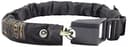
A wearable chain rides on your hips like a belt, which is a much better place for weight than your shoulders. It stays with you when you lock up, it can’t rattle loose off the bike, and it removes the single most common excuse for leaving a heavy lock behind. The trade is that you are wearing several pounds of chain, which some riders stop noticing within a week and others never get on with. If your problem is that a serious lock is too heavy to carry any other way — and it often is for flat and apartment dwellers who can’t leave one at the rack — this is the method that solves it.
Mounted on the bike
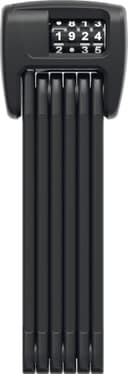
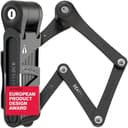
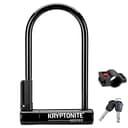
The tidiest answer, and the one we’d default to. Folding locks ship with a case that bolts to a bottle-cage mount, so the lock rides on the frame and you never think about it; most U-locks come with a bracket that does the same job with more rattle. Two things to watch. Cheap brackets work loose and buzz, and a badly positioned lock fouls your knees or a water bottle — try the mount before you commit to it. And a lock left on a parked bike is a lock that can be stolen, so bring it in if the bike lives outdoors.
In a bag or pannier
Perfectly fine if you already carry cargo, and much better in a pannier than a backpack. Weight in a pannier sits on the bike; weight in a backpack sits on your spine and shoulders, and a four-pound lock is exactly the sort of load that makes riding to work feel like work. If you currently backpack your lock and dislike commuting, that may well be the reason — our comparison of panniers vs a backpack covers the wider version of the same argument. Wrap the lock or keep it in a sleeve so it doesn’t chew up a laptop.
Left at the destination
The method nobody thinks of and the one that solves the hardest case. If you park in the same rack every working day, leave a heavy lock there permanently — locked to the rack itself — and carry only a light second lock for everything else. You get top-tier security at the place your bike sits longest without carrying it anywhere. It only works where the rack is secure and reasonably watched, and you should expect to lose the lock eventually, so buy accordingly.
Does a heavier lock mean a more secure lock?
Broadly yes, and the reason is simple: weight in a lock is mostly hardened steel, and thickness of hardened steel is exactly what resists cutting. A heavier lock in the same category is usually the stronger one.
But weight is a proxy, not the property itself, and it misleads in two ways. Across categories it breaks down — a heavy chain of soft links is weaker than a lighter hardened U-lock, and a bulky lock with a poor cylinder can be opened quietly regardless of its mass. And beyond a certain point extra weight buys security you then fail to deploy, because the lock stays home. The useful rule is to pick the security tier your parking genuinely needs, using independent security ratings rather than heft, and then choose the lightest lock that hits that tier in a shape you can carry. We work through the spend side of the same decision in how much to spend on a bike lock.
Matching the method to your commute
- Same rack every day, bike parked all day. Leave a heavy chain or U-lock at the rack and carry a light one. Best security for the least carrying, by a distance.
- Lots of short stops — errands, school run, coffee. You want the lock on the bike, always ready. A folding lock in a frame case or a compact U-lock in a bracket wins here, because anything that takes effort to retrieve is a lock you’ll skip “just this once”.
- Apartment or flat, bike stored inside, high-theft street. You need real security and you have nowhere to leave a lock. A wearable chain is the honest answer; a folding lock in a frame case is the lighter compromise.
- You already ride with panniers. Put the lock in the pannier and buy purely on security, since carrying has stopped being a constraint. This is the quiet argument for fitting a rack.
- You ride an e-bike.The bike is heavy, valuable and targeted, so the lock needs to be serious — and the good news is that an extra pound or two barely registers on a bike with a motor. Start at best e-bike locks.
The two-lock version
Once you’ve solved carrying, the two-lock setup gets much more appealing: a heavy lock that lives at your main destination, plus a light one that lives on the bike. A thief then needs two different tools, you can secure the frame and a wheel properly, and neither lock is heavy enough to resent. It is the setup we’d recommend to most daily commuters, and do you need two bike locks makes the full case.
Whatever you carry, none of it helps if the lock goes on badly at the other end. Frame and rear wheel, to something immovable, shackle filled, lock off the ground — how to lock your bike is the two-minute read that makes any of these locks work harder than a tier of extra steel would.