What each tier of spend actually buys
Lock pricing isn’t smooth. It steps, and each step corresponds to a real change in the metal and the rating rather than a nicer finish.
The bottom of the market: cables and no-name locks
This is the tier to skip entirely. A braided cable lock is cut with hand snips in seconds, and an unrated U-lock from a brand nobody has heard of gives you no way to know what the steel is. Spending nothing here is genuinely worse than spending nothing at all, because a bad lock buys confidence you haven’t earned. We go through the specifics in are cable locks safe. A cable’s only legitimate job is as a secondary loop through a wheel behind a real lock.
Entry tier: a genuine hardened U-lock
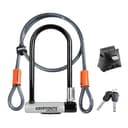
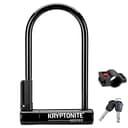
The first real step up gets you a hardened shackle around 12mm and a Sold Secure Silver rating — resistance to a determined attack with common hand tools. This is the floor we’d recommend to anyone, and for daytime parking in a low-risk area on a bike you could replace without pain, it is a defensible place to stop. What it doesn’t buy is resistance to a large bolt cutter or any power tool.
Mid tier: Sold Secure Gold, and the best value in locks
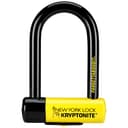
Moving up to a roughly 13mm shackle and a Gold rating is where most commuters should land, and it is where the value curve is steepest. Gold means the lock resisted a defined, tool-assisted attack for a set period, and it’s the tier most insurers ask for when they ask for anything. You’re paying meaningfully more than the entry lock and getting a meaningfully different lock — not a marginally better one.
Top tier: 16–18mm shackles and Diamond-rated locks
The top tier buys thicker hardened steel, better cylinders, and in the Diamond-rated locks a design specifically tested against an angle grinder. The price roughly doubles again, the lock gets noticeably heavier, and the security gain is real but narrower than the price suggests — because past a point you are buying minutes against a power tool, not immunity to one. This tier is correct for e-bikes, for bikes left outdoors overnight, and for high-theft cities. It is overkill for a suburban office car park.
The rule we’d use instead of “10% of the bike”
Price the lock against your parking, then sanity-check it against the bike. Three questions get you to the right tier:
- How long does the bike sit unattended, and where? Ten minutes outside a shop in daylight is a completely different risk from nine hours at a commuter rail station, which is different again from overnight on a street. Time is what a thief needs, and duration should drive your spend more than anything else on this list.
- How bad is theft where you park?Local risk is the variable that moves the answer most, and it is knowable — look at what’s locked around you, whether the racks have cut locks left on them, and what your local police or campus security say about the area.
- What would replacing this bike actually cost you?Not the sticker price — the cost of being without transport for two weeks plus whatever you’d have to spend to be riding again. For someone genuinely car-light, that number is larger than the bike, and it justifies buying up a tier.
An e-bike shifts every one of those answers. It is heavier, more valuable, harder to replace quickly, and a known target — which is why our best e-bike locks page starts a tier higher than this one does.
Where extra money stops buying security
Three honest limits, because a buying guide that only says “spend more” isn’t advice.
First, no lock is uncuttable. A cordless angle grinder gets through everything eventually; the top tier buys time and noise and attention, not immunity. If you understand what you are buying, the money is well spent — we set out exactly what “grinder-proof” can and can’t mean in angle-grinder-proof locks.
Second, weight is a real cost. The heaviest locks are the ones most likely to be left at home on a nice day, and a top-tier lock in your hallway protects nothing. If the serious lock is too heavy to carry daily, either buy the tier down or solve the carrying problem deliberately — that’s the whole subject of how to carry a bike lock.
Third, technique is free and it outranks a tier. Locking the frame to something immovable, filling the shackle so there’s no room for a jack, and keeping the lock off the ground will do more for a mid-tier lock than another hundred dollars of steel does for a badly used one. Start with how to lock your bike before you upgrade.
Two locks, or one expensive one?
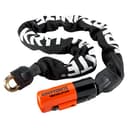
If your budget stretches to the top tier, splitting it across two mid-tier locks of different typesis often the better buy — a U-lock and a chain, say. It forces a thief to carry and use two different tools, which is a genuine deterrent, and it lets you secure the frame and a wheel properly rather than making compromises with one lock. The counter-argument is weight and hassle, and it’s a fair one. We work through when the second lock earns its place in do you need two bike locks.
Whatever tier you land on, register the bike and photograph the serial number before you need them. It costs nothing, it’s the step almost nobody takes, and it’s the difference between a recovered bike and a statistic — see how to prevent bike theft for the whole routine.