What Heybike actually publishes
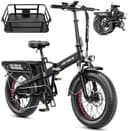
Start with the spec table on Heybike’s own Mars 3.0 page, because it is the most complete and most internally consistent description of this bike that exists. The motor is a rear hub unit listed at 750 W sustained and 1400 W peak, producing 95 N·m of torque. The battery is 624 Wh and removable, charged by a 2 A, 54.6 V charger in a stated five to seven hours. Assist is managed by a torque sensor rather than a cadence sensor, which is the single most meaningful item on this list for how a budget e-bike feels to pedal: a torque sensor scales the motor to how hard you are actually pushing, where a cadence sensor mostly notices that the pedals are turning. The drivetrain is a Shimano Altus 8-speed, with a half-twist throttle.
The chassis is a 6061 aluminum folding frame with a 65 mm coil suspension fork with hydraulic lockout up front and a Horst Link linkage at the rear, on 20 × 4.0-inch puncture-protection fat tires. Heybike lists the bike at 32 kg (70 lbs), a maximum combined rider-and-cargo weight of 440 lbs, and a rear rack rated to 100 lbs. Folded, it is quoted at 38.2 × 19.7 × 33.1 inches; unfolded, 66.9 × 25.6 × 52.0. A rear rack and fenders are included rather than sold separately, there is a TFT display with an NFC tap-to-start, and the lights are a headlight with a horn plus a tail light with brake and turn signals. Heybike states UL 2849 certification for the bike’s electrical system and UL 2271 for the battery, a two-year warranty, and a 14-day trial period.
Two things a commuter should care about are missing from that table. There is no brake specification — not the type, not the rotor size — and there is no top speed or e-bike class. Both appear elsewhere, in less authoritative places, which brings us to the problem with this listing.
The listing problem: two different bikes on one page
On the day we read it, the Amazon listing for this bike was internally inconsistent in a way we have not seen on any other product we rank. The title claims a 1400 W peak motor, 32 MPH and 70+ miles of range. The bullet points directly beneath it open with the words “The Heybike Mars 2.0 electric bike for adults” and then describe an 1800 W peak motor with 100 N·m of torque, a 48 V 13 Ah battery good for 55 to 70 miles, a Shimano 7-speed drivetrain, five pedal-assist modes, a frame rated to 330 lbs, and a folded size of 38.6 × 17.7 × 29.9 at 75 lbs. The Item details block below that reads, in adjacent rows, “Model Number Mars 3.0” and “Model Name Mars 2.0,” with a warranty description of one year where Heybike’s own site says two.
Some of that is reconcilable. A 48 V 13 Ah pack is 624 Wh, so the battery is the same battery described two ways. The rest is not: 1400 versus 1800 peak watts, 95 versus 100 N·m, eight speeds versus seven, 440 versus 330 lbs of rated capacity, 70 versus 75 lbs of bike. Our reading is that the bullet copy is leftover Mars 2.0 text on a listing whose title, price and battery describe the 3.0, and that Heybike’s spec page is the figure set to trust. But we cannot prove that from a listing, and neither can you — which is the practical point. If the exact drivetrain, frame rating or peak output decides your purchase, buy where the specification is unambiguous, or ask before you order. On the day we checked, Heybike’s own store showed the same price as the Amazon listing and quoted the longer warranty, which makes the direct channel worth a look rather than a reflex.
None of this rules the bike out, and we have left it at the top of the folding ranking. It is a reason to shop it with your eyes open, and it is why every number above is attributed to a specific page on a specific date in the sources at the foot of this review.
How fast it goes, and which class you are riding
The Amazon title’s “32 MPH” is the number to be careful with, because 32 mph sits outside the three-class system the United States regulates e-bikes under altogether. Class 1 is pedal-assist to 20 mph, Class 2 adds a throttle to 20 mph, and Class 3 is pedal-assist to 28 mph. Nothing above 28 is a legal e-bike on a shared path or bike lane in most of the country, and our e-bike classes explainer walks through what that means in practice.
Heybike’s own answer on the listing is clearer than its title. The Mars 3.0, the company says, ships as Class 2 — throttle, 20 mph — and can be made Class 3 by disabling the throttle and unlocking the limiter to 28 mph through the display or the app, or Class 1 by disabling the throttle and leaving the limit at 20. That is the honest framing: out of the box this is a 20 mph throttle e-bike, which is what most commuters want and what most bike paths allow. The 32 mph figure describes what the hardware will do with the limiter off, and using it on a public road is a decision with insurance and licensing consequences rather than a feature. Our guides to how fast e-bikes go and whether you need a license cover those consequences in detail.
Range: what 624 watt-hours really buys
Heybike’s product page rates the Mars 3.0 at up to 65 miles. The Amazon title says 70+, and the bullet copy says 55 to 70 “depending on terrain, weight and riding mode.” Treat all three as the same claim stated with different amounts of candor, and treat the bottom of the bullet range as the more useful planning number.
The arithmetic is why. Every headline range figure on every e-bike is produced in the lowest assist level, on flat ground, with a light rider, and 624 Wh is a genuinely large battery for this price bracket — but a fat-tire bike weighing 70 pounds, ridden on higher assist with a throttle available, draws far more than the best case assumes. Our battery and range guide works through watt-hours per mile properly; the short version is that a commuter planning around half the advertised figure is rarely disappointed, and on that basis the Mars 3.0 still covers a 15-mile each-way commute with margin, which very few bikes near this price can claim. If you are sizing a bike to a specific route, how far you can commute on an e-bike is the page to read next.
The battery is removable, which on a commute matters more than the capacity number. It means charging at a desk or in an apartment without wheeling 70 pounds of bike indoors, and it means the expensive part of the bike is not sitting on the street while you are at work.
The fold, and the 70 pounds
A folding e-bike is a storage solution, not a portability solution, and this is the clearest example of that difference on our site. Folded, Heybike quotes roughly 38 × 20 × 33 inches — a block that fits a car trunk, a hallway, a closet or the corner of a small apartment. It weighs 70 pounds. That is fine to roll into a lobby or lift into an SUV with a second pair of hands, and genuinely hard to carry up a flight of stairs every day, alone. If your storage is up two flights, this is the wrong bike, and we would rather say so now.
The fat tires follow the same logic. Twenty-by-four-inch tires with puncture protection, on a coil fork and a linkage rear end, turn broken city pavement, curb transitions and gravel shortcuts into non-events, which is exactly why we rank the bike well for rough routes. They also cost you rolling efficiency and a share of that range figure, and they are part of why the bike weighs what it weighs. Whether the trade is right for you is the whole subject of are fat-tire e-bikes worth it for commuting. On a smooth, flat commute the answer is usually no, and the best e-bikes for commuting ranking has lighter options.
Brakes, lights and the commuting extras
The brake spec is the one figure we would most like from Heybike and cannot get from Heybike. Its spec table omits brakes entirely; the Amazon bullets — the same bullets that call the bike a Mars 2.0 — describe 180 mm dual hydraulic disc brakes with 1.8 mm rotors. Hydraulic discs at 180 mm would be the right answer for a 70-pound bike carrying a rider at 20 mph, but we will not state a brake type as fact from copy that names the wrong model. Confirm it with the seller if stopping power is the deciding factor, and budget for a brake service either way: on a heavy e-bike, pads and rotors are consumables, as our e-bike maintenance routine explains.
What is unambiguous is the commuting kit. A rear rack and fenders come in the box, which is rarer than it should be and worth real money — a rack rated to 100 lbs takes panniers or a trunk bag without an upgrade, and fenders are the difference between arriving damp and arriving soaked. There is a headlight with a horn and a tail light with brake and turn signals, though integrated lights on budget e-bikes are usually bright enough to be seen rather than bright enough to see with, so read our be-seen vs see guide before deciding you are covered for unlit roads. The TFT display with NFC start is a genuine convenience: tap and go, no key hunt in the cold.
Safety certification, which matters more than the motor
Heybike states that the Mars 3.0 is UL 2849 certified and that its battery meets UL 2271, and repeats both in its listing answers. On a budget e-bike that belongs near the top of the spec sheet, not the bottom. UL 2849 covers the whole electrical system — battery, charger, controller and motor as one assembly — and it is the certification a growing number of cities, landlords and employers require before a bike can be charged or stored indoors. If you park in an apartment building or a workplace bike room, this is the line on the spec sheet that decides whether you can own the bike at all, and it is a good reason to choose it over an uncertified bike advertising more peak watts for less money.
Water resistance is less tidy. The product page markets an IP65 rating, while an answer on the same page says the bike is “rated IPX5 … safe to ride in light rain” and advises against riding in heavy rain. Those are different claims about dust and the same claim about water. Treat it as rain-capable rather than weatherproof: don’t pressure-wash it, store it dry, and follow the advice on riding an e-bike in the rain.
The honest cons
First, the weight. Seventy pounds is the defining fact of owning this bike: it shapes where you can store it, whether you can lift it onto a car rack, and how it behaves when the battery is flat. A dead battery on a 70-pound bike with an 8-speed freewheel is a long, slow ride home.
Second, the listing. We have not written a warning like the section above about any other product we rank, and a buyer who cares about exact specs should count that as a real cost of this purchase. The brake spec being absent from the maker’s own table compounds it.
Third, the components. An Altus 8-speed and a coil fork are honest parts at this price and they are not durable parts at this weight. Expect to adjust the derailleur, expect the brakes to want attention sooner than on a lighter bike, and expect the suspension to deliver comfort rather than control.
Fourth, price for purpose. This bike sits at the top of the budget bracket for the e-bikes Amazon sells, and much of what you pay for is range and suspension. If your commute is five flat miles, that money buys capability you will never use, and the cheaper picks above do the job.
Who should buy it, and who should buy something else
Buy the Mars 3.0 if you have a genuinely long or genuinely rough commute — 10 miles or more each way, potholes, gravel, curb hops, a hilly route — and you need to store the bike somewhere a normal e-bike will not fit. It suits riders who want one bike for the commute and the weekend, riders who carry loads on the rack, and anyone whose building requires a UL-certified bike indoors. The 624 Wh battery and the torque sensor are the two specs that justify the money, and both are real.
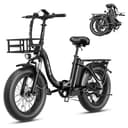
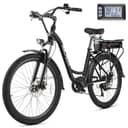
Buy something else if you have stairs, a short flat commute, or a hard budget limit. The Heybike Ranger 2.0 above is the same folding fat-tire format for meaningfully less, with less range and a simpler ride; the ANCHEER city bike is the pick if a conventional non-folding commuter fits your life, which for most riders with a garage it does. If a low step-over matters more than range, the step-through rankings are the better starting point, and if the budget is firm, the best e-bikes under $1,000 page covers the tier below this one. Whichever way you go, budget separately for a lock that matches the bike — an e-bike is a heavier, more valuable target than a bike, and our best locks for e-bikes page exists because the lock people buy alongside an e-bike is usually a tier too light.