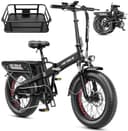
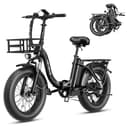
The two bikes, on Heybike’s own published figures
| Spec | Mars 3.0 | Ranger 2.0 |
|---|
| Range (listed) | 70+ miles, pedal-assist | Not published on this listing |
| Motor (listed) | Not published on this listing | 1400W peak |
| Sustained (nominal) watts | Not published | Not published |
| Torque | Not published | Not published |
| Frame | Folding, fat tire | Folding, fat tire |
| Suspension | Not published on this listing | Dual suspension on many configurations |
| Weight | Not published; heavy to lift folded | Not published; heavy to lift folded |
That table has more empty cells than full ones, and that is the most useful thing on this page. In this price band, makers publish the one number they win on and stay quiet about the rest. Heybike publishes range for the Mars and peak watts for the Ranger; neither listing publishes a nominal wattage, a torque figure in newton-meters, or a bike weight. Anyone presenting a complete spec table for these two bikes filled in every cell somewhere other than the listing. We would rather show you the gaps.
Why range usually wins on a commute
A commute is a fixed distance you ride twice a day, every working day, and the battery does not care that you are only going four miles — it cares how many times you have charged it and whether you are charging it in a hurry. Range headroom buys three things that have nothing to do with distance:
Charging on your schedule, not the bike’s.A bike with double the range you need gets charged twice a week, in daylight, when you are around — which is also the safe way to charge, as we cover in e-bike charging safety.
Cold-weather margin. Lithium capacity drops in the cold, and a February commute can cost a noticeable slice of the range you had in August. Headroom is what stops that being a problem.
Years, not just miles. A pack that is never run to empty and never charged in a panic ages better. Our battery lifespan guide goes through what actually determines that.
None of which helps if you physically cannot get up the hill between you and work. That is the Ranger’s case, and it is a real one — see best e-bikes for hills for the full argument and how many watts you need for why peak wattage is the wrong number to shop on.
What they share, and what that means
Both are folding fat-tire budget e-bikes, and that format has a consistent personality. Fat tires soak up broken pavement, curbs and gravel shortcuts, which is genuinely useful on a city commute and costs you some rolling efficiency. The fold is for storage rather than for carrying: both bikes are heavy enough that folding one gets it into an apartment or a trunk, not up three flights of stairs. If you have ever lifted a folded fat-tire e-bike, you know the difference.
Both are also budget builds, which is not an insult — it is a maintenance plan. Expect to tighten, true and adjust more often than on a bike shop bike, budget for a tune-up in the first few months, and read e-bike maintenance before the first thing rattles. The upside is that this is the price band where an e-bike actually replaces car trips rather than being a toy, which we cost out on e-bike vs car.
And both are theft targets the moment you leave them anywhere. A fat-tire e-bike is heavy, valuable and obvious; the lock budget is part of the bike budget. Start with best e-bike locks and securing the battery.
Who should buy neither
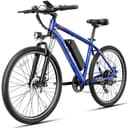
If you do not need the fold, you are paying for a hinge. A folding frame adds weight, cost and a maintenance item, and it buys you exactly one thing: the bike fits somewhere a normal bike does not. If you have a garage, a shed or a ground floor hallway, a conventional e-bike like the Jasion EB5 is a simpler bike for less money — which is why it is the third pick above and the lead on best e-bikes under $1,000.
And if the appeal is the fold specifically because you mix bike and transit, read best folding e-bikesfirst — folded size and lift weight matter more than either headline number on this page, and a fat-tire folder is one of the bulkier ways to solve that problem.