How we picked
Four criteria, in the order they decide whether a set is even possible on your e-bike.
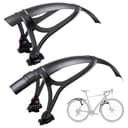
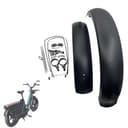
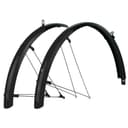
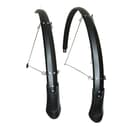
1. Published tire clearance.This is the filter. The SKS Bluemels B45 fits 700 x 29–38mm. The Planet Bike Cascadia in this size is recommended up to 700c x 35mm. The Zefal publishes a 48mm ceiling. The ZSYALY set is built for 26 x 4.0 in. Those four numbers do not overlap much, and no amount of enthusiasm makes a 45mm blade clear a four-inch tire. One set here — the RockBros clip-on — publishes no clearance figure at all, which is a real mark against it.
2. Mounting the frame can actually accept. Bolt-on sets need fender eyelets at the dropouts plus something at the fork crown and seatstay bridge. Plenty of e-bikes have none of that, and no adapter invents a threaded hole. Strap and clamp mounts are the answer there, with the honest caveat that straps are never as rigid as stays.
3. Coverage, which is what you are paying for. A full-length blade keeps water off your feet, your drivetrain and the rider behind you. A short clip-on stub keeps a stripe off your back and does little else. If you are getting fenders because your commute is wet, get full coverage.
4. What happens if something jams.Two sets here publish a release mechanism — SKS’s ASR system uncouples the stays, and Planet Bike puts release tabs on the front fender — so a stick or a strap caught in the front wheel pulls the fender away instead of locking the wheel. On a heavy e-bike carrying speed, that is not a luxury feature.
Clearance and mounting, side by side
| Set | Fits tires (published) | Mounting | Coverage | Release system |
|---|
| Zefal Shield G50 | Up to 48mm, 650B/700C | Straps, no eyelets needed | Full, adjustable | Not published |
| ZSYALY fat-tire set | 26 x 4.0 in | Not published in detail | Full cover | Not published |
| SKS Bluemels B45 | 700 x 29–38mm | Bolt-on, needs eyelets | Full length, 45mm blade | ASR stay release (SKS) |
| Planet Bike Cascadia ALX | Up to 700c x 35mm | Bolt-on, disc compatible | Full + 100mm mudflaps | Front release tabs |
| RockBros detachable | Not published | Clamp-on, detachable | Partial | Not published |
Read that clearance column before anything else on this page. It is the only column that can make a purchase impossible.
The fat-tire problem, honestly
A lot of the budget commuter e-bikes people actually buy — including the folding fat-tire bikes we recommend in best folding e-bikes — roll on 20 or 26 inch tires around four inches wide. Mainstream fender makers do not serve that width. SKS, Planet Bike and Zefal all top out far below it, which leaves a market served mostly by anonymous sellers.
The ZSYALY set is our pick there because it actually clears 26 x 4.0 in and gives full cover rather than a stub, and we are equally clear about what you are accepting: no brand track record, no published material or hardware detail, and one size only. A 20 x 4.0 in folding e-bike needs the other size, not this one. And on any e-bike, the fitment you have to check yourself is the clearance around the hub motor, the torque arm and the disc caliper, none of which exists on the bikes these fenders were designed around.
If your e-bike came with fenders from the factory, keep them. Factory fenders on a fat-tire e-bike are worth more than an aftermarket set that nearly fits.
Why e-bikes need fenders more than regular bikes
Three reasons, and the third surprises people.
You ride in weather you would otherwise skip.The whole value of an e-bike for a commute is that it removes the excuses — distance, hills, sweat. What is left as an excuse is rain. A fender is the cheapest thing that removes that one too, which is the honest reason this is a higher-value upgrade on an e-bike than on a weekend bike.
Speed multiplies spray.A Class 3 commuter at 25 mph throws a great deal more water off the front tire than the same bike at 12 mph, and all of it lands on your feet, your drivetrain and your bottom bracket.
Road grit is motor-adjacent. On a hub-motor bike the back wheel is the drive unit, and a rear fender keeps the worst of the salt and slurry off the motor housing, the cable entry and the disc. That is cheap insurance on the most expensive wheel you own. The rest of the wet-weather routine is in can you ride an e-bike in the rain and e-bike maintenance.
Fitting them on an e-bike without eyelets
- Look properly first. Threaded holes hide under rack hardware, behind plastic covers and inside the dropout. A bike that looks undrilled often has two of the four mounting points you need.
- Check the strap contact points. Strap mounts bear directly on the frame and fork. On a painted aluminum e-bike, add a strip of helicopter tape or an old inner tube under each contact point.
- Leave more clearance than looks necessary. Wet grit packs into a tight gap and then grinds. A couple of extra millimeters costs you nothing.
- Re-torque after the first wet week. Every fender loosens once. On a heavy bike, catch it early.
- If nothing fits, fit a rack instead.A rack with a bag on it blocks a surprising amount of rear spray, and it is more useful the rest of the year — rear racks for e-bikes covers the same fitment problem for racks.
What we would skip
A clip-on stub on a daily wet commute. It is the right product for a bike that meets rain twice a year and the wrong one for a bike you commute on.
Buying before measuring. Half the one-star reviews in this category are a clearance mismatch described as a quality problem.
A narrow 700c set “because it looks like it will stretch”. Blades do not stretch.
Zip-tying a fender to a suspension fork lower. It moves, it rubs, and on an e-bike it rubs fast.