How Long Do Bike Lights Last?
Three different questions hide inside that one: how long per charge, how many charges, and how many years. The number on the box answers only the first, and only in the dimmest mode.
How this is funded:we earn a commission if you buy through our links, at no extra cost to you. It never changes which product we recommend, and we’ll tell you when we’d skip one. Full disclosure.
The short answer: assume a front light gives you two to four hours in a mode you would actually choose, a rear light gives you twenty or more, and the light itself lasts three to five years of commuting. If you want the longest published runtime in our registry it is the Magicshine URBO TL at up to 82 hours, and if you want to stop guessing altogether it is the NiteRider Lumina OLED Boost 1200, which puts remaining runtime on a screen.
The reason this question gets answered badly everywhere is that it is three questions wearing one coat, and the number printed on the box only addresses the first of them — usually in the dimmest mode the light offers.
The three questions
1. Runtime per charge. How many hours of light you get before it goes out. This is the advertised figure, and it is quoted in whatever mode produces the best number. A headlight advertised at twenty hours is a twenty-hour light on a low flash and a one-to-two hour light on full steady output. Both figures are true; only one of them is the one you will use on a dark lane.
2. Charge cycles. How many times the battery can be refilled before it holds noticeably less. Lithium cells lose capacity gradually with cycles and with age, so a light in its third winter genuinely runs shorter than the same light did new. Nobody in this category publishes a cycle figure, so treat it as a known unknown: a light charged weekly for three years has had well over a hundred cycles put through it, and will show it.
3. Service life.How long before the light stops being a light. This is the one that decides what you should spend, and the LED has almost nothing to do with it. What fails is the charge port seal, the button membrane, the mount, or the cell — and on a sealed commuter light the cell is not replaceable, which makes the whole unit the consumable.
What actually determines runtime
- Mode, by a mile.The gap between a light’s brightest and dimmest settings is routinely ten to twenty times the runtime. Nothing else on this list comes close to mattering as much.
- Front versus rear. A front light that must illuminate the road is burning far more power than a rear light that only has to be noticed. That is why a rear light can honestly claim 82 hours and a headlight cannot.
- Temperature.Lithium cells deliver less usable capacity cold. Plan for the short end of the published range in winter, which is exactly when you need the light most — the unhelpful symmetry at the heart of commuting.
- Battery age. Capacity declines with cycles. A light that comfortably did your commute in year one may not in year three, and the first sign is usually the indicator turning red earlier rather than the light cutting out sooner.
- Flash versus steady.Flashing modes draw far less average power than steady ones, which is partly why they are quoted. Whether to use them is a separate argument with a different answer front and rear — flashing vs steady has it.
What to look for if runtime is your priority
Three specifications, and one of them is not a number. Look for a published runtime range rather than a single figure, because a maker quoting one number is quoting the flattering one. Look for a runtime display or at least a multi-stage battery indicator, so the decision to switch modes is informed. And look for enough modes to ration output— a light with two settings forces a choice between too much and not enough, while six settings let you match the mode to the stretch of road. The four picks below are the registry lights that do best on those three counts.
Quick picks
Ranked on published specs, real security and safety standards, and buyer fit.We have not tested these products — here is exactly what we do instead.
| # | Product | Best for | Price |
|---|---|---|---|
| 1 | 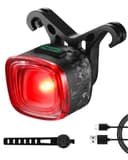 Magicshine URBO TL Brake Tail Light A featherweight tail light that brightens when it senses you braking and switches itself on and off automatically — genuinely useful safety tech at a fair price, with a claimed 82-hour runtime. | Longest published runtime | $21.99 · View on Amazon Price as of October 5, 2026. #ad How we’re funded |
| 2 | 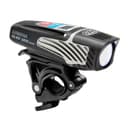 NiteRider Lumina OLED Boost 1200 1200 lumens is enough to actually SEE on unlit streets, not just be seen, and the OLED screen shows real remaining runtime so you're never guessing. The commuter headlight we'd point most people to first. | Shows real remaining runtime | $95.95 · View on Amazon Price as of October 5, 2026. #ad How we’re funded |
| 3 | 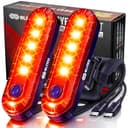 Blitzu Cyborg 120T Tail Light (2-Pack) Two USB-C rechargeable tail lights for the price of one premium light — the budget way to always have a charged rear light, and a spare for a second bike or a helmet. | Two lights, so one is charged | |
| 4 | 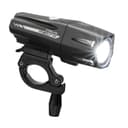 Cygolite Metro 1100 Pro 1100 lumens with day-flash modes and an IP67 rating, at a friendlier price than the NiteRider. The value see-and-be-seen headlight — daytime running flash for traffic, steady beam for the dark stretches. | Most modes to ration output | $86.95 · View on Amazon Price as of October 5, 2026. #ad How we’re funded |
How to never get caught dark
Four habits, in order of how much they buy you for the effort. None of them requires a better light.
Charge on a schedule, not on a warning.Sunday night, both lights, every week, regardless of what the indicator says. A weekly cadence comfortably covers any commuter rear light and most front lights in sensible modes, and it removes the decision from the one moment you are least equipped to make it — leaving the office in the dark.
Run one mode down from what feels right. Brightness is not linear in usefulness. Going from 1,100 lumens to 600 on a lit street costs you almost nothing you would notice and can double the runtime. Our page on how many lumens you need gives the honest band for each kind of route.
Keep a cheap second rear light in the bag. This is the single highest-value item on the list, and it is why a two-pack is one of the picks above. A spare tail light turns a dead battery from a safety problem into a non-event, and being seen from behind is the half of lighting that actually correlates with getting home.
Charge indoors, dry the port first. Cold cells charge badly and a wet USB port is how a perfectly good light dies in its second winter. That failure is the subject of best waterproof bike lights, and it is more often the thing that ends a light than any amount of use.
What about battery-powered lights?
They solve the charging problem and introduce two others. A coin-cell or AA light will sit in a pannier for a year and work when you need it, with no discipline required — genuinely useful as an emergency light. But replaceable cells mean a user-openable compartment, which is a second water path, and neither battery-powered set in our registry publishes a water rating. They also fade rather than cut off: a dimming light that still technically works is worse than a dead one, because you stop checking. We lay out both cases in rechargeable vs battery lights.
If your light has already failed
Work through it in this order before buying a replacement. Try a different cable and a different wall charger — a failed cable is the most common “dead light” of all. Clean the charge port with a dry brush and check the bung still seats flush. Then look at the mount: a perished silicone strap or a cracked bracket is a $5 problem, and how to mount bike lights covers what fits what. Only if the light charges to full and then drops out within minutes is the cell actually finished — and at that point, on a sealed light, it is a new light.
Frequently asked questions
How long do rechargeable bike lights last per charge?
Anywhere from about an hour to over eighty, and the spread is almost entirely about mode rather than about the light. A 1,000-lumen headlight on full steady output is a one-to-two hour light; the same unit on a low flash is a twenty-hour light. Rear lights last far longer than front lights because they are doing a fundamentally easier job — the Magicshine URBO TL publishes up to 82 hours. The practical rule: assume the figure on the box is the dimmest mode, and assume you will want brighter.
How many years does a bike light last?
Three to five years of commuting is a reasonable expectation for a decent sealed USB light, and what ends it is almost never the LED. LEDs outlive bikes. What fails is the charge port seal, the button membrane, the mount strap, or the battery's usable capacity after a few hundred charge cycles. That is why our picks skew toward lights with hard mounts and published water ratings: those are the two parts a wet winter attacks.
Why does my bike light die faster than the advertised runtime?
Four reasons, in order of how much they matter. You are running a brighter mode than the quoted one — the headline figure is usually the lowest setting. It is cold, and a lithium cell delivers less usable capacity below about 40°F. The battery has aged, and after a couple of hundred cycles it holds meaningfully less than it did new. Or it is being topped up from a low-current USB port that never actually reaches a full charge. None of these is a fault; all four are predictable, which is the point of planning for the short end of the range.
Should I let a bike light fully discharge before charging it?
No. That advice is a holdover from nickel-cadmium batteries and does not apply to the lithium cells in every modern bike light — deep discharges are harder on them than partial ones. Top up whenever it is convenient, avoid leaving a light sitting empty for months, and if you are storing a light over a season, store it part-charged rather than flat. The one habit that genuinely helps is letting a cold, wet light warm up and dry before you plug it in.
How do I know when my bike light is about to run out?
On most lights, you do not — a single LED turns red somewhere near the end, which tells you to worry without telling you how much time you have. That is the specific problem the NiteRider Lumina's OLED screen solves: it shows remaining runtime in the current mode, so the decision to switch down is informed rather than superstitious. If your light has no display, the cheap fix is redundancy: a second rear light in the bag costs less than the batteries you would otherwise be guessing about.
Do bike light batteries need replacing?
On most commuter lights the battery is sealed in and not user-replaceable, so when its capacity drops too far the light is the consumable. That is worth knowing before you spend heavily: a premium sealed light is a three-to-five year purchase, not a decade one. Lights that take replaceable AA or coin cells sidestep the issue entirely and pay for it in water resistance, because a user-openable compartment is a second place for water to get in — neither battery-powered light in our registry publishes a water rating at all.
Sources
- TUV Rheinland — IP testing (IEC 60529 degrees of protection) — The accredited test house's published table of the IEC 60529 IP code: the first digit runs 0 ("No special protection") to 6 ("Totally protected against dust"), and on the second (water) digit, 4 is "Protected against splashing water from all directions", 6 is "Protected against temporary flooding with water (100L/min), for example, for use on ship decks" and 7 is "Protected against the effects of immersion 1 m" (accessed October 6, 2026)
- U.S. NHTSA — Bicycle safety — Federal guidance on bicyclist safety, including being visible to drivers (accessed July 23, 2026)
Keep reading
Best Waterproof Bike Lights
The charge port is what usually kills a commuter light. Which lights publish a rating that survives it.
See the ratingsRechargeable vs Battery Bike Lights
The full case for each, including when a replaceable-cell light is the right call.
Compare themBest USB-Rechargeable Bike Lights
The rechargeable picks in full, front and rear, with what each one's battery buys you.
See the picksHow to Stop Your Bike Lights Being Stolen
The other way a light's life ends — and the mounts that make taking it with you a one-second job.
Read the guide