What the ratings actually promise
Read the two digits separately. The first is dust, the second is water, and a light that publishes only one of them is telling you it only had one of them measured.
| Published rating | Dust (1st digit) | Water (2nd digit) | Lights here |
|---|
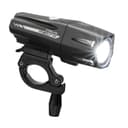
| IP67 | 6 — totally protected against dust | 7 — effects of immersion to 1 m | Cygolite Metro 1100 Pro |
| IPX6 | Not declared | 6 — temporary flooding, 100 L/min jets | Magicshine URBO FL, URBO TL |
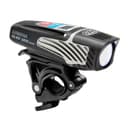
| IP64 | 6 — totally protected against dust | 4 — splashing from all directions | NiteRider Lumina 1200, Cygolite Hotshot Pro 200 |
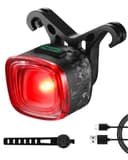
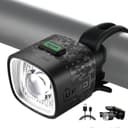
| None published | Unmeasured | Unmeasured | Ascher set, BV set, WSDCAM rear, Blitzu Cyborg 120T |
Two things fall out of that table. First, IPX6 is not worse than IP64 at keeping water out— on the water digit it is two levels better. What it does not declare is dust, which matters less on a bike than it does on a workshop floor. Second, IP64 is a splash rating. For a commute that means rain and road spray are in scope and a puddle that swallows the light is not. In practice IP64 is enough for the overwhelming majority of commuting, which is why our brightest two picks sit comfortably on this page.
Where water actually gets in
Not through the lens. Three places, in order of how often they cause the failure:
- The charge port. This is the one. A rubber bung that has been opened 300 times stops seating flush, and then the port fills, corrodes, and the light charges intermittently before it stops charging at all. It is also why we would never leave a USB light on a bike stored outdoors with the bung open.
- The seam between the body halves. Usually a gasket. Usually fine, until the light is dropped on a rack and the shells go slightly out of register.
- The button. A membrane switch is a membrane, and it ages in UV like every other elastomer on a bike.
None of those is helped by buying a brighter light. All three are helped by drying the port before you plug in, charging indoors rather than in a cold garage, and taking the light off the bike when you park — which you should be doing anyway, for reasons covered in how to stop your lights being stolen.
Rechargeable or replaceable batteries in the wet?
Sealed rechargeable lights win on water, and it is not close. A battery-replaceable light has a compartment designed to be opened by a user, which is a second gasket and a second failure point — and the compartment is where corrosion starts, because a leaking AAA in a damp housing is a slow chemical problem rather than a sudden one. The honest counter-case for replaceable batteries — no charging discipline needed, works at the bottom of a pannier for a year — is argued in full in rechargeable vs battery lights. Neither of our two battery-powered registry lights publishes a water rating, which is the practical end of that argument for wet-weather commuting.
What a water rating does not tell you
It tells you nothing about beam shape, which in rain matters more than usual: a light that throws glare upward turns wet air and a wet windscreen into a wall of scatter, and a cut-off beam like the Magicshine URBO FL’s puts the light down on the road where it reflects back to you instead. It tells you nothing about cold, which costs you runtime from any lithium cell. And it tells you nothing about mount security, which is the other thing a wet winter attacks — a perished silicone strap drops a perfectly waterproof light into the road. If any part of your route is unlit, read lumens vs lux before you choose on the water rating alone.
What we would skip
Any light sold as “waterproof” with no IP code. The word is free. The test is not. A seller who will not publish the figure is a seller betting you will not ask.
Reading IP68 as twice as good as IP67 for a bike. It is a deeper, longer immersion test, and nothing in commuting produces it. You are paying for a spec that does not do anything on a bicycle.
A rain cover for a light. It traps condensation against the body and blocks the beam. If you need a cover, buy a light with a rating.
Charging a cold, wet light immediately. Bring it inside, dry the port, let it reach room temperature, then plug in. This single habit extends the life of a commuter light more than any spec on this page.