How to Stop Your Bike Lights Being Stolen
Lights are the most-stolen thing on a commuter bike, because they are valuable, unsecured and gone in four seconds. There are only three real answers, and one of them is much better than the other two.
How this is funded:we earn a commission if you buy through our links, at no extra cost to you. It never changes which product we recommend, and we’ll tell you when we’d skip one. Full disclosure.
The answer is to take them with you, and the way to make that realistic is to buy light, quick-release lights. Of the lights in our registry the Magicshine URBO FL at 48 grams and the Magicshine URBO TLat around an ounce are the two that make pocketing them a non-event — and a light in your pocket has a theft rate of zero, which no mount can match.
That sounds like a dodge, so it is worth being precise about why the alternatives are worse. Bike lights are stolen constantly for three reasons that stack: they are worth real money, they are designed to detach in one motion, and a thief needs no tool and about four seconds. Nothing you can buy changes the first point, and the second point is a feature you actually want. So there are exactly three strategies available, and they are not equal.
Strategy 1: take it with you (the one that works)
Remove the light, leave the bracket. This is the only approach with a genuine success rate, and the entire difficulty is behavioural rather than technical — people stop doing it because the light is heavy, the mount is fiddly, or they have nowhere consistent to put it. Those are solvable problems, and they are the reason weight and mount type are the criteria we picked on below rather than brightness.
A 48-gram light with a quick-release mount goes in a jacket pocket and you forget it is there. A 200-gram light with a bolt-through bracket stays on the bike, which means it eventually gets stolen. The lightest adequate light you will actually remove beats the best light you will not.
Strategy 2: make it harder (helps a little, costs something)
Hard mounts, anti-tamper screws and bolt-on brackets raise the effort from a four-second grab to a thirty-second job with a tool. In a busy street at 9 a.m. that genuinely deters an opportunist, and it is worth having for a completely separate reason: a hard mount holds the light steady on rough roads where a silicone strap lets it rotate.
But understand the failure mode. A thief who commits anyway snaps the bracket, and you are left with a missing light anda damaged fitting — sometimes a scratched bar or a bent clamp. Harder is not safer; it changes who takes it and what they leave behind. Treat a secure mount as vibration insurance with a small theft bonus, not as protection.
Strategy 3: make it not worth taking (underrated)
Run lights cheap enough that losing one is an annoyance rather than an event. This is a legitimate strategy, not a defeat, and it is the right call in exactly one situation: a bike that has to live outdoors or in a shared bike room where you cannot take the lights off daily.
The specific version that works is a two-pack of inexpensive rear lights. One lives on the bike permanently so the bike is always legal and always visible, the other is the spare, and if one disappears you fit the other and move on. Pair that with a good front light that travels in your bag, and you have covered both the visibility requirement and the seeing requirement without leaving anything valuable clamped to a public rack.
What to look for
Three specifications, in this order, if theft is your concern. Weight — under about 60 grams and the light disappears into a pocket, which is the whole game. Mount type— a genuine quick release that leaves the bracket behind, so re-fitting is one click rather than a re-installation. Replacement cost— honestly assessed against where you park, because the right answer in a locked garage is not the right answer at a train station. The four picks below are the registry lights that score best on that set, which is deliberately a different ranking from the brightness ranking.
Quick picks
Ranked on published specs, real security and safety standards, and buyer fit.We have not tested these products — here is exactly what we do instead.
| # | Product | Best for | Price |
|---|---|---|---|
| 1 | 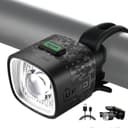 Magicshine URBO FL Cut-off Front Light A 48-gram, StVZO-style cut-off beam that lights the road without blinding oncoming riders and drivers — the considerate commuter's front light. Light, quick-release, and IPX6 for wet rides. | Fastest to take with you (48 g) | $24.99 · View on Amazon Price as of October 5, 2026. #ad How we’re funded |
| 2 | 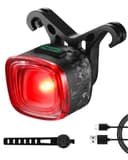 Magicshine URBO TL Brake Tail Light A featherweight tail light that brightens when it senses you braking and switches itself on and off automatically — genuinely useful safety tech at a fair price, with a claimed 82-hour runtime. | Fastest rear (~1 oz) | $21.99 · View on Amazon Price as of October 5, 2026. #ad How we’re funded |
| 3 | 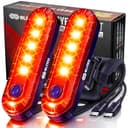 Blitzu Cyborg 120T Tail Light (2-Pack) Two USB-C rechargeable tail lights for the price of one premium light — the budget way to always have a charged rear light, and a spare for a second bike or a helmet. | Cheap enough to write off | |
| 4 | 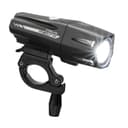 Cygolite Metro 1100 Pro 1100 lumens with day-flash modes and an IP67 rating, at a friendlier price than the NiteRider. The value see-and-be-seen headlight — daytime running flash for traffic, steady beam for the dark stretches. | Bracket stays, light comes off | $86.95 · View on Amazon Price as of October 5, 2026. #ad How we’re funded |
Build the habit, not the hardware
Every rider who stops losing lights does the same four things, and none of them is a purchase.
Lights come off with the helmet. Attach it to something you already always do. You never leave your helmet on the bars; make the lights part of that same motion and it stops requiring willpower in about a week.
One pocket, always the same one. The reason people stop taking lights off is not effort, it is that the lights end up loose in a bag and the rear one goes missing anyway. A jacket pocket or a dedicated pouch in the pannier solves it.
Leave the brackets on the bike.This is the detail that makes the whole habit workable. A bracket is worthless to a thief and takes thirty seconds to fit, so leaving it clamped means re-mounting is a one-second click rather than a re-installation. It is also why a hard-mount light like the Cygolite is not a bad choice here — the mount is secure and the light still detaches.
Keep a throwaway rear light in the bag permanently.It covers the day you forget, and being seen from behind is the half of lighting most correlated with getting home. In California this matters more than elsewhere: the state’s lighting statute was amended effective January 1, 2026 so an electric bicycle must carry its rear device at all hours, not just after dark — details on the California bike light laws page.
Where this fits in your overall theft plan
Lights are the cheapest thing you can lose and the most frequent. The bike is the expensive one, and it is protected by completely different measures: a lock matched to what the bike is worth, locked to something immovable, through the frame and rear wheel. If you have not read it, how to lock your bike is the foundation and prevent bike theft is the full layered picture. Components sit in between: wheels and saddles are covered in how to lock your wheels and saddle, and recovery hardware — trackers and alarms — is in bike anti-theft devices.
One thing not to do: do not buy a tracker for a bike light. A tag costs more than most lights, is bigger than some of them, and would be found in a bin within the hour. Trackers earn their place on the bike, not on a $25 accessory.
If you park outdoors overnight
Assume anything not bolted or welded is gone eventually, and plan the lighting around that rather than fighting it. Run the cheap pair on the bike full-time so the bike is always legal and always visible, and carry the good front light in your bag for the rides where you actually need to see. The additional benefit of this arrangement has nothing to do with theft: a light left outside all night in standing water fails at the charge port, which is the single most common way a commuter light dies — covered in best waterproof bike lights and how long bike lights last.
Frequently asked questions
How do you stop bike lights being stolen?
Take them with you. That is not a disappointing answer, it is the only one that actually works — a quick-release light is two seconds off the bracket and lives in a jacket pocket, which removes the opportunity entirely. The two alternatives are worse: bolt-on lights deter a casual grab but a determined thief breaks the mount and leaves you with a damaged bike, and cheap redundant lights accept the loss rather than preventing it. Buy light, quick-release lights and build the habit of pocketing them when you lock up.
Are bolt-on bike lights theft-proof?
No, and they can make the outcome worse. A bolted or anti-tamper mount raises the effort from a four-second grab to a thirty-second one with a tool, which does deter opportunists in a busy street. But a thief who commits anyway snaps the bracket, and now you have a broken mount, a missing light, and sometimes a scratched or bent fitting on the bike. Hard mounts are genuinely worth it for security against vibration and for keeping the bracket on the bike when the light comes off — not as theft protection.
Should I leave my lights on the bike at work?
Not if the bike is parked anywhere public, and not even in a shared building bike room — those are a common theft location precisely because the bikes sit for eight predictable hours. If you genuinely cannot take the lights with you every day, the honest compromise is to run cheap lights you are prepared to lose and keep one good light that travels in your bag. Leaving a $90 headlight clamped to a bar in a public rack is a slow-motion donation.
Will a bike lock protect my lights?
No. A lock secures the frame and wheels, which are the expensive parts, and does nothing for anything clamped or strapped on — lights, computers, pumps, bags, saddles with quick-release seatposts. That division of labour is worth understanding: lock for the bike, pockets for the accessories. Our guide on how to lock your wheels and saddle covers the components a lock can realistically cover, and lights are not among them.
What do I do if my bike lights are stolen?
Practically, replace them before you ride again at night — riding unlit is both the real safety risk and, in every US state, a legal one after dark. Then change the habit rather than the light: buy a lighter quick-release unit so taking it with you stops being a chore. There is rarely any point reporting a light theft on its own, but if the bracket was damaged or anything else went with it, photograph it, because a pattern of thefts at one rack is the kind of thing a building manager or campus security will act on where a single incident is not.
Are USB lights more likely to be stolen than battery ones?
Yes, for a mundane reason: USB-rechargeable lights are generally the brighter, more expensive, more resellable ones, and they come off a bracket in one motion by design. That same design is the solution — the removability that makes them easy to steal is what makes taking them with you effortless. A cheap battery-powered backup set in the bottom of a pannier is the complement, not the replacement: nobody wants it, and it works the night you forget to charge anything.
Sources
- California Vehicle Code § 21201 — Operation of bicycles: equipment — California's bicycle equipment statute: the white front lamp visible 300 feet, the rear red reflector or solid/flashing red light visible 500 feet, pedal and side reflectors, and the rule that an electric bicycle must carry the rear device during all hours (amended by Stats. 2025, Ch. 36, effective January 1, 2026) (accessed August 18, 2026)
- U.S. NHTSA — Bicycle safety — Federal guidance on bicyclist safety, including being visible to drivers (accessed July 23, 2026)
Keep reading
How to Prevent Bike Theft
The layered plan for the expensive part: lock choice, locking technique, parking, registration and recovery.
Read the guideHow to Mount Bike Lights
Bracket types, what fits what, and why leaving the bracket on the bike is the whole trick.
Read the guideBest Budget Bike Lights & Sets
The cheap-enough-to-lose tier, which is a legitimate anti-theft strategy rather than a compromise.
See the picksBike Anti-Theft Devices
Trackers, tags and alarms — what they do, what they do not, and why they never replace a lock.
See the devices