How to Lock Two Bikes Together
One lock through two frames is cheaper and lighter than two locks. It also means one cut loses both bikes — which is fine for a coffee stop and the wrong plan for an overnight.
How this is funded:we earn a commission if you buy through our links, at no extra cost to you. It never changes which product we recommend, and we’ll tell you when we’d skip one. Full disclosure.
Short answer: yes, with a chain long enough to pass through both frames and around something fixed. Plan on about 5 feet of chain to do it properly; a 3-foot chain works only if the bikes are parked tight together, and a standard U-lock almost never has the opening. Our pick for the job is the 5-foot hardened chain in the table below.
One sentence of warning before the method, because it is the mistake that costs people both bikes: chaining the two bikes to each other and not to anything fixed is not locking them up. It feels secure, because neither bike can be ridden away. In practice two bikes chained together are one object that can be lifted into a van, or wheeled around the corner on the two wheels still touching the ground, and taken apart somewhere quiet. The chain has to capture something immovable.
The reach you actually need
Three things have to fit inside the lock at the same time, and that is what sets the length:
- Bike one’s rear triangle.The frame and the rear wheel in one pass — the best single thing to capture on any bike.
- Bike two’s rear triangle. Same again, which is why parking the bikes nose to tail puts both triangles conveniently side by side.
- The anchor. A stand, a thick railing, a post. This is the part people run out of chain for, and the part they then skip.
Five feet covers all three on almost any pair of bikes and any normal rack. Three feet covers it only when the two bikes are touching and the anchor is thin. Folding locks reach about 90 cm — roughly three feet — so they are in the same category as the shorter chain.
Two bikes, one lock: the trade you are making
It is worth naming plainly. One lock is cheaper, lighter and quicker, and it means a single cut takes two bikes instead of one. The lock has not become weaker; the downside has become twice as large. That makes this a good solution for a short stop in a busy place and a poor one for overnight parking or for a bike worth real money.
Below are the three locks worth considering for this, with today’s live prices. Underneath: the step-by-step technique, why a U-lock usually cannot do it, and the situations where two locks is simply the better purchase.
Quick picks
Ranked on published specs, real security and safety standards, and buyer fit.We have not tested these products — here is exactly what we do instead.
| # | Product | Best for | Price |
|---|---|---|---|
| 1 |  Kryptonite New York Legend 1515 Chain When you need length AND maximum security — a 5ft, 14.5mm chain rated 10/10 that reaches racks the shorter Fahgettaboudit can't. The trade-off is nearly 15 pounds; treat it as a fixed anchor. | Best reach for two bikes | $159.96 · View on Amazon Price as of October 21, 2026. #ad How we’re funded |
| 2 | 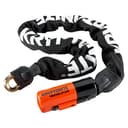 Kryptonite Evolution 1090 Chain The mid-weight chain most commuters actually want: 10mm hardened links, lighter and cheaper than the 14mm New York chains, with enough deterrence for daily city parking that isn't overnight-outdoors. | Best everyday chain | |
| 3 | 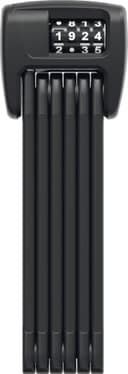 ABUS Bordo 6000C Folding Lock The folding lock that made the category credible: hardened 5mm steel links at ABUS Security Level 10, folding flat into a frame holster. More lockable length than a U-lock, far more security than a cable. | Best portable option | $93.85 · View on Amazon Price as of October 21, 2026. #ad How we’re funded |
The technique, step by step
1. Park the bikes nose to tail, close together.Facing opposite directions puts the two rear triangles side by side, which is the shortest possible chain run and the easiest to pull tight. It also keeps both sets of handlebars out of each other’s way.
2. Pass the chain through both rear triangles.The rear triangle — the gap bounded by the seat tube, chainstay and seatstay, with the rear wheel inside it — is the single best thing to capture on a bike, because it takes the frame and the expensive wheel together. Both bikes, same pass.
3. Then around the anchor, and only then close the lock. Something immovable: a proper bike stand, a thick railing, a signpost with something on top of it. Not a chain-link fence, not a sapling, not a bollard you could lift the chain over. Our no-rack guide covers what counts and the sign-post trick for what does not.
4. Take up every inch of slack.This is the step that matters most and gets skipped most. Chains are rarely cut in the real world — they are twisted. A loose loop gives a thief somewhere to insert a bar and generate enormous leverage against a single link. A chain pulled tight around two seat tubes has nowhere for a bar to go. Route the excess around a seat tube rather than leaving it hanging.
5. Keep the lock body off the ground. A padlock or lock mechanism resting on concrete can be hammered against the ground. Lift it so it hangs in the chain run.
6. Deal with the wheels and saddles separately.One chain through two rear triangles leaves two front wheels and two saddles unsecured, and both come off without tools on a lot of bikes. A cheap cable through both front wheels, or locking skewers, closes that gap — wheels and saddle.
Why a U-lock rarely works for this
A U-lock is the best security per pound available, and its shackle opening is the entire reason it is secure — a small opening leaves no room for a jack or a crowbar. That same small opening is why it cannot usually take two frames plus a rack. Even a full-size U-lock is built around the geometry of one bike and one stand.
There is a practical exception worth knowing: a U-lock per bike plus a cable linking them is a perfectly sensible setup, and it is not the same thing as locking two bikes with one lock. Each bike is independently secured to the rack, and the cable is simply the convenience layer. If you already own two U-locks, that is the arrangement to use rather than buying a chain. The comparison between the two lock types is in U-lock vs chain lock.
The honest risk arithmetic
Using one lock for two bikes does not make the lock weaker. A hardened 14.5mm chain in the top band of Kryptonite’s own scale is exactly as hard to defeat with two bikes in it as with one. What changes is what one failure costs, and that is a doubling.
So the decision is situational rather than technical:
- Short stop, busy street, two modest bikes→ one good chain. The convenience is real and the exposure window is short.
- Both bikes left for a working day→ two locks, ideally of different types, so a thief needs two tools.
- Overnight or outdoors→ two locks, and seriously consider not parking there. Overnight is where opportunistic theft becomes patient theft, and patience is what defeats a single lock.
- One of them is an e-bike→ lock it separately. An e-bike is heavier, far more valuable and a known target; it needs its own lock tier and its battery brought inside. See best locks for e-bikes and how to secure an e-bike battery.
- Home or garage storage→ one heavy chain, permanently installed, through both bikes and a floor or wall anchor. Weight stops being a problem the moment you are not carrying it.
Carrying a chain long enough to do this
Reach costs weight, and that is the real tax on this approach. A 5-foot 14.5mm chain is listed at roughly 15 lb, which is a fixed-anchor lock rather than something you carry. A 3-foot 10mm chain is far more carryable and gives up both reach and metal. And a wearable chain shifts the weight to your hips, which is the compromise many two-bike households settle on — the full set of options is in how to carry a bike lock.
The folding lock in the table is the portable answer: ABUS Security Level 10, 90 cm unfolded, and it rides in an included frame holster. Ninety centimeters is enough for two bikes parked tight to a thin post and not much more, so it is a lock for the school run rather than the railway station. Its honest weak point, as with every folding lock, is the rivets between links rather than the bars themselves — folding lock vs U-lock is fair about that trade.
Whatever you buy, read the published rating rather than the marketing. Sold Secure Gold, ABUS’s 1–15 scale and Kryptonite’s 1–10 scale are the three worth knowing, and they are not interchangeable — ratings explained decodes all three.
General guidance, not professional advice. Chain & Charge is written by an enthusiast, not a bike mechanic, and we do not run a test lab. Laws, security ratings and specs change — verify your state’s current e-bike rules and a lock’s current security rating before you rely on them, and set any new gear up per the maker’s instructions.
Frequently asked questions
Can you lock two bikes with one lock?
Yes, provided the lock is long enough to pass through both frames and around something fixed. In practice that means a chain: a 5-foot hardened chain handles two bikes and a rack comfortably, a 3-foot chain can manage two bikes parked close together on a thin stand, and a standard U-lock almost never has the opening for it. The thing to understand is what you are accepting — one lock means one cut takes both bikes, so it is a good answer for a short stop and a poor one for parking overnight.
How long does a chain need to be to lock two bikes?
Plan on 5 feet, which is the length that reliably captures two rear triangles plus a rack, a post or a stand without forcing the bikes into an awkward position. A 3-foot chain can do it if the two bikes are parked right next to each other and the anchor is thin, but you end up with the frames pulled tight together and very little room to route the chain through metal rather than around it. Folding locks top out around 90 cm — about 3 feet — so the same caveat applies.
Is it safe to lock two bikes together with one lock?
It is exactly as safe as the lock, with twice as much to lose. The security of the setup does not drop because there are two bikes in it — a 14.5mm hardened chain is a 14.5mm hardened chain — but the consequence of failure doubles. That trade is fine when the stop is short, the area is busy and the bikes are modest. It is a bad trade overnight, outdoors, or when one of the bikes is an e-bike, because patient theft defeats a single lock and then takes everything.
What is the most common mistake when locking two bikes?
Locking the two bikes to each other and not to anything fixed. It feels secure — neither bike can be ridden away — and it is the easiest theft on this page, because two bikes chained together can simply be lifted or wheeled away as one object and cut apart later somewhere quiet. The rule is absolute: the chain must pass through something immovable. The second most common mistake is capturing only the wheels, which leaves two frames behind once the quick-release skewers come out.
Should I use one lock or two for two bikes?
Two locks, if the bikes are parked anywhere for long or either bike is valuable. Two locks of different types force a thief to carry two different tools, which is a far bigger ask than using one tool twice, and it means a single failure costs you one bike rather than both. One long chain is the right answer for convenience parking — a cafe, a shop, a school run — and for home storage where the chain is a fixed anchor you never carry. Our two-lock page works through where that upgrade pays.
How do you lock two bikes at home or in a garage?
With a heavy chain you never have to carry, looped through both rear triangles and around a ground or wall anchor. This is the one scenario where weight is a feature rather than a cost: a 5-foot 14.5mm chain is nearly 15 pounds, which makes it a terrible daily carry and an excellent permanent anchor lock. Add the habits that matter more than the lock — bikes out of sight of a window, serial numbers recorded, and for an e-bike the battery brought inside rather than left on the frame.
Sources
- Sold Secure — Ratings explained — The Bronze / Silver / Gold / Diamond lock ratings and what each attack test involves, including the Diamond angle-grinder test (accessed July 23, 2026)