How to Secure an E-Bike Battery
The best lock for a battery is the inside of your building. When that is not possible, the pack needs its own layer — because the factory key lock was designed to stop it falling out, not to stop someone taking it.
How this is funded:we earn a commission if you buy through our links, at no extra cost to you. It never changes which product we recommend, and we’ll tell you when we’d skip one. Full disclosure.
Short answer: if the pack comes off, take it with you— that is free and it ends the problem. When the bike has to be left with the battery on it, add a second lock of a different type run through the pack’s carry handle or mounting rail and around the frame. Our pick for that job is the 3-foot 10mm chain in the table below; if you would rather wear the weight than carry it, the wearable Gold-rated chain does the same job.
The reason the battery needs its own answer is simple arithmetic. It is the single most expensive component on a budget e-bike, often a third of the price of the whole bike, and it is the only expensive part designed to be removed in seconds without tools. From a thief’s point of view that is an unusually good target: high value, small, light enough to carry, no bike to ride away on, and nothing with a serial number visible from across the street.
What the factory key lock actually protects against
Nearly every commuter e-bike keys its battery to the frame, and riders reasonably assume that is the security. It is not, quite. That latch exists to do two things: stop the pack walking out of its rail over potholes, and stop somebody lifting it off in one casual motion while you are inside a shop. Both are worth having.
What the latch is not built for is a tool. The cylinder and the rail around it are made to a retention standard, not a security standard — nothing like the hardened steel in a bike lock — and a plastic shroud with two screws in it is not an obstacle to someone who came prepared. Treat the key as a latch with a lock on it, and treat the actual security as something you add.
The three mounting positions, ranked by how exposed they are
- Rear-rack and carrier packs: most exposed. High, visible, and they usually slide straight back out of the rail. This is the position that most needs a chain through it.
- Down-tube packs: middling. Lower, partly shrouded by the frame, and often need the bike tipped or a cage moved. Still removable by hand once the key is turned.
- Integrated, bolted-in packs: least exposed— and the ones you cannot bring inside to charge, which trades a theft problem for a charging one.
Below are the four things worth owning for this, with today’s live prices, followed by the layer-by-layer method, how to route the chain so it is not defeated by leverage, and what not to do to a lithium pack.
Quick picks
Ranked on published specs, real security and safety standards, and buyer fit.We have not tested these products — here is exactly what we do instead.
| # | Product | Best for | Price |
|---|---|---|---|
| 1 | 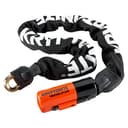 Kryptonite Evolution 1090 Chain The mid-weight chain most commuters actually want: 10mm hardened links, lighter and cheaper than the 14mm New York chains, with enough deterrence for daily city parking that isn't overnight-outdoors. | Best chain for frame + pack | |
| 2 | 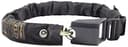 Hiplok Gold Wearable Chain Lock A Sold Secure Gold chain you wear around your waist like a belt, so the weight rides on your hips instead of your bag. The clever answer for riders who hate carrying a chain but want chain-level security. | Best wearable option | |
| 3 |  Knog Scout Bike Alarm & Finder The one device here that does both jobs — an 85 dB motion alarm that makes a thief stop and look around, plus Apple Find My so the same unit helps you get the bike back if they carry on anyway. | Best alarm + finder | $64.95 · View on Amazon Price as of October 21, 2026. #ad How we’re funded |
| 4 |  Apple AirTag (2nd Generation) The default bike tracker for anyone on an iPhone, because the thing that finds it isn't the tag — it's the enormous Find My network of other people's Apple devices quietly reporting its location as it passes them. | Cheapest recovery layer |
The layers, in order of how much they change the outcome
1. Take the pack inside. Free, instant, and it defeats battery theft completely. If your e-bike has a removable battery, this is the habit that matters more than any product on this page. It also solves charging and winter storage at the same time, which is why we treat removability as a buying criterion in best e-bikes with a removable battery.
2. Lock the bike properly first.A battery lock on an unsecured bike is pointless — they will take the whole thing. An e-bike is heavier and more valuable than a bicycle and attracts more deliberate attention, which is why the lock tier steps up: best locks for e-bikes covers what matches.
3. Run a second, different lock through the pack.A 3-foot 10mm chain passed through the battery’s carry handle or mounting rail, then around the frame and the rack or stand, means the pack cannot slide out of its rail without the chain being cut. Use a different typeof lock from your main one, because two types force a thief to carry two tools — the logic in do you need two bike locks. A wearable chain is the version of this most commuters will actually carry every day.
4. Add an alarm if the bike parks somewhere quiet.A motion-triggered siren is the only device here that intervenes while the theft is happening. The one in the table is an 85 dB motion alarm with Apple Find My in the same unit, bolted to the bottle-cage bosses with anti-tamper screws, and it is the honest answer for one-device coverage. The wider category — louder sirens, GPS, tags — is in best bike anti-theft devices.
5. Add a tracker for afterwards.It prevents nothing and it is the cheapest chance of getting the bike back. Where to hide it matters more than which one you buy — where to put an AirTag on a bike.
How to actually route the chain
Three rules, and they are all about not relying on plastic.
- Through metal, not through the shroud.Pass the chain through the pack’s steel carry handle or the metal mounting rail, not around a plastic cover or a moulded lip that will simply break.
- Capture the frame too. The chain should pass through the pack and around the frame, so that removing the pack means defeating the chain, and defeating the chain still leaves the bike locked by the main lock.
- No slack. A loose loop can be twisted with a bar for leverage, which is how chains fail in practice rather than being cut. Take up the length around the seat tube.
A note on rack-mounted packs specifically: they are the easiest target because they sit high and slide straight back. If your e-bike carries its battery on the rear carrier, make the chain-through-the-pack step part of every lock-up, not just overnight parking.
What not to do
Do not drill, bolt or glue anything to the pack housing. Riders occasionally ask about adding their own anchor point. The housing is a sealed enclosure around lithium cells, and breaching it is the one modification on a bike with a genuinely dangerous failure mode. Use the handle and rail the maker provided.
Do not rely on a cable lock as the only layer.A thin cable through the handle is a visual deterrent and nothing more. It is a reasonable cheap second layer for a coffee stop, which is exactly the job the budget combination chain above is in this list for, and it is not an overnight solution — are cable locks safe is blunt about this.
Do not leave the key in the battery latch. It happens constantly, and it turns a keyed latch into no latch at all.
Do not buy a replacement pack from an unidentified sellerif the worst happens. Packs are model-specific and the cheap route here has a failure mode that is not merely inconvenient. The CPSC’s micromobility guidance is worth reading on exactly this point, along with charging with the supplied charger and not charging unattended overnight.
Record the battery, not just the bike
Battery packs carry their own serial number, usually on a label on the housing or under the mounting foot. Photograph it, store the photo somewhere that is not on the bike, and include it alongside the frame serial when you register the bike. A pack with a recorded serial is a pack that can be identified if it surfaces on a marketplace, and it is the difference between a police report with something in it and one without. The rest of that checklist — registration, marketplaces, insurance — is in what to do if your bike is stolen and how to prevent bike theft.
And the storage half of the problem — where the pack lives overnight, over winter and while it charges — is covered end to end in how to store an e-bike.
General guidance, not professional advice. Chain & Charge is written by an enthusiast, not a bike mechanic, and we do not run a test lab. Laws, security ratings and specs change — verify your state’s current e-bike rules and a lock’s current security rating before you rely on them, and set any new gear up per the maker’s instructions.
Frequently asked questions
How do you lock an e-bike battery?
If the pack is removable, the real answer is to take it with you — that is free, instant and defeats the theft entirely. When it has to stay on the bike, pass a hardened chain or cable through the pack's carry handle or mounting rail and around the frame and whatever you are locked to, so the battery cannot be slid out of its rail without cutting through the chain. A 3-foot 10mm chain is enough reach for most frames. Treat this as a second lock, not a replacement: the main lock still has to secure the frame and rear wheel.
Does the e-bike battery key lock stop theft?
Only the casual kind. On most commuter e-bikes the battery is keyed to the frame, and that key lock does two useful things: it stops the pack vibrating out of its rail on rough ground, and it stops a passer-by lifting it off in one motion. What it does not do is resist a tool. The lock cylinder and the plastic or alloy rail around it are not built to the standard of a bike lock, so someone who arrives with a screwdriver and two minutes is not stopped by it. Think of it as a retention latch with a key, not a security device.
Can you lock an e-bike battery without a key?
Not the factory latch — that is keyed, and if you have lost the key the route is the manufacturer or dealer, with proof of ownership, not force. Forcing a battery latch risks damaging the terminals and the pack housing, which is the one component on an e-bike where damage has a worse failure mode than simply not working. What you can add without a key is a combination chain or cable through the pack's handle and the frame, which gives you a keyless second layer and is the usual answer for riders who hate carrying keys.
Where do thieves take the battery from first?
Rack-mounted and rear-carrier packs are the easiest, because they sit high, exposed, and often slide straight back out of their rail. Down-tube packs are harder: they are lower, partly shrouded by the frame, and usually need the bike tipped or a bottle cage moved first. Integrated packs bolted inside a down tube are hardest of all and are also the ones you cannot take inside to charge. If your e-bike carries its battery on the rack, it is worth running the second lock through the pack as a matter of routine rather than only overnight.
Should I put a tracker on the battery or the bike?
The bike, as the priority — a stolen e-bike is the larger loss and the thing police can identify by serial number. If the battery is frequently taken on its own, a small tag inside or under the pack housing is a cheap addition, with the caveat that any metal around a Bluetooth tag weakens its signal and a pack is a lot of metal. In practice most riders get more value from one well-hidden tracker on the frame plus the habit of carrying the battery indoors than from tagging both.
Is it safe to leave an e-bike battery on the bike in cold or wet weather?
Rain is generally fine — commuter e-bike packs and connectors are built for weather, and riding in the rain is normal. Sitting out is a different question. Prolonged cold storage costs a lithium pack capacity, and standing water around the connector over days is not what the seal was designed for. The habit that solves both at once is the same one that solves theft: bring the pack indoors when the bike is parked for the night, store it at room temperature and at a partial charge, and charge it somewhere attended with a working smoke alarm.
Sources
- U.S. CPSC — Micromobility Information Center — CPSC's consumer guidance for e-bikes and other micromobility products: "Follow the manufacturer's instructions for proper charging and unplug the device when done"; "Always be present when charging micromobility products. Never charge them while sleeping or when you are not at home"; "Only use the charger provided with or recommended by the manufacturer"; only use a replacement battery pack "tested and approved to work safely with your device" and confirmed by the device manufacturer; never use a device with a pack "modified or reworked by unqualified personnel or with repurposed or used cells"; "Never throw lithium batteries into the trash or general recycling. Instead, take them to your local battery recycler or hazardous waste collection center." CPSC notes it has "seen many lithium-ion battery home fires and deaths happen at night while batteries were charging and families were asleep" (accessed October 6, 2026)
- Knog — Scout Bike Alarm & Finder — Knog's published specs for the Scout: 85 dB motion-sensitive alarm, 2-to-6-month USB-C rechargeable battery, IP66 wash-proof rating, mounting to standard water-cage braze-ons with supplied anti-tamper screws, and Apple Find My support (iOS only) (accessed August 25, 2026)