Is MIPS Worth It on a Commuter Helmet?
Usually yes, for a reason that is smaller than the marketing and bigger than the skeptics allow — and never at the price of the helmet you would actually wear. Here is what the maker publishes, what it declines to publish, and what to check instead of the sticker.
How this is funded:we earn a commission if you buy through our links, at no extra cost to you. It never changes which product we recommend, and we’ll tell you when we’d skip one. Full disclosure.
Short answer: yes if it costs about $20 more than the helmet you already wanted, and no if it means buying a helmet you will wear less. That second half is not a cop-out. It is the only part of this decision with a large effect size, and it is the part the category refuses to say out loud because there is no margin in it.
The rest of this page is about why the honest answer has to be that shape. We are going to quote MIPS’s own words on what the system is designed to do — and then MIPS’s own words on what it does not promise, including a side effect the company discloses and almost nobody in the retail chain repeats. Then we will point you at the one free check that tells you more about a specific helmet than the yellow sticker ever will.
One thing to establish before the picks, because it reframes everything: every bicycle helmet legally sold in the United States already has to meet the mandatory CPSC standard. The choice in front of you is not safe versus unsafe. It is certified versus certified, with one more system inside.
We own none of these helmets and we crash-test nothing. Every figure below is quoted from the manufacturer’s own published material or an independent lab’s own published method, on a dated visit, and the recommendation is editorial argument rather than a score. Here is exactly what we do instead of testing.
Quick picks
Ranked on published specs, real security and safety standards, and buyer fit.We have not tested these products — here is exactly what we do instead.
| # | Product | Best for | Price |
|---|---|---|---|
| 1 | 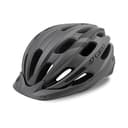 Giro Register MIPS Helmet MIPS rotational protection from a name that's made helmets forever, at a mainstream price. The pick if MIPS is your priority — a universal-fit lid with the safety tech and Giro's fit dialed in. | Best MIPS pick | $39.99 · View on Amazon Price as of October 31, 2026. #ad How we’re funded |
| 2 | 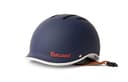 Thousand Heritage 2.0 Helmet The commuter helmet people actually keep wearing because it looks like a helmet you'd choose, not one you're forced into. A low-profile retro shell, a hidden pop-lock for your U-lock, and a magnetic light mount. | Best non-MIPS, if you will wear it | $99.00 · View on Amazon Price as of October 31, 2026. #ad How we’re funded |
| 3 | 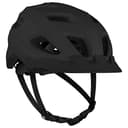 Retrospec Lennon Helmet with LED A commuter helmet with a rear LED safety light built in and a dial fit system, at a genuinely affordable price. The value pick — visibility and adjustable comfort without paying for a boutique brand. | Best budget, with a light | $39.99 · View on Amazon Price as of October 31, 2026. #ad How we’re funded |
| 4 | 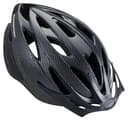 Schwinn Thrasher Adult Helmet The rock-bottom-price helmet that's still a real, certified helmet: lightweight microshell, 20 vents and a dial fit. No MIPS and no frills, but a certified lid beats no lid — and this is the cheapest way to that. | Cheapest certified |
The three helmets this decision actually comes down to
Four picks above, and they are deliberately not a ranking of MIPS quality — they are the four different answers to the question. The Giro Register MIPS is the one to buy if MIPS is the point: a mainstream helmet from a maker that has been doing this for decades, with the system named on the listing, at a price that does not punish you for wanting it.
The Thousand Heritage 2.0is on this page as the honest counterweight, and it is the pick we would defend hardest. It does not have MIPS — Thousand’s own lineup page labels MIPS only on its Chapter and Chapter+ models and simply does not claim it for the Heritage line. It is here because it is the helmet a certain reader will actually put on their head every single day, and the rotational system in the helmet you left in the hallway is worth exactly nothing. We wrote a full review of it, including what Thousand declines to publish.
The Retrospec Lennon and the Schwinn Thrasher are the budget end, and neither has MIPS. The Lennon puts its money into an integrated rear LED instead, which on a dark commute is a defensible place to spend it. The Thrasher is the cheapest route to a certified helmet, full stop. If your current situation is “no helmet”, the upgrade from nothing to a certified non-MIPS helmet is enormously larger than the upgrade from non-MIPS to MIPS, and anyone telling you otherwise is selling the wrong thing.
What MIPS is, in one paragraph
Inside a MIPS helmet there is a thin low-friction liner between your head and the foam, anchored so that the shell can rotate a small amount relative to your skull during an impact instead of gripping it and twisting your head with it. MIPS calls it “slip-plane technology”. The problem it addresses is real and specific: most bicycle crashes are not a clean vertical drop onto the crown. You hit the road at an angle, the shell catches, and some of that energy arrives at your brain as rotation rather than as a straight-line deceleration. Rotational motion is the mechanism most strongly associated with concussion, and it is the one a plain foam shell does least about.
What MIPS itself will and will not say
This is the part that changed how we write about it, and it comes from MIPS’s own website rather than from a critic. The company’s published claim is that “THE MIPS SYSTEM HAS BEEN DESIGNED TO REDUCE ROTATIONAL ENERGIES TO THE HEAD” “WHICH MAY LEAD TO BRAIN INJURIES” — their capitals. Read that carefully. It is a statement of design intent and a statement about a mechanism. It is not a claim of a measured injury reduction, and MIPS does not publish a percentage, a test figure, or even the number of millimeters the liner moves on the page that explains the system.
On the same page MIPS publishes its own limits, also in capitals: “NO HELMET OR IMPACT PROTECTION SYSTEM CAN PROTECT A USER FROM ALL INJURIES.” And it discloses a side effect most retail listings omit entirely: “SOME MIPS LOW-FRICTION LAYERS, ALONG WITH OTHER PARTS OF A HELMET, MIGHT CAUSE LACERATIONS TO THE WEARER’S SCALP”. We are repeating that because a buyer deserves to hear the manufacturer’s own caveats from someone who is going to earn a commission, not only from someone who is not.
So the honest position is narrower than either camp wants. MIPS is a reasonable engineering response to a real mechanism, sold by a company that is careful not to promise an outcome. It is not snake oil and it is not a safety upgrade with a number attached. If you have been waiting for a figure that justifies the premium, it is not on the maker’s site, and nobody who quotes you one is quoting MIPS.
The thing to check instead of the sticker
Here is the genuinely useful move, and it is the reason this page exists. The presence or absence of MIPS is a feature flag. An independent rating is evidence. Virginia Tech’s Helmet Lab publishes per-model bicycle helmet ratings using its STAR system, and its published method is exactly what you want: “We measure linear acceleration and rotational velocity for each impact, which are correlated to concussion risk”, across 24 impact tests per helmet at six locations and two impact energies. Its published guidance is to choose a helmet rated 4 or 5 stars, and it states that helmets earning more stars “are associated with lower concussion risk in these scenarios”.
That matters because rotational velocity is the thing MIPS exists to reduce, and Virginia Tech measures it per helmet — shell, fit system, liner and all — rather than crediting a component. A well-designed non-MIPS helmet can out-rate a poorly-designed MIPS one, and the star rating is where you would find out. Note what the lab does not do: its ratings page does not mention MIPS or any named rotational technology at all. It rates helmets, not features.
One honesty note, because it limits this advice: the lab rates a subset of the market, and a helmet without a published rating is not a bad helmet — it is an unrated one. Of the picks on this page, we are not quoting a star figure for any of them, because we are not going to attach a number to a model we did not confirm was tested. Look your own shortlist up before you buy. It is a free check that tells you more than the price does.
What certification already guarantees, and what it does not
Some context that reframes the whole question. Every bicycle helmet legally sold in the United States must already meet the mandatory CPSC standard, 16 CFR Part 1203. That is not a marketing badge — it is a floor, and the $25 helmet on the bottom shelf has to clear it just like the $250 one. You are not choosing between a safe helmet and an unsafe helmet. You are choosing between a certified helmet and a certified helmet with an extra system in it.
What the certification does not do is rate anything. It is pass or fail, so it cannot tell you that one compliant helmet is better than another compliant helmet — which is precisely the gap an independent star rating fills. (For transparency: we tried to fetch the regulation text itself on October 31, 2026 and the federal eCFR service refused our request, so no figure from the standard is quoted anywhere on this page. The source is listed so you can read it yourself.)
So: is MIPS worth it? Four straight answers
Yes, if the MIPS version is within about $20 of the one you wanted. At that margin it is a cheap hedge against a mechanism that is genuinely implicated in concussion, and there is no real argument for declining it. This is the common case in the commuter price band, and it is why the Giro leads the picks above.
No, if buying MIPS means buying a helmet you find ugly, hot, or annoying. This is not a soft, feelings-based caveat — it is the single highest-leverage fact in helmet buying. Helmet use is the variable with by far the largest effect on your outcomes, and a liner cannot help a helmet that is in your hallway. If the retro-looking non-MIPS helmet is the one that ends up on your head five mornings a week, buy that one and do not feel clever about it.
No, if you do not have a certified helmet at all yet. Spend the money on a certified helmet that fits properly, today. Come back to MIPS when you replace it.
Yes, and spend above it, if you ride a Class 3 e-bike in traffic. At sustained 20–28 mph the impact energies are higher, you are mixing with motor traffic rather than drifting along a path, and the weight penalty of a better-covered helmet is irrelevant on a bike with a motor. This is the one rider profile where we would tell you to prioritize the protection features over the looks, and where a deep-cut shell plus a rotational system plus a 4- or 5-star rating is worth real money. We go into the legal side of that in do you need a special helmet for an e-bike, and the short version is that no US statute requires anything beyond the CPSC floor — this is a choice, not a requirement.
Three things worth more than MIPS, in order
1. Fit. A helmet rocking loose on your head, or sat back off your forehead, is protecting a part of your skull you are unlikely to land on. The dial should be snug enough that the helmet stays put when you shake your head with the strap undone, and the front edge should sit roughly two fingers above your eyebrows. This is free and it outranks every feature on every listing.
2. Actually wearing it. Covered above, and we will say it once more because the category never does.
3. Replacing it after an impact.Expanded-foam liners work by crushing, which is a one-time event. A helmet that has taken a real hit has already spent its protection, even where the shell looks intact — and that is true with or without MIPS, because the slip-plane does nothing about foam that is already compressed. A helmet dropped onto a tile floor from handlebar height is a different and much less worrying case; a helmet that was on your head when you hit the road is finished.
And one spend that is arguably ahead of all of this, because it works on the crash instead of the impact: the grip under you. The most common way a commuter goes down is a wheel sliding on wet paint, wet leaves or ice, and a soft all-season compound addresses that directly in a way no helmet feature can. If your rubber is the original stock set, our commuter tire roundupcovers which of the three tire problems you actually have — and the grip one is the one nobody shops for until after the fall.
If you are shopping from scratch rather than resolving the MIPS question, the commuter helmet roundup is the page to start from, and the rest of the first-purchase order is in bike commuting essentials.
Frequently asked questions
Is MIPS worth it on a bike helmet?
Usually yes, if the MIPS version costs roughly $20 more than the helmet you already wanted. It addresses rotational motion, which is the injury mechanism most associated with concussion and the one a plain foam shell does least about, and at that price difference there is no real argument for declining it. It is clearly not worth it in two cases: if choosing MIPS means buying a helmet you find ugly or uncomfortable and therefore wear less, and if you do not own a certified helmet at all yet. In the second case buy any certified helmet that fits properly today - the gap between no helmet and a certified helmet is far larger than the gap between non-MIPS and MIPS.
What is the difference between MIPS and non-MIPS helmets?
A MIPS helmet has a thin low-friction liner between your head and the foam, mounted so the shell can rotate slightly relative to your skull during an angled impact rather than gripping it and twisting your head. MIPS describes it as slip-plane technology designed to reduce rotational energies to the head. A non-MIPS helmet has the padding sitting directly against the EPS foam. Both have to meet the same mandatory CPSC standard to be sold in the United States, so the difference is not certified versus uncertified - it is one extra system inside an already-certified helmet.
Does MIPS actually reduce concussions?
MIPS itself does not claim that, and we are not going to claim it on their behalf. Its published language is that the system has been designed to reduce rotational energies to the head, which may lead to brain injuries - a statement of design intent and mechanism, not of measured outcome. The same page states that no helmet or impact protection system can protect a user from all injuries. The mechanism it targets is real and well established in the injury literature, but if you want evidence about a specific helmet rather than about a component, look up that model's Virginia Tech STAR rating, which measures rotational velocity for the whole helmet.
How do I check whether a helmet is actually safe, not just certified?
Look up the model in Virginia Tech's Helmet Lab bicycle helmet ratings. It is the independent, publicly-funded lab that publishes a per-model rating rather than a pass/fail certification. Its method runs 24 impact tests per helmet at six locations and two impact energies, and it measures both linear acceleration and rotational velocity, which the lab states are correlated to concussion risk. Its own recommendation is to choose a helmet rated 4 or 5 stars. The useful part is that it rates the whole helmet, so a well-designed non-MIPS helmet can out-rate a poorly-designed MIPS one. Not every helmet on the market has been rated, and an unrated helmet is not the same thing as a bad one.
Are there any downsides to MIPS?
Three, and the first comes from MIPS itself: it publishes that some MIPS low-friction layers, along with other parts of a helmet, might cause lacerations to the wearer's scalp. That is the manufacturer's own disclosure and almost no retail listing repeats it. Second, MIPS versions cost more, and on a tight budget that money may do more good spent on a light or a lock. Third, the liner takes up a little internal space and some riders find the fit slightly different, which matters because fit outranks every feature. None of those is a reason to avoid MIPS if the price is close - they are reasons the answer is not automatically yes.
Does a commuter helmet need MIPS more or less than a sport helmet?
Arguably more, for a reason the marketing never mentions: commuting crashes tend to be low-speed, angled falls in traffic - clipped by a door, down on a wet painted line, over a pothole in the dark - and angled falls are exactly the geometry rotational systems address. The place we would prioritize it hardest is on a Class 3 e-bike, where you are sustaining 20 to 28 mph in motor traffic and the weight penalty of a better helmet is irrelevant because a motor is carrying it. No US statute requires anything beyond the CPSC floor on any e-bike class, so this is a choice rather than compliance.
Do I need to replace a MIPS helmet after a crash?
Yes, and the MIPS liner does not change that answer. Helmet foam protects by crushing, which is a one-time event, so a helmet that was on your head during a real impact has already spent its protection even if the outer shell looks undamaged - and a slip-plane does nothing about foam that is already compressed. Replace it. A helmet knocked off a table or dropped from handlebar height onto a floor is a much less worrying case and does not automatically need replacing. If you are not sure which happened, replace it anyway; a helmet is the cheapest thing in this comparison.
Sources
- Mips — What is Mips? — The manufacturer's own page. What it claims, in its own capitals: "THE MIPS SYSTEM HAS BEEN DESIGNED TO REDUCE ROTATIONAL ENERGIES TO THE HEAD" "WHICH MAY LEAD TO BRAIN INJURIES" — design intent, not a measured result. The technology is described as "slip-plane technology used by helmet manufacturers, which is what Mips safety system is all about". The page gives NO movement distance in millimeters and no test figures. Its own limitation language, also in capitals: "NO HELMET OR IMPACT PROTECTION SYSTEM CAN PROTECT A USER FROM ALL INJURIES." and "DO NOT WARRANT THAT AN INDIVIDUAL WHO SUFFERS A COLLISION, FALL, OR OTHER BLOW TO THE HEAD" is protected. It also discloses a known side effect: "SOME MIPS LOW-FRICTION LAYERS, ALONG WITH OTHER PARTS OF A HELMET, MIGHT CAUSE LACERATIONS TO THE WEARER'S SCALP" (accessed October 31, 2026)
- Virginia Tech Helmet Lab — Bicycle helmet ratings (STAR system) — The independent university lab that publishes a per-model rating rather than a pass/fail certification. Its published method: helmets are evaluated "using the STAR testing system"; "We measure linear acceleration and rotational velocity for each impact, which are correlated to concussion risk"; each helmet undergoes "24 impact tests" across six locations around the helmet at medium and high impact energies. Its published interpretation: "Helmets earning more stars are associated with lower concussion risk in these scenarios", and the lab recommends "choosing a helmet rated 4 or 5 stars". Cost shown alongside a rating is "the price of the helmet at the time of testing". The page does not mention Mips or any named rotational technology, and does not state how many helmets have been rated (accessed October 31, 2026)
- U.S. CPSC — Safety Standard for Bicycle Helmets (16 CFR Part 1203) — The mandatory U.S. bicycle-helmet standard every helmet sold in the country must meet (accessed July 23, 2026)
- Amazon — Giro Register MIPS Adult Recreational Helmet listing (ASIN B075RTGS5M) — The listing this site's price and buy link point at, resolved and confirmed "In Stock" via Creators getitems on 2026-10-31 after the previous ASIN (B0GGF1RZH2, Register MIPS II, Matte Black/Grey) went "Currently unavailable". The full title reads "Giro Register MIPS Adult Recreational Helmet - Matte Titanium - Size UA (54-61 cm)". It publishes the MIPS name, the universal-adult size range 54-61 cm and the colorway. It is the ORIGINAL Register MIPS, not the Register MIPS II, which is why our registry name was corrected from "Register MIPS II Helmet" to "Register MIPS Helmet". The listing publishes no weight, no vent count and no Virginia Tech star rating (accessed October 31, 2026)
- Thousand — Bike Helmets collection — Thousand's own lineup page, which labels MIPS by model: the "Chapter MIPS Helmet" at $149.95 and the "Chapter+ MIPS Helmet" at $174.95 are the models carrying the MIPS name. The "Heritage 2.0 Bike & Skate Helmet" ($99.95, or $104.95 in the Smiley and Keith Haring finishes), the "Heritage 1.0 Bike & Skate Helmet" and the "Thousand Jr. Kids Helmet" are not labeled MIPS on this page. Thousand does not state anywhere on the page that the Heritage models lack MIPS — it simply does not claim it for them (accessed October 24, 2026)
Keep reading
Best Commuter Bike Helmet
The full roundup, if you are shopping from scratch rather than resolving the MIPS question.
See the picksThousand Heritage 2.0 Review
The non-MIPS helmet people buy for the looks, and what Thousand declines to publish about it.
Read the reviewDo You Need a Special Helmet for an E-Bike?
The legal side: what California's Class 3 statute actually names, and what it does not.
Read the guideBike Commuting Essentials
Where a helmet sits in the buying order, against the lock, the lights and the bag.
Read the guide