Do You Need a Special Helmet for an E-Bike?
No. The only US statute that makes a helmet mandatory for an adult on an e-bike names the same CPSC or ASTM bicycle standard every helmet sold here already meets. What changes is not the certification — it is what you should want from the helmet.
How this is funded:we earn a commission if you buy through our links, at no extra cost to you. It never changes which product we recommend, and we’ll tell you when we’d skip one. Full disclosure.
No. A standard CPSC-certified bicycle helmet is what the law names, and every bicycle helmet legally sold in the United States already meets it. California’s Vehicle Code section 21213 — the one US rule that makes a helmet mandatory for an adult on an electric bicycle — requires a helmet meeting the standards of either ASTM or the US Consumer Product Safety Commission. That is the same federal standard, 16 CFR Part 1203, that governs the helmet on the shelf at any bike shop. There is no separate US e-bike helmet certification.
So the honest version of this question is not “which certification do I need” but “what should I want from a helmet now that I ride faster, in more traffic, more often?” If you want a single answer: the Giro Register MIPS, because a rotational-impact system matters in the kind of angled crash that actually happens and it costs very little extra.
What the law actually says
Two provisions are worth reading rather than paraphrasing, because this is the subject where internet summaries drift furthest from the statute.
California, section 21213(b):a person shall not operate a Class 3 electric bicycle, or ride on one as a passenger, on a street, bikeway or public bicycle path or trail “unless that person is wearing a properly fitted and fastened bicycle helmet that meets the standards of either the American Society for Testing and Materials (ASTM) or the United States Consumer Product Safety Commission (CPSC), or standards subsequently established by those entities.” Note three things: it is Class 3 only, it applies to riders of all ages, and the standard it names is the ordinary bicycle-helmet one. The same section also provides that a person under 16 shall not operate a Class 3 at all.
Federally, 16 CFR Part 1203:the CPSC’s mandatory safety standard for bicycle helmets, which every helmet sold in the US must meet. This is why “do I need a special helmet” has a slightly anticlimactic answer: the floor is already the standard the e-bike statute points at.
Beyond that, adult helmet requirements are set state by state and many states require helmets only below a certain age. Rules change, and we are not going to publish a fifty-state table we cannot keep current — check your own state’s current requirement, and if you ride a Class 3 in California, treat the helmet as mandatory.
The European standard, and why it is not your answer
You will see NTA 8776 mentioned in this discussion. It is a Dutch standard written for speed pedelecs— 45 km/h electric bikes — and helmets certified to it offer more coverage and are tested at higher impact speeds than bicycle helmets. It is a real standard and a sensible one for that vehicle.
It is also not a category that exists under the US three-class system, which caps assistance at 28 mph for a Class 3, and no US statute names it. So an NTA 8776 helmet is a legitimate choice if you want maximum coverage and can find one, and it is not something you are required to have or disadvantaged by lacking. Do not let a seller present it as a legal requirement.
What to look for instead
Since certification is a given, these are the four things that actually differ between helmets, in the order they matter for e-bike commuting.
1. A rotational-impact system (MIPS or equivalent). Real crashes are angled, not perpendicular, and these systems address the twisting component that a plain foam shell does not. It is the feature with the clearest rationale and it adds relatively little to the price.
2. Coverage, especially low at the back and sides.A deep-cut urban shell covers the temple and the occiput better than a heavily vented road helmet. At sustained 20–28 mph in traffic, that trade is worth making — and the weight penalty is irrelevant on a bike with a motor.
3. A fit system you will actually use. A rear dial you can turn one-handed, with gloves, while moving. Fit is the single largest variable in how much protection you get, and a helmet that is annoying to adjust ends up adjusted badly.
4. Ventilation and the honest question of whether you will wear it. A helmet left at home protects nobody. If a lighter, cooler, better-looking helmet is the one that ends up on your head every day, that is a legitimate reason to buy it — which is exactly why one of the picks below is ranked on that basis rather than on features.
Quick picks
Ranked on published specs, real security and safety standards, and buyer fit.We have not tested these products — here is exactly what we do instead.
| # | Product | Best for | Price |
|---|---|---|---|
| 1 | 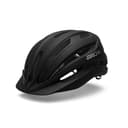 Giro Register MIPS II Helmet MIPS rotational protection from a name that's made helmets forever, at a mainstream price. The pick if MIPS is your priority — a universal-fit lid with the safety tech and Giro's fit dialed in. | Best for most e-bike riders | $84.95 · View on Amazon Price as of October 5, 2026. #ad How we’re funded |
| 2 | 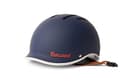 Thousand Heritage 2.0 Helmet The commuter helmet people actually keep wearing because it looks like a helmet you'd choose, not one you're forced into. A low-profile retro shell, a hidden pop-lock for your U-lock, and a magnetic light mount. | Best if you will actually wear it | $99.00 · View on Amazon Price as of October 5, 2026. #ad How we’re funded |
| 3 | 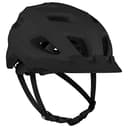 Retrospec Lennon Helmet with LED A commuter helmet with a rear LED safety light built in and a dial fit system, at a genuinely affordable price. The value pick — visibility and adjustable comfort without paying for a boutique brand. | Best budget | $39.99 · View on Amazon Price as of October 5, 2026. #ad How we’re funded |
| 4 | 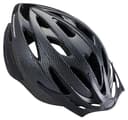 Schwinn Thrasher Adult Helmet The rock-bottom-price helmet that's still a real, certified helmet: lightweight microshell, 20 vents and a dial fit. No MIPS and no frills, but a certified lid beats no lid — and this is the cheapest way to that. | Cheapest certified |
Fit beats every feature on this page
A correctly fitted basic helmet protects you better than a premium one worn loose or tipped back, and the statute itself makes the point — California requires a helmet that is “properly fitted and fastened”, not merely present. Three checks:
- Level, two fingers above the eyebrows. If you can see the front rim in your upper vision, it is roughly right. Tipped back exposes the forehead, which is the part you land on.
- Side straps form a V under the ears and the buckled strap lets you fit no more than a finger between it and your chin.
- It does not move when you shake your head. Tighten the rear dial before you tighten the straps; the cradle does the holding and the straps stop it coming off.
Where the e-bike genuinely changes the calculation
Not the certification — the usage. Three things are different and they all point the same way:
Speed is sustained, not occasional. On an unassisted commuter you touch 20 mph going downhill. On a Class 2 you sit at it, and on a Class 3 you can hold 28. Impact energy rises with the square of speed, which is the technical reason coverage at the temple and the back of the head matters more on an e-bike than the weight of the shell does.
You ride in more traffic, more often.An e-bike removes the effort objection, so it gets ridden on days and routes a regular bike would not — in the rain, in the dark, up the hill with the bus lane. That makes visibility part of the helmet decision: a light-coloured shell and a rear light mount are worth more than they sound. The visibility argument in full is in best bike lights for e-bikes.
The bike is heavier.A 65–75 lb bike going down is a different event from a 22 lb one, particularly at low speed in a car park or when a foot does not reach the ground. That is an argument for actually wearing the thing on short trips, which is where most people take it off.
What about a helmet for a passenger or a child?
California’s section 21213 covers passengers explicitly: the helmet requirement applies to a person riding as a passenger on a Class 3 e-bike, and also to someone in a child seat attached to the bike or in a trailer towed by it. The same statute bars anyone under 16 from operating a Class 3 at all. If you are carrying children on an e-bike, the seat or trailer is the bigger decision and we work through it in bike commuting with kids.
For children generally, buy a helmet sized for a child rather than a small adult helmet — the cradle geometry differs — and replace it when they grow out of it rather than loosening it further.
Which class is your bike, actually?
This matters because the helmet requirement in California hangs entirely off the class, and listings are frequently unclear about it. A Class 1 is pedal-assist to 20 mph, a Class 2 adds a throttle to 20 mph, and a Class 3 is pedal-assist to 28 mph — all under a 750 W federal power limit. Plenty of Amazon e-bikes ship configured as Class 2 and can be unlocked to a higher speed through the display, which changes what rules apply to you without changing anything about the bike you bought. We go through all of it in e-bike classes explained and whether you need a licence.
General guidance, not professional advice. Chain & Charge is written by an enthusiast, not a bike mechanic, and we do not run a test lab. Laws, security ratings and specs change — verify your state’s current e-bike rules and a lock’s current security rating before you rely on them, and set any new gear up per the maker’s instructions.
Frequently asked questions
Do you need a special helmet for an e-bike?
No. California's Vehicle Code section 21213 — the one US rule that requires a helmet for an adult on an e-bike — specifies a helmet meeting "the standards of either the American Society for Testing and Materials (ASTM) or the United States Consumer Product Safety Commission (CPSC)". That is the same CPSC standard, 16 CFR Part 1203, that every bicycle helmet legally sold in the United States must already meet. So any helmet you buy from a reputable US retailer is legally sufficient for an e-bike. There is no separate US e-bike helmet certification to look for.
Do you legally have to wear a helmet on an e-bike?
It depends on your age, your state and the bike's class. Nationally there is no federal adult helmet law. In California, section 21213 requires a properly fitted and fastened helmet for anyone operating or riding as a passenger on a Class 3 electric bicycle regardless of age — and separately bars anyone under 16 from operating a Class 3 at all. Many states require helmets for riders under a specified age on any bicycle. Because the rules are set state by state and change, verify your own state's current requirement rather than relying on a general summary.
What kind of helmet do I need for an electric bike?
A CPSC-certified bicycle helmet, which is all of them sold legally in the US — so the choice is about fit and features, not certification. For e-bike commuting specifically we would prioritise four things: a rotational-impact system such as MIPS, since real crashes are angled rather than straight-on; more coverage at the back and sides than a vented road helmet offers; a fit system you can adjust one-handed; and enough ventilation that you keep wearing it in July. Speed and weight both argue for coverage over the lightest possible shell.
Is there an e-bike helmet standard?
Not in the US. There is a European standard — NTA 8776 — written for speed pedelecs, the 45 km/h class of electric bike that does not exist as a category under the US three-class system, and helmets certified to it are sold mainly in Europe. No US statute names it, and no US retailer requirement depends on it. If you see a helmet marketed as an "e-bike helmet" in the US, treat the claim as a description of its coverage and styling rather than a certification you are legally required to have.
Do I need a motorcycle helmet for a fast e-bike?
Not for anything that is legally an electric bicycle. The US three-class framework caps assistance at 28 mph for a Class 3 and 20 mph for Classes 1 and 2, with a 750 W federal power limit, and the statutes that govern those bikes name bicycle-helmet standards. If a vehicle exceeds those limits it may not be an electric bicycle at all in the eyes of your state, in which case motor-vehicle rules including helmet requirements can apply — which is one reason to read the actual class your bike is sold as rather than the top speed in the listing title.
Should I replace my bike helmet when I get an e-bike?
Only if the one you own is already due for replacement or does not fit well. A CPSC-certified helmet is a CPSC-certified helmet. The two genuine reasons to upgrade are age and damage — foam degrades and any helmet that has taken an impact is finished, even if it looks intact — and coverage, if your current one is a minimal vented road shell and you are now riding faster in traffic. Buying an e-bike is a reasonable prompt to check both, not an automatic reason to spend.
Sources
- California Vehicle Code § 21213 — Class 3 electric bicycles: age and helmet (via Public.Law) — Subsection (a): "A person under 16 years of age shall not operate a class 3 electric bicycle." Subsection (b): a person shall not operate or ride as a passenger on a class 3 electric bicycle on a street, bikeway or public bicycle path "unless that person is wearing a properly fitted and fastened bicycle helmet that meets the standards of either the American Society for Testing and Materials (ASTM) or the United States Consumer Product Safety Commission (CPSC), or standards subsequently established by those entities" — the same CPSC standard that already governs every bicycle helmet sold in the US, with no separate e-bike helmet standard named (accessed October 6, 2026)
- U.S. CPSC — Safety Standard for Bicycle Helmets (16 CFR Part 1203) — The mandatory U.S. bicycle-helmet standard every helmet sold in the country must meet (accessed July 23, 2026)
- PeopleForBikes — Electric bike policies and laws — The 3-class e-bike system (Class 1 pedal-assist to 20 mph, Class 2 throttle to 20 mph, Class 3 pedal-assist to 28 mph) and the 750W federal power limit (accessed July 23, 2026)
Keep reading
Best Commuter Bike Helmets
The full helmet ranking, with what MIPS, coverage and fit systems are actually worth.
See the picksE-Bike Classes Explained
Class 1, 2 and 3 — what each one permits, and why the class decides which rules apply to you.
Read the guideHow Fast Do Electric Bikes Go?
The legal caps, the listing claims that exceed them, and what you will actually average.
Read the guideBest E-Bikes for Beginners
If you have not bought the bike yet, start here — step-through frames, simple controls, removable batteries.
See the picks