Are Panniers Worth It?
For anyone riding more than about fifteen minutes with a load: yes, and it is not close. The load comes off your back, which fixes the complaint that stops most people commuting by bike.
How this is funded:we earn a commission if you buy through our links, at no extra cost to you. It never changes which product we recommend, and we’ll tell you when we’d skip one. Full disclosure.
Short answer: yes, if you ride more than about fifteen minutes with anything to carry, and the reason has almost nothing to do with capacity. It is that the weight comes off your back. Our pick for a first pair is the value roll-top pair in the table below; if you only ever carry one bag’s worth, buy a single 27 L bag instead and save the money.
The argument people expect here is about volume — panniers carry more than a backpack. That is true and it is not the point. A 20 liter backpack and a 20 liter pannier hold the same things. The difference is where the load sits. A pack rides against your spine, against the one part of your body with the least airflow, and it is the main reason people arrive at work hot and damp on a ride that was not physically hard. Move the same weight onto the rack and the problem goes away, which is why “how do I not arrive sweaty” is usually a carrying question rather than a fitness question.
There is a second, quieter benefit. Weight on a rear rack sits low and close to the rear axle, so a loaded pannier changes how a bike handles far less than the same weight on your shoulders changes how you handle. A heavy pack raises your center of gravity and moves with every steering input. The bike does not care.
Who should not bother
Three groups, honestly. If your commute is under about ten minutes and you carry a laptop, a backpack is fine and you will not notice the heat. If your trip is multi-modal— bike then train, or bike then a long walk — a pack that comes with you beats a bag that lives on a rack. And if your bike genuinely cannot take a rack, panniers are not an option at any price.
Everyone else: the question is not whether to buy panniers but how much to spend, and that is where the second half of this page comes in. Below are three bags covering the three honest price tiers, with today’s live prices. Underneath, exactly what the extra money buys on a premium pair, the case against, and how to spend as little as possible without buying the wrong thing twice.
Quick picks
Ranked on published specs, real security and safety standards, and buyer fit.We have not tested these products — here is exactly what we do instead.
| # | Product | Best for | Price |
|---|---|---|---|
| 1 | 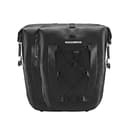 RockBros Waterproof Panniers (2-Pack, 30L) Most of the Ortlieb's waterproofing at a fraction of the price: a roll-top pair rated to 30L that shrugs off rain and doubles as a shoulder bag. The value pick for wet-weather commuting. | Best first pair | $103.99 · View on Amazon Price as of October 21, 2026. #ad How we’re funded |
| 2 | 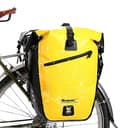 Rhinowalk Waterproof Pannier 27L A single 27L waterproof pannier that carries a laptop and converts to a shoulder bag for the walk into the office — the one-bag commuter's pick when you don't need a matched pair. | Best single bag | $49.99 · View on Amazon Price as of October 21, 2026. #ad How we’re funded |
| 3 | 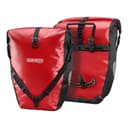 Ortlieb Back-Roller Classic Panniers (Pair) The waterproof pannier every other pannier is measured against: a fully welded, roll-top pair (40L total) that keeps a laptop dry in a downpour, on the QL2.1 hooks that click on and off in a second. | Best buy-once pair | $199.00 · View on Amazon Price as of October 21, 2026. #ad How we’re funded |
Where the money actually goes on a premium pair
“Why are panniers so expensive” is a fair question, and it has three concrete answers rather than a brand story.
Welded seams instead of stitched ones. A fully welded roll-top body has no stitch line, so there is nothing for water to wick through and no step for you to forget. A stitched roll-top is dry in rain and eventually damp in a sustained downpour, because every needle hole is a path. This is the single clearest difference between the price tiers, and it is visible on the listing rather than being a matter of opinion.
An engineered mount instead of generic hooks.On the premium pair the hooks are a designed quick-release system that clicks on and locks down; on a budget bag they are formed metal or plastic that hangs over the rail. Both work when new. The difference shows up on a pothole with 10 kg in the bag, and in whether the hardware is still intact in year five.
Service life.A benchmark pair is a ten-year purchase for a daily commuter; a budget pair is a three-to-five-year purchase. Per year, the gap narrows a lot — which is the honest reason to buy the expensive ones if you already know you will still be riding in five years, and the honest reason not to if you are finding out whether you like this.
The case against panniers, stated fairly
Three situations where we would not tell you to buy them.
Your commute is multi-modal.If the bike is one leg of a trip that also involves a train, a bus or a long walk, a backpack is simply the better container — it comes with you, it goes under a seat, and it does not sit on a rack while you are elsewhere. The honest comparison is in panniers vs backpack.
Your bike cannot take a rack. Some frames genuinely cannot, and adapters only go so far. That is what carrying things without a rack exists for.
Your load is tiny and your stops are frequent.If you carry a lock, a phone and a lunch, and you park five times a day, a basket or a small rack-top bag is less faff — nothing to unclip, nothing to carry. We argue that out in basket vs pannier and panniers vs trunk bag.
How to spend the least and still get it right
- Buy one bag, not a pair, unless you shop by bike. This is the biggest saving available and it is also the better product for most commutes. Sizing is worked through in what size panniers do I need.
- Buy the rack first and buy it properly.The rack is the part everything else depends on, it is cheap, and a bad one ruins good bags — best rear bike racks.
- Spend on waterproofing only if you ride in rain.If you ride in genuinely wet weather most weeks, welded seams are worth the money. If you ride in a dry climate, they are not, and the budget roll-top is the right answer — best budget panniers.
- Check it has a shoulder strap. A bag you can carry off the bike is a bag that comes inside with you. A pannier mount is not a security device, and quick-release hardware releases for anyone.
- Read reviews for the hooks, not the fabric. At the low end, mounting hardware is where failure lives.
What panniers are actually replacing
It is worth naming the comparison honestly. For most people shopping for panniers, the real alternative is not a cheaper bag — it is driving. A pannier is the difference between “I could ride to work but I need to bring things” and riding to work. Set against the running cost of the car trips it displaces — AAA’s annual Your Driving Costs report is the usual source of record for what a mile in a car actually costs once depreciation, insurance and maintenance are counted, and we work through those numbers in e-bike vs car cost — even a premium pair is a short payback.
That is also the reason we lead with the value pair rather than the benchmark one. The purchase that matters is the first one, because the first one is what decides whether the habit sticks. If you want the full argument for riding instead of driving, it is in is bike commuting worth it and how to start bike commuting.
Frequently asked questions
Are bike panniers worth it?
For a commute longer than about fifteen minutes with anything to carry, yes, and the reason is not capacity — it is that the weight comes off your back. A backpack presses against the one part of you with the least airflow, which is why arriving sweaty is substantially a backpack problem rather than a fitness problem. Panniers also put the load low and near the axle, where it barely affects handling, and they make a rack worth having for everything else you will eventually carry. The honest exception is a short, light, multi-modal commute, where a pack you can walk away with may genuinely win.
Why are panniers so expensive?
On a premium pair you are paying for three specific things, and you can see all three on the listing. First, welded rather than stitched seams: a fully welded roll-top body is waterproof because of what it is, with no stitch line for water to wick through. Second, an engineered mounting system rather than generic hooks, which is what stops a loaded bag working itself off a rack. Third, materials and hardware chosen to last a decade of daily use. A budget roll-top pair gets you most of the waterproofing for a fraction of the money, with the seams as the acknowledged weak point in a sustained downpour.
Are cheap panniers any good?
The good budget bags are genuinely good, and the bad ones fail in a predictable place: the mounting hardware. A cheap roll-top body made of coated fabric keeps rain out well enough for most commutes. Cheap hooks, by contrast, are the part that rattles loose, cracks in cold weather, or quietly scratches through your rack's finish. So if you are buying at the low end, read the reviews for the words hooks, clips and mount rather than for waterproofing, and expect to replace the bag in a few years rather than a decade.
Do I need a rack to use panniers?
Yes, and fitting one is the cheapest meaningful upgrade in commuting. Panniers hang from a rear rack's side rails, so no rack means no panniers. Most commuter, hybrid and touring frames have fender and rack eyelets; frames that genuinely cannot take a rack — some full-suspension bikes, a few carbon road bikes — narrow your options to a handlebar bag, a frame bag, a seat pack or a backpack. The rack is also what makes a trunk bag, a child seat and a grocery run possible later, so it is rarely money spent on one purpose.
Are panniers universal, or do I need a matching rack?
Most panniers hook over the top rail of a standard rear rack, so most bags fit most racks — but there are three real compatibility traps. Hook spacing has to match your rack's rail positions. Hook diameter has to match the rail's tubing thickness, and some cheap hooks will not open wide enough for fat e-bike tubing. And rail-system bags — the brand-specific rack-top ones — only click onto that brand's rack and nothing else. Check all three before you buy; our rack and pannier compatibility guide walks through each one.
Pannier or backpack for commuting?
Pannier for almost anyone riding more than fifteen minutes, because the load moves from your spine to the bike and your back stays dry. The case for a backpack is real but narrow: it walks into a meeting, it goes on a train, and it cannot be stolen off a rack while you lock the bike up. If your commute is multi-modal, or you park somewhere you would not leave a bag, the pack may win on balance. Many commuters end up with both and use the pack only on the days the bike is not the whole journey.
Sources
- AAA — Your Driving Costs (2025) — AAA's annual study of the total cost to own and operate a new vehicle, with cents-per-mile figures by vehicle type (accessed July 23, 2026)