What an e-bike actually changes
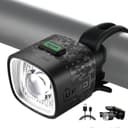
1. Reaction distance, not brightness for its own sake.The useful question is not “how many lumens” but “how far ahead can I see, and how long does that give me?” At 12 mph you cover about 18 feet a second; at 20 mph, about 29; at a Class 3’s 28 mph, about 41. The pool of light does not grow to match. That is why the two 1,100–1,200 lumen headlights lead this page while the lower-output cut-off light sits fifth: it is an excellent light for a lit street and the wrong light for a dark one at speed. If your whole route is streetlit, read how many lumens you actually need before you overspend here.
2. Weather exposure. This is the criterion e-bike buyers under-weight most, because it only bites in month four. An e-bike removes the effort argument against riding in the cold and the wet, so the bike does more winter miles than a regular bike would, and the light either survives that or it fails quietly — usually as a charge port that stops seating properly. Three of the five picks publish a rating that contemplates jets or immersion; two publish none at all. We have a whole page on what those ratings mean and which lights carry them.
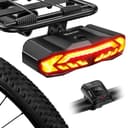
3. The rack.If your e-bike came with a rear rack — most budget commuters and nearly every fat-tire folder do — you can mount a rear light that no road bike can take. The WSDCAM unit below is the example: a rack-mounted tail light with a wireless remote for turn signals, a brake light and a built-in alarm. On a seatpost that is a silly product. On a rack behind a 65–75 lb e-bike that gets ridden in traffic, signalling a left turn without taking a hand off the bars is a real gain.
The specs, side by side
Every row below is read from the maker’s published listing. Where a maker does not publish a figure, the cell says so rather than guessing.
| Light | Front / rear | Output (listed) | Water rating | Mount |
|---|
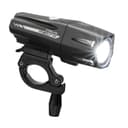
| Cygolite Metro 1100 Pro | Front | 1,100 lumens | IP67 | Hard bar mount |
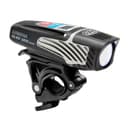
| NiteRider Lumina OLED Boost 1200 | Front | 1,200 lumens | IP64 | Bar mount, OLED runtime screen |
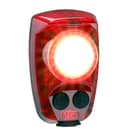
| Cygolite Hotshot Pro 200 | Rear | 200 lumens | IP64 | Hard seatpost mount |
| WSDCAM Smart Tail Light | Rear | Not published | Not published | Rear cargo rack only |
| Magicshine URBO FL | Front | Not published (cut-off beam) | IPX6 | Quick release, 48 g |
The law is stricter for e-bikes in at least one state
This is the part most e-bike light guides miss. California amended its bicycle lighting statute effective January 1, 2026, and an electric bicycle there must now carry the rear red device at all hours — not only after dark, the way a regular bicycle must. If you ride in California, a tail light that switches itself on is not a convenience, it is how you comply without thinking about it. The full statutory detail is on our California bike light laws page, and the general picture is in bike light laws by state.
Front and rear are different jobs
A front light does two jobs that pull in opposite directions: throwing light far enough down the road for you to see, and being conspicuous to a driver pulling out of a side street. A rear light does only the second job, which is why 200 lumens at the back is a serious light and 200 lumens at the front is not. If you only buy one thing after reading this, buy the rear light — you are far more likely to be hit from behind or by a car that failed to see you than to crash into something you could not see. We argue that case properly in be seen vs see.
Both of our front picks have a daytime flash mode, and on an e-bike we would run it. Daylight is when most commuting happens and when most car-bike collisions happen, and a flashing front light at 20 mph closing speed is specifically good at making a left-turning driver revise their estimate of how fast you are arriving. The honest counter-argument — flash is worse for being located precisely, and can be unpleasant on a dark shared path — is in flashing vs steady.
What we would skip
Wheel lights and frame light strips. They look like safety and are decoration. Nothing about a spoke light helps a driver judge your closing speed, and the battery and charging overhead buys you nothing a $20 tail light does better.
A headlight bought only on lumens.Beam shape decides whether the light lands on the road or in an oncoming rider’s eyes, and the number on the box says nothing about it. See lumens vs lux for why.
Replacing an e-bike’s factory-wired light with a wired aftermarket one. The connector, voltage and controller behaviour are specific to the bike and usually undocumented. Add a self-contained light instead and keep the warranty.
Relying on reflectors.They are a legal minimum and a genuinely useful backup, and they do nothing until someone’s headlights are already pointed at you — reflectors vs lights has the full argument.