How to Store an E-Bike
Store the battery separately, indoors, at room temperature — and never charge it unattended. Then solve the bike, which is a 70 lb theft target that may not fit through your door.
How this is funded:we earn a commission if you buy through our links, at no extra cost to you. It never changes which product we recommend, and we’ll tell you when we’d skip one. Full disclosure.
Take the battery off the bike, keep it indoors at room temperature, and charge it only while you are awake and at home.That one habit covers the expensive part, the fragile part and the genuine fire risk at the same time. Then store the bike itself somewhere dry, locked to something immovable if it is not behind a locked door — and if it lives outside, a Sold Secure Diamond-grade lock like the Kryptonite New York Fahgettaboudit Miniis the tier the bike’s value justifies.
An e-bike is a different storage problem from a bicycle in three ways. It is heavy— 50 to 75 lb on a typical commuter, which rules out most of the wall hooks and ceiling hoists people use for bikes. It is valuable and obvious, so it attracts a kind of theft a ten-year-old hybrid does not. And it contains a large lithium-ion battery, which has handling rules of its own that have nothing to do with bicycles.
The battery comes first
If your bike has a removable battery — most commuter e-bikes do, and it is one of the reasons to buy one that does — take it out and store it separately. Indoors, at normal room temperature, away from furnishings and bedding, and not in an entrance, hallway or stairwell you would need in order to leave the building.
On charging, the CPSC publishes guidance for micromobility products and it is worth quoting rather than summarising. Follow the manufacturer’s instructions for proper charging and unplug the device when done. Always be present when charging micromobility products. Never charge them while sleeping or when you are not at home. Only use the charger provided with or recommended by the manufacturer. CPSC adds the reason plainly: it has seen many lithium-ion battery home fires and deaths happen at night while batteries were charging and families were asleep.
That rules out the habit most people default to, which is plugging the bike in when they get home and leaving it overnight. It does not have to be inconvenient: a typical commuter battery charges in a few hours — Heybike publishes 5 to 7 hours for a full charge on the Mars 3.0, with a 2 A charger — which fits inside an evening.
On what charge level to store it at, read your own manual. Makers differ, and this is a figure we are not going to publish on your manufacturer’s behalf. What is safe to say generally: do not store a battery deeply discharged for months, do not leave it on a charger indefinitely, and check on it periodically rather than forgetting about it for a season.
Then the bike: three situations
Indoors, in a house or garage.The easy case. Keep it somewhere dry rather than somewhere merely out of sight — an unheated garage is fine, a damp shed is where cables and bearings go to die. On the floor on a stand is better than on a hook for anything this heavy; if you do hang it, the mount needs to be rated for the weight and anchored into a stud.
In an apartment.The hard case, and the reason folding e-bikes sell so well: a folder is a cupboard-sized object rather than a hallway-sized one. If your bike does not fold, the workable arrangement is a floor stand in a corner with the battery charging elsewhere in the flat. Shared bike rooms deserve a specific warning — they are convenient and they are a known theft location, because the bikes sit in a predictable place for predictable hours. Lock the bike inside the room.
Outside.The compromise case, covered properly below. The short version: battery indoors every night regardless, a lock matched to the bike’s value, and an acceptance that the display, the charge port, the connectors and the cables will age faster than they would under cover.
What to look for in the hardware
If the bike is not behind a locked door, the storage question becomes a security question, and three things matter. Lock grade— Sold Secure rates locks Bronze through Diamond, and Diamond is the tier whose test involves an angle grinder, which is the tool that actually takes bikes now. Something immovable to lock to— a ground anchor or a wall anchor in a garage or shed turns a lock from a nuisance into a real obstacle; a lock around a wheelie bin is theatre. And a detection or recovery layer— a motion alarm for a shed or garage, where noise at 3 a.m. is actually useful, and a tracker for afterwards. Neither replaces a lock, and both earn their place on a bike that sits in one predictable spot. The four picks below are the registry products that cover those three jobs.
Quick picks
Ranked on published specs, real security and safety standards, and buyer fit.We have not tested these products — here is exactly what we do instead.
| # | Product | Best for | Price |
|---|---|---|---|
| 1 | 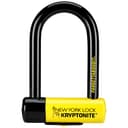 Kryptonite New York Fahgettaboudit Mini U-Lock The heaviest-duty U-lock most commuters can practically carry: an 18mm hardened shackle that Kryptonite rates 10/10, the closest thing to grinder-resistance in a lock you can still fit in a bag. | Best for outdoor storage | $179.95 · View on Amazon Price as of October 5, 2026. #ad How we’re funded |
| 2 | 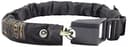 Hiplok Gold Wearable Chain Lock A Sold Secure Gold chain you wear around your waist like a belt, so the weight rides on your hips instead of your bag. The clever answer for riders who hate carrying a chain but want chain-level security. | Best for a shared bike room | |
| 3 | 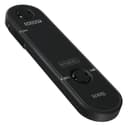 Knog Scout Bike Alarm & Finder The one device here that does both jobs — an 85 dB motion alarm that makes a thief stop and look around, plus Apple Find My so the same unit helps you get the bike back if they carry on anyway. | Best alarm for a shed or garage | |
| 4 |  Apple AirTag (2nd Generation) The default bike tracker for anyone on an iPhone, because the thing that finds it isn't the tag — it's the enormous Find My network of other people's Apple devices quietly reporting its location as it passes them. | Best recovery backup |
Storing it outside, if you have no choice
Plenty of people have no indoor option, so here is the honest version rather than “don’t”:
- The battery still comes inside.Every night. This is non-negotiable and it is the single biggest thing you can do — it removes the most valuable, most weather-sensitive and most theft-attractive component from the equation, and it means a stolen bike is a stolen bike rather than a stolen bike plus a battery.
- Lock it as if it were on the street.To something immovable, through the frame and rear wheel, with a lock rated for what the bike is worth. A bike stored in one predictable place every night is a bike a thief can plan around, which is the opposite of street parking. Sold Secure’s Diamond grade is the tier that involves an angle-grinder test — the detail is in security ratings explained.
- Use a breathable cover, not a tarp. A sealed plastic sheet traps condensation against the bike and accelerates exactly what you were trying to prevent.
- Cover the charge port and the display. These are the components that fail from weather, long before the frame shows anything.
- Add a tracker and expect to need it.A tag is a recovery tool, not a deterrent, and it is the honest layer to add when the bike lives somewhere you cannot watch — see bike anti-theft devices.
Winter storage, step by step
If the bike is going away for a season rather than being ridden through it:
- Clean and dry it properly. Road salt is the real enemy and it keeps working all winter on a bike that was put away dirty.
- Lubricate the chain so it does not surface-rust in place.
- Inflate the tires to pressure. A tire stored soft sits compressed on one spot of sidewall for months.
- Remove the battery and bring it indoors. Room temperature, away from anything flammable, charged in line with your manual rather than a number off the internet.
- Check on it monthly. Both the battery and the tires. Four months of being forgotten is how a battery ends up deeply discharged.
Before you commit to storing it, though, ask whether you should. An e-bike is genuinely usable in winter and the obstacles are tires, lighting and layers rather than the bike itself — bike commuting in winter and winter commuting gear cover the actual fixes. The strongest argument for riding through is that a bike stored for four months needs more work in March than a bike ridden all year does.
What not to do
Do not charge in an entrance, a hallway or a stairwell. That is the route you would use to get out, and it is the one place a charging battery should never be.
Do not use a non-approved replacement pack.CPSC’s wording is unambiguous: only a pack tested and approved to work safely with your device and confirmed suitable by the device manufacturer, and never one modified or reworked by unqualified personnel or built from repurposed cells.
Do not store a damaged battery indoors.Swelling, a smell, heat or discolouration means stop using it. Do not put it in the trash or general recycling either — CPSC directs lithium batteries to a battery recycler or hazardous waste collection centre.
Do not hang a 70 lb bike on a drywall hook. Into a stud, with hardware rated for the weight, or onto the floor.
Do not assume the bike room is safe.Shared building and campus bike rooms are a well-known theft location precisely because the bikes sit there for predictable hours. Lock inside the room — best e-bike locks is the honest spend-tier argument for a bike worth four figures.
General guidance, not professional advice. Chain & Charge is written by an enthusiast, not a bike mechanic, and we do not run a test lab. Laws, security ratings and specs change — verify your state’s current e-bike rules and a lock’s current security rating before you rely on them, and set any new gear up per the maker’s instructions.
Frequently asked questions
How should you store an e-bike battery?
Take it off the bike where the design allows it and keep it indoors at normal room temperature, away from anything flammable and away from a doorway or stairway you would need to escape through. For charging, the CPSC's guidance is explicit: follow the manufacturer's charging instructions and unplug when done, always be present while charging, never charge while asleep or away from home, and only use the charger provided with or recommended by the manufacturer. For storage charge level, follow your own manual — makers differ and we are not going to publish a percentage your manufacturer may contradict.
Can you store an e-bike outside?
You can, and you should treat it as a compromise rather than a plan. Two separate problems: theft, because an e-bike is a high-value target that is hard to hide, and weather, which attacks the display, the charge port, the connectors and the brake and shifter cables rather than the frame. The practical version is the battery indoors every night, the bike locked to something immovable with a lock rated for its value, and a cover that breathes. If outdoors is permanent, budget for a Sold Secure Diamond-grade lock and expect to replace cables and bearings sooner than you would otherwise.
How do you store an e-bike for winter?
Clean and dry it, lubricate the chain so it does not surface-rust, inflate the tires to pressure so the sidewalls are not sitting compressed, remove the battery and keep it indoors at room temperature, and store the bike somewhere dry rather than somewhere cold-and-damp — an unheated garage is better than a shed, and indoors is better than both. Check on the battery periodically rather than forgetting it for four months, and charge it in line with the manufacturer's instructions when you do. Then be realistic about whether you actually need to store it at all: winter commuting is a tire and lighting problem more than a bike problem.
Is it safe to charge an e-bike indoors?
It is where charging should happen, done properly, and the CPSC's own guidance assumes an indoor domestic setting. The specific rules that matter: be present while it charges, never charge while asleep or when you are not at home, unplug when it finishes, and use only the charger supplied or recommended by the maker. Keep the charging battery away from furnishings and bedding and not in the path you would use to leave the building. Never use a replacement pack that has not been approved for your device, and never a pack reworked by anyone unqualified or built from repurposed cells.
How do you store an e-bike in an apartment?
The three things that actually solve it are a folding bike, a wall or floor stand, and the fact that the battery comes out. A folding e-bike turns an awkward hallway object into a cupboard object, which is why folders are so heavily represented in apartment commuting. If your bike does not fold, a floor stand in a corner with the battery charging elsewhere in the flat is the usual arrangement — be cautious about wall hooks, because a 70 lb bike needs a mount rated for the weight into a real stud, not drywall. Shared bike rooms are convenient and are also a known theft location, so lock the bike inside the room as if it were on the street.
Should you leave an e-bike plugged in overnight?
No. CPSC guidance is to be present while a micromobility battery charges and never to charge one while asleep or when away from home, and it notes that many lithium-ion battery home fires and deaths have happened at night while batteries were charging and families were asleep. Charge it in the evening while you are up, unplug it when it finishes, and leave it unplugged until the next ride. On a typical commuter battery a full charge takes a few hours — the maker's figure for the Heybike Mars 3.0, for example, is 5 to 7 hours — so it fits comfortably into a waking evening.
Sources
- U.S. CPSC — Micromobility Information Center — CPSC's consumer guidance for e-bikes and other micromobility products: "Follow the manufacturer's instructions for proper charging and unplug the device when done"; "Always be present when charging micromobility products. Never charge them while sleeping or when you are not at home"; "Only use the charger provided with or recommended by the manufacturer"; only use a replacement battery pack "tested and approved to work safely with your device" and confirmed by the device manufacturer; never use a device with a pack "modified or reworked by unqualified personnel or with repurposed or used cells"; "Never throw lithium batteries into the trash or general recycling. Instead, take them to your local battery recycler or hazardous waste collection center." CPSC notes it has "seen many lithium-ion battery home fires and deaths happen at night while batteries were charging and families were asleep" (accessed October 6, 2026)
- Heybike — Mars 3.0 product page and specifications — Heybike's published specification table for the Mars 3.0: rear hub motor 750W sustained / 1400W peak with 95 N.m torque, 624Wh removable battery, up to 65 miles max range, torque sensor, 6061 aluminum folding frame with rear rack and fenders included, 65mm coil suspension fork with hydraulic lockout plus Horst Link rear suspension, 20 x 4.0 puncture-protection fat tires, Shimano Altus 8-speed, half-twist throttle, TFT display with NFC start-up, front light with horn and tail light with brake and turn signals, 32 kg / 70 lbs, 440 lbs maximum combined rider and cargo weight with the rear rack rated to 100 lbs, folded 38.2 x 19.7 x 33.1 in, unfolded 66.9 x 25.6 x 52.0 in, 2A / 54.6V charger with a 5-7 hour full charge, UL 2849 and UL 2271 certification, 2-year warranty and a 14-day trial. The page markets an IP65 water-resistance rating while its own FAQ answer states IPX5 (accessed September 26, 2026)
- Sold Secure — Ratings explained — The Bronze / Silver / Gold / Diamond lock ratings and what each attack test involves, including the Diamond angle-grinder test (accessed July 23, 2026)
Keep reading
E-Bike Maintenance
What actually needs doing and how often — the routine that makes a stored bike easy to bring back.
Read the guideE-Bike Battery and Range
What moves the range figure, how capacity ages, and what the Wh number on your bike means.
Read the guideBest E-Bike Locks
A heavier, more valuable bike needs a different lock tier. The spend argument, by security grade.
See the picksBest Folding Electric Bikes
The real answer to the apartment storage problem, if you have not bought the bike yet.
See the picks