How we picked
One hard filter and three tie-breakers.
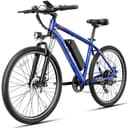
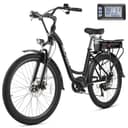
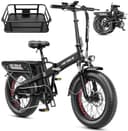
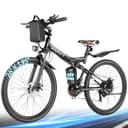
1. The listing has to say the battery is removable. This is the filter, and it eliminated two of the six commuter e-bikes we cover. A photograph that looks like a slide-out pack is not a published spec, and a battery that is bolted into a down tube is a completely different ownership experience from one that lifts out on a key. Of the bikes on this site, four publish removability and two do not.
2. Watt-hours, where the maker publishes them.Two of these four publish a capacity figure — 624 Wh for the Mars 3.0 on Heybike’s own spec page, and a 48 V / 499 Wh system for the ANCHEER. The other two publish a motor figure and no watt-hours, which is normal at this price and worth knowing before you shop on range claims. Our battery and range guide explains why the headline mileage is always the best case.
3. Can you carry the pack up a flight of stairs? The point of a removable battery is defeated if removing it is a two-handed wrestle. Smaller packs are easier, which is one of the few places where the cheap bike wins.
4. Does the bike make sense without the battery in it? A removable pack means you will sometimes ride, push or store the bike with the battery out. An upright commuter is fine like that. A 70-pound fat-tire folder is still 60-odd pounds of bicycle.
The specs, side by side
| Bike | Battery (listed) | Removable | Type | Motor (listed) |
|---|
| Jasion EB5 | Capacity not published | Yes, published | 26 in upright commuter | 1000 W peak |
| ANCHEER 48V City | 48 V, 499 Wh | Yes, published | 26 in city, non-folding | Not published |
| Heybike Mars 3.0 | 624 Wh (Heybike) | Yes (Heybike) | Folding fat-tire | 750 W, 1400 W peak |
| Vivi Folding | Capacity not published | Yes, published | Folding, small wheel | 749 W peak |
Two of these four publish no watt-hour figure at all, and that is the honest state of the budget end of this market. It is also why we will not rank this category on range: a motor wattage tells you about hills, not miles. If an exact capacity decides your purchase, ask the seller before you buy and get the answer in writing.
The two bikes here that do not publish it
The Gotrax Dolphin and the Heybike Ranger 2.0 are both bikes we recommend elsewhere — the Dolphin is our step-through pick in best step-through e-bikes and the Ranger is our climber in best e-bikes for hills. Neither listing states that the battery is removable, so neither appears here. That is not a claim that the packs are fixed; it is a refusal to promise you a feature on a photograph. If the removable pack is the thing you are buying, confirm it with the seller before you order either one.
What a removable battery actually buys you
Charging where you live.This is the big one. A removable pack charges on a kitchen counter, a desk or a workbench — somewhere with a smoke alarm and somewhere you walk past. The CPSC’s micromobility guidance is blunt about the habits that matter: use the charger that came with the device, do not charge unattended overnight, and keep the pack away from exits and anything flammable. None of that is possible if the battery is welded into a bike chained to a bollard outside.
Winter.Lithium packs do not like being stored cold, and a pack left at freezing for three months comes back with less capacity than it went in with. A removable battery turns “where do I keep the bike all winter” into “the bike goes in the shed, the battery goes in the closet”. Our full routine for that is in how to store an e-bike.
Theft.A battery is the densest value on an e-bike and the easiest high-value part to walk away with. Taking it inside removes the prize and leaves a heavy bike nobody wants to pedal. It is the cheapest anti-theft measure available, and it stacks with the lock rather than replacing it — see how to secure an e-bike battery for the locks, alarms and trackers that handle the times you cannot take it with you.
And one thing it does not buy: a second battery is not automatically available, cheap or still being made in three years. Removable does not mean standardized. Before you plan a commute around a spare pack, check that the seller actually sells one for your exact model.
What to check on a listing before you buy
- The word “removable” in the specification, not the marketing copy.Budget e-bike listings recycle text between models; the Mars 3.0 listing we read had bullet copy describing the previous generation. Treat the maker’s own spec page as the figure of record.
- Whether it locks in. A pack that lifts out without a key is a pack anyone can lift out. Most commuter e-bikes key the battery to the frame; confirm yours does.
- Whether it charges off the bike. A removable battery that only charges while mounted solves the storage problem and not the charging one. Look for a charge port on the pack itself.
- Watt-hours, not miles.Volts times amp-hours gives you watt-hours, which is the only comparable number. A 48 V 13 Ah pack is 624 Wh regardless of what the range claim says.
- What the pack weighs.Rarely published at this price, and it decides whether “I’ll take it upstairs” survives week two.
What we would skip
Buying on the headline range figure. Every number in this category is a best case: lowest assist, flat ground, light rider. Plan on roughly half and you will never be disappointed.
A folder you do not need.Folding and removable-battery are different solutions to the same storage problem, and you pay for both. If the battery comes out and the bike has somewhere to stand, the fold is weight and complexity you are carrying for nothing — best folding e-bikes is the page to read if you genuinely do need it.
Third-party replacement packs from an unidentified seller.The battery is the one component where the cheap option has a failure mode that is not “it stopped working”.
Leaving the pack on the bike because it is only ten minutes. Ten minutes is the whole theft.