How we picked
1. The lock is graded against an independent standard where one exists.Brand scales — Kryptonite’s 1-to-10, ABUS’s 1-to-15 — are internally consistent and meaningless across brands. Where a Sold Secure grade exists we lead with it; where a pick carries only a brand rating, we say so plainly rather than implying an independent result. The tiers are explained in bike lock security ratings explained.
2. The lock has to be one you will actually carry. This is the criterion most roundups skip, and it decides more real-world outcomes than the rating does. A Diamond-grade lock left at home because it is too heavy protects nothing. Carryability is why a folding lock takes the everyday slot here.
3. Lights are judged on beam and being seen, not headline lumens. The number on the box is maximum-mode output and tells you almost nothing about whether a light is pleasant to ride behind or dazzling to drivers. Beam pattern, run time in a realistic mode and daylight visibility matter more.
4. The pair has to make sense together. A Gold-rated lock next to a be-seen-only light set is an incoherent kit: it says the bike is valuable enough to protect but the rider is not. Each tier below is internally consistent.
Why these two and not the others
Every other item in a commuter kit can be added later without much cost. The bag can wait. The fenders can wait until the first wet week. The helmet you may already own. But the first time you park the bike, you need a lock, and the first time the ride home runs past sunset — which in most of the US means some time in the second half of the year, whether or not you planned it — you need lights. Both of those first times usually happen inside the first two weeks.
The other reason to buy them together is that they are sized by the same question. A bike parked in a locked garage at work and ridden home before dusk needs modest versions of both. A bike locked to a rack outside a train station all day and ridden home in the dark needs serious versions of both. It is unusual for the answers to diverge, which is exactly why bundling them is a good idea even when the seller’s bundle is not.
The light-risk pairing
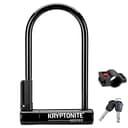
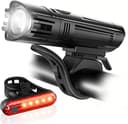
Buy this if the bike is inexpensive, it is rarely out of your sight for long, and your route is lit. The Kryptonite Keeper 12is a 12mm hardened shackle rated Sold Secure Silver — a real hardened lock rather than a cable, at close to cable-lock money, with a frame bracket included so it travels with the bike. The Ascher USB light set covers front and rear in one purchase and is unambiguous about what it is for: being seen on a lit street, not lighting an unlit one.
What you are accepting: Silver is a meaningful step up from nothing and a meaningful step below Gold, and a be-seen light is genuinely inadequate on a dark road. If either of those makes you uneasy, that unease is information — move up a tier.
The everyday pairing (the one we’d buy)
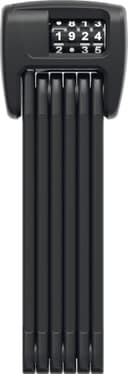
This is the set for the commute most people actually have. The ABUS Bordo 6000Cis the anchor because it solves the carry problem that sinks better-rated locks: 5mm hardened steel bars that fold into a frame holster and open to 90 cm of reach, so it goes around a lamppost a short U-lock cannot reach and rides on the frame rather than in your bag. ABUS rates it 10 of 15 on its own scale, which is a brand figure, not an independent one — we say that rather than letting it read as a Sold Secure grade. If you would rather have the independent grade, the best folding locks page compares the category properly and folding lock vs U-lock is the honest trade-off.
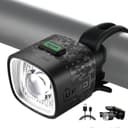
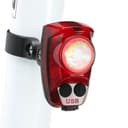
On lights, the Magicshine URBO FL is the front pick for a reason that does not show up in a lumen count: it has a cut-off beam, shaped so the light lands on the road rather than in the eyes of the person coming toward you. On a commute that means you can run it on a shared path or a bike lane without being the rider everyone squints at, and at 48g with an IPX6 rating and a quick release, it is easy to live with. The Cygolite Hotshot Pro 200covers the back, where the job is being seen in daylight as well as dark — a surprising share of collisions happen in good light.
The high-risk pairing
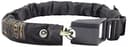
Buy this if the bike is expensive or electric, or it lives locked outdoors in a dense city. The Hiplok Gold is 10mm hardened chain rated Sold Secure Gold— an independent grade, not a brand one — built into a wearable waist design so a heavy chain rides on you instead of in a bag. Pair it with a front light at the night-riding tier, because a commute that justifies a Gold lock usually also involves genuinely dark stretches.
If the bike is an e-bike, go further: the e-bike starter kit makes the case for a 14mm chain and a tracker, and the best locks for e-bikes ranks the category. And if you are weighing whether the top security tier is worth the weight and money at all, we work through that honestly in are angle-grinder-proof locks worth it.
Two locks beat one expensive lock, sometimes
A frequently better use of the same money than upgrading one lock is carrying two different ones. Different lock types resist different attacks, and a thief carrying bolt cutters for a chain is not necessarily carrying a jack for a U-lock. It also doubles the time on the ground, which is the currency that actually matters. The trade-off — weight, and whether you will keep doing it — is worked through in do you need two bike locks.
Whatever you buy, technique is half your security and it is free. A good lock around the front wheel only, or clipped to something a bike can be lifted over, protects nothing: how to lock your bike properly covers the frame-and-wheel method, and how to prevent bike theft puts it in a layered plan.
What the lights need to do, by street
The rear light is the simpler half: you want it visible in daylight as well as dark, and you want it unobstructed — a seatpost light swallowed by a pannier is doing nothing. How to mount bike lights covers where each one actually goes.
The front light is where the money decision lives, and it comes down to one question: is any part of your route genuinely unlit? If not, a be-seen front light is honestly enough and you should spend the difference on the lock. If so, you need output anda beam shaped to put it on the road. That distinction — and the reason a bare high-lumen light can be worse than a lower-output one with a cut-off — is the whole of be seen vs see the road, with the numbers by street type in how many lumens do you need. One legal note worth checking wherever you live: whether a flashing front light satisfies your state’s requirement, which flashing vs steady and our bike light laws page both cover.