How we picked
1. Ranked by how much of the water it actually stops.This is the criterion that reorders the whole category. Road spray is the majority of the problem on most commutes, so the thing that stops road spray outranks the thing that stops rain, however counterintuitive that looks on a page called “rain gear”.
2. Waterproof claims are quoted, not upgraded.Soft goods are where sellers over-claim hardest. Where a listing says “water resistant”, we print water resistant. Where it publishes no hydrostatic head rating — and almost none of them do at this price — we say the rating is unpublished rather than implying a number.
3. Cut for a riding position.A rain shell designed for standing up is a bad shape on a bike: it rides up at the back, catches wind, and floods the cuffs when you reach for the bars. Where we recommend something not cut for cycling — and we do, because it is genuinely the best-value option — we say so in its cons.
4. Cheapest thing that does the job wins. The budget pick on this page covers both halves of your body for roughly what a single cycling jacket costs. We are not going to pretend the pricier jacket is the correct first purchase for someone who has never ridden in the rain.
Fenders: the unglamorous answer
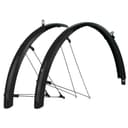
If you fit nothing else on this page, fit fenders. Full-length front and rear blades stop the spray at the source, which means your back stays clean, your feet stay dramatically drier, and your chain and brake pads stop eating road grit. The SKS Bluemels is the pick for a bike with fender eyelets: an aluminum-and-plastic sandwich construction rather than bare plastic, with a safety system that lets the stays uncouple instead of jamming the wheel if something gets caught.
The one thing to get right is size — a fender has to be wider than the tire it covers, so read your tire sidewall before you order. If your frame has no eyelets at all, there are strap-mounted sets that still give full coverage, and if your commuter is a fat-tire e-bike almost nothing standard will clear it. All of that, with the picks for each case, is in the best bike fenders for commuting.
The jacket: cut, hood, and what “waterproof” is worth
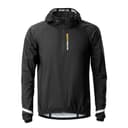
Once the road spray is handled, a jacket earns its place. The RockBros cycling rain jacketis the pick because it is shaped for a bike and because the hood detaches — and a fixed hood under a helmet is the single most common reason a rain jacket ends up unused. It doubles as a windbreaker on cold dry days, which is how it earns hanger space it would not otherwise get.
Be clear-eyed about what a jacket at this price is. The listing says waterproof; it publishes no hydrostatic head rating, so that word is the seller’s and not a measurement. In heavy, sustained rain, expect to arrive damp from the inside as much as the outside — that is breathability, not waterproofing, and it is the real limit at every price point below serious money. Which is a large part of why we do not think a jacket should be your first purchase.
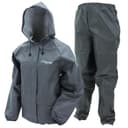
The budget alternative is genuinely good and we would not talk anyone out of it. The Frogg Toggs Ultra-Lite2 is a full suit — jacket andpants — for roughly what one cycling jacket costs, listed as waterproof and breathable. Its honest weakness is the cut: it is general outdoor wear, not cycling wear, so it flaps and it is not shaped for reaching to the bars. For someone finding out whether they will ride in the rain at all, that is an entirely reasonable trade.
The parts everyone forgets: legs and feet
Two things separate people who ride happily in the wet from people who try it once. The first is that your legs are the least protected part of you and the most exposed to spray, which is why the budget pick above including pants matters more than it sounds. The second is shoes.
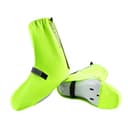
Wet shoes are the specific misery that makes a rainy commute unbearable, because unlike everything else you cannot change out of them — you sit in them all day and they are still wet at five o’clock. The RockBros shoe covers are the cheapest fix on this page, and we are going to be precise about what they are: the listing says water resistant, not waterproof, and a long downpour will get through. For a normal wet commute with fenders already fitted, they are the difference between damp and soaked. For an hour in heavy rain, they are not.
The one failure that costs real money
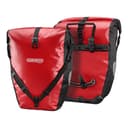
Everything above is comfort. This one is not. A laptop in a shower-resistant backpack in real rain is a genuine risk, and it is the only rain-gear decision with a four-figure downside. The Ortlieb Back-Roller Classicis a fully waterproof roll-top pannier pair — roll-top, welded, 40 L across the pair — and it is the pick precisely because the failure mode it prevents is expensive.
If that is more than you want to spend, the honest cheaper answer is a dry bag inside whatever you already own. It is unglamorous and it works. The full comparison, including the mid-priced roll-tops that get most of the way there, is in the best waterproof panniers, and how to carry a laptop on a bike covers padding as well as water.
Wet weather is also a visibility problem
Rain does two things to how visible you are, and both are worse than people assume: it cuts the daylight dramatically, and it puts water on every windshield between you and a driver’s eyes. A tail light that is bright enough to be seen in daylight is doing more work on a wet afternoon than on a clear night.
If your current setup is a be-seen light set bought for summer, wet season is the time to reconsider it — best rear bike lights covers the daylight-visible options, and our lock and light pairings put it in context with the rest of the kit. Grip is the other wet-weather change: braking distances lengthen and painted lines and metal covers become genuinely slippery, which is technique rather than gear and is covered in bike commuting in the rain.
What we would skip
A few things get sold for wet commuting that we would not buy. Waterproof socks are a real product, but with fenders and shoe covers fitted they are solving a problem you no longer have. A poncho is genuinely effective at standstill and genuinely dangerous in wind on a bike. And a second “rain bike” is a solution to a problem almost no commuter has — the same bike with fenders and a wiped-down chain handles a wet season fine, as can you ride an e-bike in the rain covers for powered bikes specifically.