Chain & Charge

Winter Bike Commuting Gear

Nobody quits in winter because they were cold all over. They quit because their hands stopped working, or it got dark at four, or the salt ate the bike.

By Stephen V.Last updated How we pick

Winter does not defeat a bike commute by being generally cold. Your body handles general cold better than you expect, because you are producing heat the whole way. It defeats it in four specific, narrow places: your hands, which are stationary in the wind and lose dexterity first; your face, which has no clothing on it and sits behind a vented helmet; the dark, which arrives at four in the afternoon whether or not the weather turned; and road salt and slush, which quietly destroys a drivetrain over a season.

Buy for those four and the rest of winter is genuinely manageable in the clothes you already own. Buy a big technical jacket first and you will find yourself overheating on the way in and still unable to brake properly, which is the wrong trade in every direction.

We own none of this gear and run no test lab. Where a listing publishes no temperature rating — and at this price almost none do — we say so rather than inventing one: here is exactly what we do instead of testing. Prices move constantly; check the live number before you buy.

How this is funded:we earn a commission if you buy through our links, at no extra cost to you. It never changes which product we recommend, and we’ll tell you when we’d skip one. Full disclosure.

Quick picks

Ranked on published specs, real security and safety standards, and buyer fit. Select a row to jump to the full write-up.We have not tested these products — here is exactly what we do instead.

#ProductBest forPrice
1
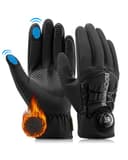
RockBros Winter Cycling Gloves (Fleece Thermal)

RockBros Winter Cycling Gloves (Fleece Thermal)

Cold hands are the single most common reason a winter bike commute gets abandoned, because you lose braking and shifting long before you lose the will to ride — full-finger fleece with a windproof face is the cheap fix.

Hands: keeping brake control
$22.99 · View on Amazon

Price as of September 6, 2026. #ad How we’re funded

2
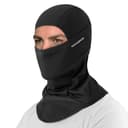
RockBros Windproof Thermal Balaclava

RockBros Windproof Thermal Balaclava

The other half of the cold problem: a helmet is a colander, and the wind that comes through it hits the one part of you that has no clothing on it at all.

Face, ears and neck
$13.49 · View on Amazon

$14.9910% off

Price as of September 6, 2026. #ad How we’re funded

3
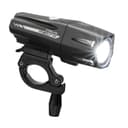
Cygolite Metro 1100 Pro

Cygolite Metro 1100 Pro

1100 lumens with day-flash modes and an IP67 rating, at a friendlier price than the NiteRider. The value see-and-be-seen headlight — daytime running flash for traffic, steady beam for the dark stretches.

The four o'clock sunset
$50.99 · View on Amazon

Price as of September 6, 2026. #ad How we’re funded

4
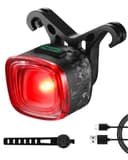
Magicshine URBO TL Brake Tail Light

Magicshine URBO TL Brake Tail Light

A featherweight tail light that brightens when it senses you braking and switches itself on and off automatically — genuinely useful safety tech at a fair price, with a claimed 82-hour runtime.

Being seen in winter gloom
$19.79 · View on Amazon

$21.9910% off

Price as of September 6, 2026. #ad How we’re funded

5
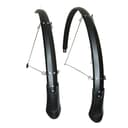
Planet Bike Cascadia Aluminum Fenders with Mudflaps (700c x 43mm)

Planet Bike Cascadia Aluminum Fenders with Mudflaps (700c x 43mm)

The set that goes after the part of the spray everyone forgets: 100mm mudflaps hang off both ends, which is what actually keeps road water off your shoes and off the rider behind you.

Slush, salt and spray
$124.99 · View on Amazon

Price as of September 6, 2026. #ad How we’re funded

The picks in full

#1Hands: keeping brake control

RockBros Winter Cycling Gloves (Fleece Thermal)

Cold hands are the single most common reason a winter bike commute gets abandoned, because you lose braking and shifting long before you lose the will to ride — full-finger fleece with a windproof face is the cheap fix.

Strengths

  • Full-finger coverage, which is the part that decides whether you can still brake
  • Fleece thermal lining plus a windproof outer (listed)
  • Costs a fraction of a technical winter glove
  • Windproofing matters more than thickness at commuting speeds

Trade-offs

  • The listing publishes no temperature rating, so pick by your own cold tolerance
  • Windproof is not waterproof — cold rain will still get in
  • This listing does not publish touchscreen compatibility
  • Stock was limited when this page was written; check before you count on it
CoverageFull finger
InsulationFleece thermal (listed)
WindWindproof (listed)
Published detailListing gives no temperature rating

Specs read from the product listing, on September 6, 2026. We have not physically tested this product.

#2Face, ears and neck

RockBros Windproof Thermal Balaclava

The other half of the cold problem: a helmet is a colander, and the wind that comes through it hits the one part of you that has no clothing on it at all.

Strengths

  • Covers face, ears and neck in one layer, under the helmet
  • Windproof and thermal per the listing
  • Unisex sizing on this listing
  • Packs to nothing, so it lives in a jacket pocket all season

Trade-offs

  • No published temperature rating
  • Not waterproof
  • Adds bulk under a helmet — re-set the retention dial after you put it on
  • Breath will fog glasses unless you route it down and away
TypeBalaclava / ski mask
ProtectionWindproof, thermal (listed)
FitMen's and women's (unisex listing)
Published detailListing gives no temperature rating

Specs read from the product listing, on September 6, 2026. We have not physically tested this product.

#3The four o'clock sunset

Cygolite Metro 1100 Pro

1100 lumens with day-flash modes and an IP67 rating, at a friendlier price than the NiteRider. The value see-and-be-seen headlight — daytime running flash for traffic, steady beam for the dark stretches.

Strengths

  • 1100 lumens with dedicated night and daytime modes
  • IP67 — the highest water rating in this group
  • Secure hard mount and strong value

Trade-offs

  • Beam is rounder than NiteRider's — slightly less road throw
  • No runtime display
Max output1100 lumens
ModesNight + daytime flash
Water resistanceIP67
MountSecure hard mount

Specs read from the product listing, on July 23, 2026. We have not physically tested this product.

#4Being seen in winter gloom

Magicshine URBO TL Brake Tail Light

A featherweight tail light that brightens when it senses you braking and switches itself on and off automatically — genuinely useful safety tech at a fair price, with a claimed 82-hour runtime.

Strengths

  • Brake-sensing flare warns drivers behind you
  • Auto on/off — nothing to remember
  • 1oz light, IPX6, quick-release, up to 82h runtime

Trade-offs

  • Lower steady output than the 200-lumen Hotshot
  • Auto sensing occasionally triggers on bumps
FeaturesBrake sensing + auto on/off
RuntimeUp to 82 hours
Weight~1 oz
Water resistanceIPX6

Specs read from the product listing, on July 23, 2026. We have not physically tested this product.

#5Slush, salt and spray

Planet Bike Cascadia Aluminum Fenders with Mudflaps (700c x 43mm)

The set that goes after the part of the spray everyone forgets: 100mm mudflaps hang off both ends, which is what actually keeps road water off your shoes and off the rider behind you.

Strengths

  • 100mm mudflaps front and rear, included rather than sold separately (Planet Bike)
  • 6061 aluminum blades — a stiffer material than the plastic sets here (Planet Bike)
  • Stainless-steel V-stays arrive pre-installed and are disc-brake compatible (Planet Bike)
  • Release tabs on the front fender so it can let go instead of jamming (Planet Bike)

Trade-offs

  • By far the most expensive set here
  • This size is recommended for tires up to 700c x 35mm — a 38-45mm hybrid needs a wider size
  • Still a bolt-on set, so a frame with no eyelets is out
  • 640g (Planet Bike), heavier than the plastic alternatives
Wheel size700c / 29 in
Fits tiresUp to 700c x 35mm (Planet Bike)
Blade width43mm
Blades6061 aluminum (Planet Bike)
Mudflaps100mm, front and rear (Planet Bike)
Weight640 g (Planet Bike)

Specs read from the product listing, on September 5, 2026. We have not physically tested this product.

How we picked

1. Fix the failure, not the season. Every pick here maps to one of the four specific things that end winter commutes. Nothing is on this list because it is generically warm.

2. Windproofing over thickness. At commuting speeds you are generating your own headwind, and wind strips heat far faster than still cold air does. A thin windproof layer beats a thick permeable one on a bike, which is why every clothing pick here publishes a windproof claim.

3. Temperature ratings are quoted only when published. None of the clothing on this page publishes one, so we do not assign one. Pick by your own cold tolerance and your own commute length; a twenty-minute ride and an hour-long one are different problems in the same weather.

4. Run time and weather sealing decide the lights. Winter is when you find out whether your light survives cold, wet and a longer dark season. Published IP rating and run time matter more in January than lumens do.

Hands first, and it is not close

This is the one that surprises people. Cold hands are not a comfort problem on a bike, they are a control problem: your fingers lose fine motor function well before the rest of you is uncomfortable, and the fingers are what you brake and shift with. Riders who give up in December almost always give up because of a specific morning when they could not work the levers properly.

The RockBros winter cycling gloves are the pick because they cover the thing that matters: full-finger, fleece-lined and windproof at a price that does not require a decision. Two honest limits, both from the listing itself. Windproof is not waterproof, so cold rain will eventually get through. And there is no published temperature rating, so if your commute is long or your winters are severe, treat these as the entry point rather than the answer.

The trick that costs nothing: put the gloves on before your hands get cold, not after. Gloves keep heat in; they do not put it back.

The face, and the helmet problem

A bike helmet is, by design, a colander. That is correct engineering for July and a real problem in January, when the wind comes straight through the vents at the one part of you with nothing on it. The RockBros thermal balaclava is the pick because it covers face, ears and neck as one layer that sits under the helmet, rather than three items that all need adjusting at a red light.

Two practical notes. Adding a layer under a helmet changes the fit, so re-set the retention dial after you put it on — a helmet that is loose because of a hat is a helmet that will move in a crash. And breath fogs glasses in cold air unless you route it downward and away, which is a matter of how you pull the fabric across your nose. Neither is a defect; both catch people out on the first cold morning.

Darkness is the part nobody prepares for

Ask people what beat them in winter and they say the cold. Look at when they stopped riding and it is usually the week the clocks changed. Across most of the US the ride home is fully dark by five o’clock for months, and a light set bought in June for occasional dusk is not the same product as a light you depend on twice a day for a season.

The Cygolite Metro 1100 Prois the front pick for winter specifically because of its IP67 rating and its secure hard mount — the two things that decide whether a light survives a season of freezing rain and gritted roads. Its 1,100-lumen figure is the maximum-mode number, as it always is on every light from every brand; you will run it far lower most of the time, which is what makes its run time workable.

At the back, the Magicshine URBO TL earns a winter place for a different reason: brake sensing and automatic on/off, at about an ounce, with up to 82 hours of run time and an IPX6 rating. On a dark, wet commute, a light that turns itself on is a light you have not forgotten to switch on in the one week you needed it most.

If your lights are older than a couple of winters, this is the season to check them properly rather than the season to find out. The current picks are in best lights for night riding and best rear bike lights, and how many lumens do you need works out the requirement by street type.

Salt, slush and the drivetrain nobody mentions

The winter cost people do not budget for is mechanical. Gritted roads throw a slurry of salt and water at your chain, cassette and brake pads every single ride, and by March an unprotected drivetrain has aged more than a whole dry summer would have done to it.

The Planet Bike Cascadiais the winter fender pick rather than a cheaper set because of one spec: 100mm mudflaps, front and rear, included. The front mudflap is what stops the slurry reaching your feet and your bottom bracket, and the rear one is what stops you power-washing the person behind you. 6061 aluminum blades with pre-installed stainless V-stays, disc-brake compatible, at 640g — heavier and pricier than the plastic sets, and worth it if you are riding a full salt season.

Check the size before you order: Planet Bike recommends this width for tires up to 700c x 35mm, and a wider hybrid tire needs a wider fender. The full sizing rules and the options for frames without eyelets are in the best bike fenders for commuting. Beyond fenders, winter maintenance is mostly one habit — wipe and re-lube the chain more often than feels necessary — and the rest is in bike commuting in winter and, for powered bikes, e-bike maintenance.

What about the rest of you?

Deliberately not on this list: a big winter cycling jacket. For most commutes it is the wrong purchase, because you generate a lot of heat riding and a heavy insulated shell means arriving sweaty, which then makes you colder standing still than you would have been. Layers you already own, plus a windproof outer you probably also already own, handle a surprising amount of winter.

The exception is rain, because cold rain is a genuinely different problem from cold air — wet clothing loses its insulation and you get cold fast. If your winter is wet rather than dry, the gear on our rain gear page matters more than anything thicker, and what to wear bike commuting covers the layering logic across the whole year.

Two things that are technique, not gear

First: lower your tire pressure a little in winter. A slightly softer tire has a bigger contact patch and finds more grip on cold, greasy roads — and a floor pump with a real gauge, on the accessories page, is what makes that a decision rather than a guess.

Second: brake earlier and straighter than you think you need to. Cold rubber, wet metal covers, painted lines and black ice all reduce grip in ways that are invisible until they are not. Nothing you buy substitutes for leaving more room, and bike commuting safety in traffic covers the road-position habits that matter most when conditions are poor.
Frequently asked questions

What do I actually need to bike commute in winter?

Four things, matched to the four ways winter ends a commute: windproof full-finger gloves, something covering your face, ears and neck under the helmet, lights you trust for a fully dark ride home, and fenders to keep salt slurry off you and your drivetrain. Most people already own enough layers for the rest of it.

Why do my hands get so cold cycling in winter?

They are stationary, out in front of you, and taking the full force of the headwind you are generating, while producing almost no heat of their own. That combination cools them faster than the rest of your body. It matters more than comfort because you lose fine motor control — and therefore braking and shifting — before you feel genuinely cold anywhere else.

Do I need a special winter cycling jacket?

For most commutes, no, and buying one first is a common mistake. You generate a lot of heat riding, so a heavily insulated shell tends to mean arriving sweaty, which makes you colder once you stop. Layers you own plus a windproof outer handle a lot of winter. Cold rain is the real exception, because wet clothing stops insulating.

How do I stop road salt wrecking my bike?

Fenders do most of it by keeping the slurry off the drivetrain in the first place, ideally with mudflaps that extend the coverage at both ends. After that it is one habit: wipe the chain down and re-lube it far more often than you would in summer. Neither is expensive, and together they are the difference between a drivetrain that survives the season and one that does not.

Are my summer bike lights good enough for winter?

Often not, for two reasons that have nothing to do with brightness. Winter means a fully dark ride home most days rather than an occasional dusk, so run time matters far more. And freezing rain and gritted roads are hard on seals and mounts, which is why a published IP rating and a secure hard mount are worth more in January than an extra few hundred lumens.

Sources

  • U.S. NHTSA — Bicycle safetyFederal guidance on bicyclist safety, including being visible to drivers (accessed July 23, 2026)
  • Planet Bike — Cascadia ALX aluminum bike fenders, 700c x 43mmPlanet Bike's published specs for the 700c x 43mm Cascadia: 6061 aluminum blades, 100mm mudflaps, pre-installed disc-brake-compatible stainless-steel V-stays, release tabs on the front fender, 640 grams, recommended for 700c x 35mm (27" x 1.25") tires (accessed September 5, 2026)

Keep reading