How we picked
Four criteria, in the order they decide the purchase. Note what is not on the list: a warmth score, a temperature range, and a padding figure. No seller in this category publishes the second or third, and we have not ridden these units, so inventing the first would be dressing spec-reading up as testing.
1. What problem are you solving — pressure or cold?This is first because it sends you to opposite ends of the page. Numbness is a pressure problem: your body weight is resting on a small patch of palm, and the fix is padding in the right place plus, honestly, a look at your bike fit. Cold is a wind problem: at 12–15 mph the back of your hand is in a permanent headwind, and insulation without a windproof face just slows the inevitable. A glove chosen for the wrong problem feels like a waste of money because it is one.
2. Half finger or full finger?Half-finger gloves exist for one reason: you can wear them when it is hot, and most people cannot wear anything else above about 70°F. They do nothing for cold. Full-finger gloves cover the fingertips, which is where cold is actually felt first and where numbness from cold starts. There is no single glove that does both jobs, which is why people who commute year-round end up with two pairs and a drawer.
3. Does the listing claim windproof, waterproof, or neither? These are three different products and sellers blur them constantly. Windproof stops the chill and wets out in rain. Waterproof keeps cold water off your skin and breathes less, so your hands can end up damp from the inside on a hard effort. Neither is a rating: no glove on this page publishes a hydrostatic head figure or an IP code, and an IP code is the kind of measured figure the waterproof light category at least sometimes gives you. Gloves do not. Treat the words as claims.
4. Can you still work the controls? The one that matters most and gets discussed least. A glove that is warm but bulky costs you brake-lever feel and the ability to find a shifter without looking, and a cold hand that cannot modulate a brake is more dangerous than a cold hand. Touchscreen compatibility belongs in the same bucket: a glove you have to remove at every junction to check a route is a glove you will stop wearing.
The seven, side by side
Read the first two columns and stop. Everything else is secondary, and the blanks are real — a seller who has not published an insulation weight has not published one.
| Glove | Solves | Coverage | Weather claim | Touchscreen |
|---|
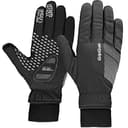
| GripGrab Ride Windproof | Cold wind | Full finger, padded | Windproof, thermal | Not stated |
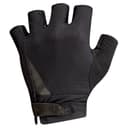
| Pearl Izumi Elite Gel | Numbness, warm days | Half finger, gel palm | None claimed | n/a (bare fingertips) |
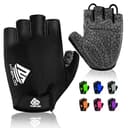
| HTZPLOO half finger | Numbness on a budget | Half finger, padded | None claimed | n/a (bare fingertips) |
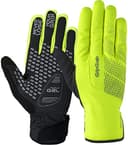
| GripGrab Ride Waterproof | Cold rain | Full finger, padded | Waterproof + windproof | Not stated |
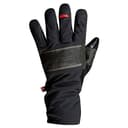
| Pearl Izumi AmFIB | Freezing mornings | Full finger, insulated, gel | Insulated (no rating) | Yes (listed) |
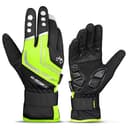
| INBIKE reflective | Being seen signaling | Full finger, gel pads | Windproof, thermal | Yes (listed) |
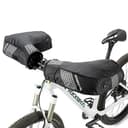
| RockBros handlebar mitts | Cold that beats gloves | Not a glove — mounts to the bar | Windproof, splash-resistant | Whatever you wear inside |
Why your hands go numb, and what a glove can actually do
Numbness in the outer fingers on a bike is common enough that hand clinics have a nickname for it — handlebar palsy, or cyclist’s palsy — and the mechanism is mechanical rather than mysterious. A nerve runs through a narrow channel on the little-finger side of your wrist, close to the surface, and that is exactly the patch of hand that takes your body weight when you lean on flat bars. Hold steady pressure there for twenty minutes and the hand downstream starts reporting tingling, then numbness, then clumsiness.
A padded glove helps because it spreads that load over a wider area instead of a coin-sized patch. That is all it does, and it is worth doing — it is the cheapest intervention available. But it is a cushion on a pressure problem, and if the pressure itself is too high, no glove fixes it. Three things do more than any glove will:
- Move weight off your hands.Raise the bars, shorten the reach, or tilt the saddle nose up a degree if it is pointed down. A saddle that tips forward slides you onto your wrists continuously, and riders fix this and discover their “glove problem” was a fit problem.
- Change hand position every few minutes. Flat bars give you almost no options, which is part of why commuters get this more than drop-bar riders. Moving your hands two inches inboard and back out, deliberately, at every red light is free and effective.
- Stop locking your elbows. Straight arms route every bump through your wrists. Soft elbows let your arms do the shock absorbing that the glove is otherwise being asked to do alone.
If numbness persists after all of that, it is worth a conversation with a clinician rather than another glove purchase. Persistent nerve symptoms are not a gear problem.
Which glove for which temperature
Nobody publishes a temperature rating, so what follows is our own framing based on what each listing claims to do — not a measured figure, and your cold tolerance will shift the boundaries.
Warm weather: half finger, padded.Above roughly 70°F a full-finger glove is a sweat problem, and the only reason to wear anything is palm pressure and grip on sweaty bars. Either half-finger pick does this. The difference is build quality and how much you care about it.
Cool mornings, roughly 45–60°F: full finger, windproof. This is the band almost everyone underestimates. It is not cold out, so people ride bare-handed, and twenty minutes of headwind at commuting speed produces genuinely painful hands. A thin windproof glove is transformative here and is why our overall pick is one.
Near freezing: insulated, full finger.Now you need both a windproof face and some loft, and the trade you start paying is lever feel. This is also where touchscreen compatibility stops being a luxury — removing a glove at 30°F to check a route costs you more warmth than you think, because getting a cold hand back into a glove is slow.
Below freezing, or any temperature in rain: stop trusting gloves. A wet glove is a cold glove, and that is true of expensive ones too. Either go waterproof, or go to handlebar mitts and wear a thin glove inside them. Mitts are the pick almost no commuter considers and the one that most reliably ends the problem, because the bar is insulated instead of your hand — your fingers stay thin-gloved and keep the dexterity to brake. Full winter kit beyond your hands is in the winter commuting gear list, and the riding side of it is in bike commuting in winter.
Gloves and being seen
One job gloves do that nothing else does: they are on the part of you that moves and points. A hand signal is only useful if a driver registers it, and at night a dark glove against dark clothing against a dark road registers as nothing. Reflective material on the back of the hand sits in the exact cone a car’s low beams already light, and it moves — which is what human vision notices.
The honest limit: that is a supplement, not a substitute. Federal bike-safety guidance leads with being visible to drivers, and the way you do that is lights and reflectors on the bike. A reflective glove is a bonus on top of a real rear light, never instead of one, and nobody should buy gloves as a visibility strategy. If you are choosing between the two this month, buy the light.
Sizing, and the one mistake everyone makes
Buy by the maker’s size chart, measured across your palm, and not by whatever size you wear in work gloves. Two specifics worth knowing:
- Tight gloves make hands colder.A winter glove works by holding a layer of still air; compress that and you have a thin cold glove. If you are between sizes on an insulated pick, size up. If you are between sizes on a half-finger summer glove, size down — a loose palm pad slides off the spot it is supposed to protect.
- Cheap gloves run small and inconsistently. The budget pick here is genuinely good value and its sizing is the usual budget-glove lottery. Order the size the chart says, not the size you hope.
- Women’s cuts are not shrunken men’s gloves. Two picks here are sold in both cuts. If a unisex glove has never fit your hand, that is the fix, not a different size.
What we would skip
Thick, non-windproof winter gloves. The ski-style glove from a general sporting-goods aisle feels warm in the shop and fails at 15 mph, because loft without a wind face just gets flushed. This is the single most common bad glove purchase in commuting.
Any glove sold with a temperature rating. Nobody in this category publishes one on their own listing. A number that appears only in a review was produced by that review.
Heated gloves, for commuting specifically. They work, and they are another battery to remember on a trip that is twenty minutes long. If your commute is long enough to justify them you already know it; if it is a twenty-minute ride, mitts cost less and never run flat.
Gel pads as a replacement for a bike-fit fix. If your hands go numb in five minutes, the glove is not the problem. See the fit list above first, then buy the glove.
Waterproof gloves for cold-dry commuting.You pay in breathability year-round for a feature you need on a handful of days. Buy for your actual climate — and if rain is the defining feature of your commute, the rest of the answer is in the rain gear list and bike commuting in the rain. The same rated-versus-claimed distinction decides what you carry your work clothes in, which is the argument in our Ortlieb Back-Roller Classic review.