What the extra fifty dollars actually buys
Four things, in the order they change your ride. None of them is simply “brighter”.
1. Output you can use rather than a number on a box. A 500-lumen light on its highest mode often runs for an hour; a 1,100 or 1,200-lumen light can give you 500 usable lumens for several hours. The difference in the band is not the headline figure, it is how long you can hold a useful figure. What a lumen number does and does not tell you is in how many lumens you need and lumens vs lux.
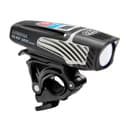
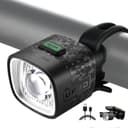
2. A run-time readout instead of a guess.This is the single most underrated feature at this price and the reason the Lumina leads: an OLED display showing remaining time in the current mode. A three-color battery LED tells you “some”, and “some” is not a basis for choosing a route home in January. Our longer answer on run times is in how long bike lights last.
3. Beam shape, including a deliberate cut-off. At the cheap end a light is a round blob. The Magicshine URBO FL has a cut-off beam - a flat top edge, like a car dipped headlight - which puts light on the road instead of in the eyes of the person walking toward you. On a shared path or a towpath that is the correct light, and it is a better neighbor than a brighter one. See can bike lights be too bright.
4. Weather sealing and mounts that survive. Lights in this band publish an IP rating and ship with mounts that are not an afterthought, which is most of why they are still working in year three. The waterproofing comparison is in best waterproof bike lights.
How to spend the $100, depending on your route
Three honest allocations. Pick the one that matches the darkest part of your commute, not the average part.
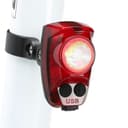
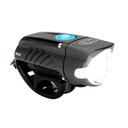
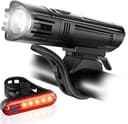
Lit streets the whole way. Spend about a third of the cap. The NiteRider Swift 500 up front and the Cygolite Hotshot Pro 200 at the back is an excellent, durable, legal setup, and you will have money left. If the budget is really tight, the Ascher set does the legal job for a fraction of that - it is the budget pick on this page precisely because it is the cheapest thing here that genuinely does the job rather than the cheapest thing here.
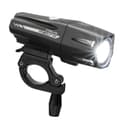
Some unlit sections.Spend most of the cap on the front. The Cygolite Metro 1100 Pro is the value answer: the output of the top tier for meaningfully less, with Cygolite’s long list of modes. Pair it with the Hotshot Pro 200 and you are at the cap with a setup that handles anything a commute throws at you.
Properly dark lanes, regularly. Spend the cap on the Lumina 1200 alone and buy the rear light next month. This is the one case where the front light is worth the whole budget, because the failure mode is not being unseen, it is hitting something you did not see. The dedicated ranking is in best lights for night riding.
And one allocation we would argue against: two expensive front lights, or a 1,200-lumen light used on a lit street at full power. The second is actively antisocial, and the modes exist for a reason - run a bright light low in town and save the output for where there is nothing else.
The things price does not fix
A light you forgot to charge is a $0 light. Every light here is USB rechargeable, which is a convenience and a trap: a weekly charging habit matters more than any spec on this page. Lights with a run-time display make the habit easier, which is a real argument for paying for one. The whole rechargeable question is in rechargeable vs battery lights.
A light you take off every time is a light you will eventually leave off. Quick-release mounts exist because a bright light left on a parked bike does not stay there - how to keep bike lights from being stolen covers the practical answers.
Daylight is the other half of the problem. A large share of cycling collisions happen in daylight, and a flashing front light is more use at 4pm than most people assume - best daytime running lights and are daytime running lights worth it.
And the law asks for specific things. In most US states that is a white front lamp and a red rear lamp or reflector after dark, with details varying by state - start at bike light laws. If you want the cheaper half of this field on its own, the tighter cap is in best bike lights under $50.