Head to head, as published
Read the first two rows. The blanks are real: neither Amazon listing publishes a weight or an internal dimension, and we are not going to supply one.
| Specification | Evolution Mini-7 | New York Standard |
|---|
| Shackle | 13 mm hardened steel | 16 mm hardened steel |
| Independent grade | Sold Secure Gold certified (listed) | Not stated on this listing |
| Body | Mini — minimal room inside | Full-size standard opening |
| Cylinder / mechanism | Double deadbolt (listed) | Pick-resistant disc cylinder (listed) |
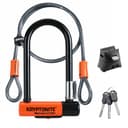
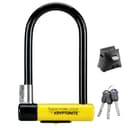
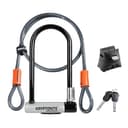
| In the box | 4 ft cable, FlexFrame-U bracket, 3 keys | FlexFrame-U mount, 3 keys |
| Maker’s stated use | High-security commuting | Heavy duty, e-bikes and scooters |
| Weight | Not published on the listing | Not published on the listing |
What 13 mm versus 16 mm buys you
Thieves use three attacks, and the shackle diameter matters for a different amount in each.
Bolt cutters and hand tools: both locks are out of reach. A 13 mm hardened shackle is already past what a portable bolt cutter will close on, which is the dividing line between a real lock and a deterrent. If your current lock is a cable or a thin U-lock, moving to either of these is the big upgrade, and the step from 13 to 16 is the small one.
Leverage — crowbars, car jacks, pipes: here the mini body wins, and it is the most underrated thing on this page. A leverage attack needs somewhere to insert the tool, and the Evolution Mini-7 is specifically shaped to deny it. A full-size New York Standard has a bigger opening by design, which is useful for locking to a fat post and is also room a thief can use. More steel, more space: the two effects partly cancel.
Angle grinders: neither lock stops one, and anybody who tells you otherwise is selling something. What diameter buys here is time— more seconds of noise, sparks and exposure for the thief, and that is exactly what 16 mm is for. If your bike is on a street overnight, that extra time is the product you are buying. If the bike is in a bike room or comes indoors, you are paying for seconds nobody will be there to use. We go through what “grinder-proof” actually means in the grinder-resistant lock guide, and the attack methods themselves in how thieves break bike locks.
The cost nobody puts on the box
Neither listing publishes a weight, which is irritating, because weight is the specification that decides whether a lock gets used. What we can say honestly: the New York Standard is in the same family as the 18 mm Fahgettaboudit Mini, whose weight runs around four and a half pounds, and the Evolution Mini-7 is roughly half that class. The practical consequences:
- A mini U-lock fits in a bag or a jersey pocket. A full-size 16 mm lock wants a frame bracket or a pannier, and you will feel it on a hilly commute.
- The mini costs you reach. This is the real downside and the one people discover at the rack: a mini opening may not pass around a fat signpost plus your frame plus a wheel. Check what you actually lock to before buying one, and read how to lock your bike for the geometry.
- The heavier lock gets left at home. Which converts a 16 mm lock into a 0 mm lock. That is the single most common way a security upgrade fails, and it is why we do not recommend the heaviest lock to everyone.
Which one your situation calls for
Daytime parking, bike indoors at night: Evolution Mini-7.This is most commuters. The bike is at a rack for eight hours in daylight, with people around, and a Gold-graded 13 mm lock in a leverage-proof body is a serious obstacle for that window. Spend the difference on a second lock for the front wheel instead — two locks beat one bigger lock in most scenarios, as we argue in do you need two bike locks.
Bike left out overnight, or locked in a high-theft city: New York Standard. Overnight is a different threat model: no witnesses, unlimited time, and the thief can come back with the right tool. Here the extra diameter and the full-size opening (which lets you lock the frame and a wheel to something immovable) are worth the weight.
An e-bike: New York Standard, at minimum. The New York listing names e-bikes and scooters for a reason: the bike is worth more, it is too heavy to carry upstairs, so it spends more time locked outside, and the battery is a separate theft target. Our e-bike lock picks go further, and the battery problem has its own page in how to secure an e-bike battery.
A beater bike, or parking in a low-theft town: neither. Both of these are more lock than the situation needs, and a budget lock plus good habits is the right answer. How much to spend is genuinely a function of what your bike is worth and where it sits, which we work through in how much to spend on a bike lock.
Two things that are equal, and one that is not
Equal: the keys and the bracket. Both ship with three keys and a FlexFrame-U style mount, so neither is more annoying to live with day to day.
Equal: the cylinder story is not a differentiator. The New York listing names a pick-resistant disc cylinder; the Evolution listing names a double deadbolt, which is about how the shackle is held rather than how the lock is picked. Neither matters much in practice, because picking a decent U-lock is a skill with better uses, and real thieves cut.
Not equal: the Evolution includes a cable.A 4 ft KryptoFlex cable comes in the Mini-7 box, and it genuinely solves something — the front wheel — that the mini U-lock cannot reach. Be clear-eyed about what it is: a cable cuts in seconds, so it is there to make a wheel annoying to take, not to secure a bike. It is still the reason the Mini-7 covers more of a real bike than its opening suggests.
What we would not do
Compare the in-house scores.Kryptonite’s own 1-to-10 scale ranks its own locks and tells you nothing against another brand’s number. If you want to compare across brands, compare Sold Secure grades, which is the point of having an independent test house.
Buy the biggest lock as insurance. It is the most expensive way to end up locking your bike with nothing, because you left the heavy one at home. Match the lock to the parking.
Treat either as grinder-proof. Neither is. Lock to something immovable, in a visible spot, and read the theft-prevention habits— they are free, and they do more than three millimeters of steel.