Chain & Charge

Best Bike Helmet Under $50

Every helmet sold in the US clears the same federal standard, so under $50 you are not buying safety - you are buying fit, visibility and whether it has MIPS. Two of these three do more than the price suggests.

By Stephen V.Last updated How we pick

The thing nobody tells you about cheap bike helmets is that they are not less safe by law. Every bicycle helmet sold in the United States has to meet the same mandatory federal standard, 16 CFR Part 1203, administered by the Consumer Product Safety Commission. A $30 helmet and a $300 helmet clear the same bar. That single fact is what makes this price band worth a page: once certification is a given rather than a feature, the $50 question stops being “is this safe enough” and becomes “what am I actually choosing between?”

The answer is three things, and only three: fit, because a helmet that sits wrong protects wrong and gets left at home; whether it carries MIPS or another rotational system; and whether it does a second job such as being seen after dark. Weight, vent count and finish are real differences too, but they are comfort, not protection, and in this band the listings barely publish them.

Here is the finding that surprised us while assembling this page, and it is the reason the cap is set at $50 rather than $100. Under $50 you can buy MIPS. Spending more does not automatically get it. The Giro Register MIPS publishes the MIPS name on its own listing at well under the cap. Meanwhile the helmet this site recommends overall — the Thousand Heritage 2.0, which costs considerably more — is not labeled MIPS anywhere on Thousand’s own lineup page, where only the Chapter MIPS and Chapter+ MIPS models carry that name. If rotational protection is your reason for spending, the price ladder is not the thing to climb. We take that whole argument apart in is MIPS worth it.

One honesty note before the picks, because it decides what this page can and cannot tell you. We have not crash-tested anything. Nobody should: the useful independent per-model evidence already exists, and it comes from the Virginia Tech Helmet Lab, which runs 24 impacts per helmet across six locations, measures rotational velocity as well as linear acceleration, and publishes a star rating per model with a recommendation to choose 4 or 5 stars. We did not confirm that any of the three helmets below has been through that program, so this page assigns no star rating to any pickand you should not read our ranking as one. Look your shortlist up in their table before you buy — it is free, and it is the only number in this category that comes from a lab rather than a marketing department. Here is exactly what we do instead of testing.

How this is funded:we earn a commission if you buy through our links, at no extra cost to you. It never changes which product we recommend, and we’ll tell you when we’d skip one. Full disclosure.

Quick picks

Ranked on published specs, real security and safety standards, and buyer fit. Select a row to jump to the full write-up.We have not tested these products — here is exactly what we do instead.

#ProductBest forPrice
1
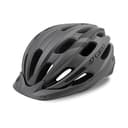
Giro Register MIPS Helmet

Giro Register MIPS Helmet

MIPS rotational protection from a name that's made helmets forever, at a mainstream price. The pick if MIPS is your priority — a universal-fit lid with the safety tech and Giro's fit dialed in.

Best overall
$39.99 · View on Amazon

Price as of November 23, 2026. #ad How we’re funded

2
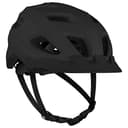
Retrospec Lennon Helmet with LED

Retrospec Lennon Helmet with LED

A commuter helmet with a rear LED safety light built in and a dial fit system, at a genuinely affordable price. The value pick — visibility and adjustable comfort without paying for a boutique brand.

Best for riding after dark
$39.99 · View on Amazon

Price as of November 23, 2026. #ad How we’re funded

3
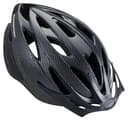
Schwinn Thrasher Adult Helmet

Schwinn Thrasher Adult Helmet

The rock-bottom-price helmet that's still a real, certified helmet: lightweight microshell, 20 vents and a dial fit. No MIPS and no frills, but a certified lid beats no lid — and this is the cheapest way to that.

Best budget
$23.09 · View on Amazon

$34.4933% off

Price as of November 23, 2026. #ad How we’re funded

The picks in full

#1Best overall

Giro Register MIPS Helmet

MIPS rotational protection from a name that's made helmets forever, at a mainstream price. The pick if MIPS is your priority — a universal-fit lid with the safety tech and Giro's fit dialed in.

Strengths

  • MIPS rotational-impact system included (listing)
  • Trusted brand with a reliable fit system
  • Universal fit and good ventilation

Trade-offs

  • Plainer looks than the boutique commuter helmets
  • Universal fit is less precise than sized shells
SafetyMIPS (listing)
FitUniversal adult, 54-61 cm (listing)
VentsMultiple
Best useMIPS on a budget

Specs read from the product listing, on July 23, 2026. We have not physically tested this product.

#2Best for riding after dark

Retrospec Lennon Helmet with LED

A commuter helmet with a rear LED safety light built in and a dial fit system, at a genuinely affordable price. The value pick — visibility and adjustable comfort without paying for a boutique brand.

Strengths

  • Integrated rear LED light for extra visibility
  • Dial adjustment for a secure, comfortable fit
  • Removable visor and a low price

Trade-offs

  • No MIPS on this model
  • Heavier than a premium commuter lid
LightIntegrated rear LED
FitDial adjustment system
ExtrasRemovable visor
Best useValue commuting

Specs read from the product listing, on July 23, 2026. We have not physically tested this product.

#3Best budget

Schwinn Thrasher Adult Helmet

The rock-bottom-price helmet that's still a real, certified helmet: lightweight microshell, 20 vents and a dial fit. No MIPS and no frills, but a certified lid beats no lid — and this is the cheapest way to that.

Strengths

  • Certified protection at a bargain price
  • 20 vents keep it cool and light
  • Dial fit and removable visor

Trade-offs

  • No MIPS
  • Basic materials and finish
Ventilation20 vents
FitAdjustable dial + straps
ExtrasRemovable visor
Best useBudget / occasional

Specs read from the product listing, on July 23, 2026. We have not physically tested this product.

How we picked

Four criteria, in the order they decide a purchase under this cap. What is deliberately absent: a safety ranking. All three helmets clear the same mandatory federal standard, none of them publishes a lab rating on its listing, and we are not going to imply an order of protection that no published evidence supports.

1. Does the published size range include your head? This is the first filter and it eliminates picks for specific people, which is why it comes before everything else. The numbers here are published on the listings and they are not the same: the Giro Register MIPS states a universal adult fit of 54–61 cm, the Retrospec Lennon states a one-size 54–61 cm, and the Schwinn Thrasher states 58–62 cm. Read those again, because the cheapest helmet on the page is the one that fits the fewestheads at the small end — a 55 cm head has two options here, not three. Measure around your head just above the eyebrows with a tape before you order anything.

2. Does the listing publish a rotational system?One of the three does: the Giro publishes MIPS. Mips’s own description of what its system does is design intent rather than a measured result — the company states that the system “has been designed to reduce rotational energies to the head” and publishes no percentage, no millimeter figure and no test number, alongside its own plain warning that no helmet or impact-protection system can protect a user from all injuries. We quote that as it is. It is still a real design feature that costs real money, and at this price it comes free of a premium.

3. Does it do a second job? In a commuting context this usually means visibility. The Retrospec Lennon publishes a 5-LED, three-functionrear light built into the shell. That is a genuine commuter feature rather than a gimmick: a light at head height is visible over a car roof and over your own panniers, and it is the one light you cannot forget on the bike because it is on your head. It is not a replacement for a rear light on the seatpost — see best rear bike lights— but as a second point of light it is worth more than a vent count.

4. Comfort features, where the listing names them. Last, because they decide whether you keep wearing it rather than whether it works. The Schwinn publishes 20 air vents, a lightweight microshell, interior padding, an adjustable dial-and-strap system and a removable visor. The Retrospec publishes 15 vents, washable padding and a visor. The Giro listing publishes neither a vent count nor a weight, so this page quotes neither for it. Nobody in this band publishes a weight in grams, which is why there is no weight column anywhere on this page.

What $50 does and does not buy

It buys a certified helmet with a dial fit system, usually a visor, and either MIPS or an integrated light — but, on the evidence of these three listings, not both at once. That is the real shape of the compromise in this band, and it is worth naming plainly because it is the actual decision: under $50 you choose between a rotational system and a built-in light.

What it does not buy is a published weight, a vent-by-vent airflow claim, a sized shell rather than a universal one, or any form of independent rating printed on the box. Universal-fit shells are the norm at this price and they are a compromise: one shell with a generous dial covers a wide range of head circumferences but matches no specific head shape as closely as a helmet sold in S/M/L. If you have a notably round or notably oval head and have never found a comfortable helmet, that is the thing a bigger budget solves, not MIPS.

It also does not buy a replacement policy worth planning around. A helmet is single-use in the way a seatbelt is not: a real impact crushes the foam, which is how it absorbs energy, and a crushed helmet is finished whether or not you can see the damage. Budget the replacement into the purchase. At these prices that is an easy sum, and it is one more argument for the cheap end of the market rather than against it.

The fit problem nobody mentions

A helmet protects the part of your head it is actually covering, which makes position as important as the shell. Two things go wrong in practice, and both are free to fix. The first is a helmet tipped back off the forehead — the classic look of a helmet that has never been adjusted — which leaves the forehead bare in exactly the fall where you go over the bars. The brim should sit roughly two finger-widths above your eyebrows and you should be able to see its edge when you look up.

The second is a loose chin strap. The dial at the back holds the helmet to the right circumference; the straps keep it from rotating off in a crash. Snug enough that two fingers fit under the strap at the chin, and the side straps forming a V just below the ear, is the standard every manufacturer describes. All three picks publish an adjustable system — a dial on the Schwinn and the Retrospec, Giro’s own fit system on the Register — so there is no excuse for riding one loose.

One practical commuter point on top of that: a helmet you carry awkwardly is a helmet you stop carrying. If you lock up outdoors all day, look at how the helmet travels. The premium commuter helmets solve this with a slot that takes a U-lock shackle; nothing under $50 does, so plan on a strap through the shackle or a clip on the bag. Our guide to locking a bike covers what should be inside that shackle first.

What spending more actually gets you

Three things, in descending order of how much they matter. First, a sized shell instead of a universal one, which is the single biggest comfort upgrade available and the reason some riders should ignore this page entirely. Second, a shape you are willing to be seen in, which sounds like vanity and is actually the highest-leverage safety feature there is: the helmet you wear every day beats the better helmet in the hallway. Third, integrated extras— a lock slot, a magnetic light mount, better padding you can wash more times.

What spending more does notreliably get you is MIPS, and the Thousand Heritage 2.0 is the clearest example on this site. It is our overall commuter helmet pick for exactly the reasons above — the low-profile shape people actually wear, the PopLock slot for a U-lock shackle, the magnetic rear light mount — and on Thousand’s own bike-helmet collection page the MIPS label appears on the Chapter and Chapter+ models, not on the Heritage line. Thousand does not claim MIPS for the Heritage and we do not claim it either. If you want the shape, buy it on the shape. The full case for it is in our Thousand Heritage 2.0 review, and the wider field is in best commuter bike helmets.

Where the rest of a small budget should go

If $50 is your entire protective-gear spend rather than just your helmet budget, buy the helmet and then buy lights, in that order, and stop. A helmet addresses one kind of crash; lights address the much more common problem of a driver who never saw you at all. A complete front-and-rear set costs a fraction of any helmet here — see best bike lights under $50 for how far a lighting budget stretches, and best budget bike lights for the cheapest route to being legal front and rear.

After that, the next dollar is better spent on a lock than on a nicer helmet, because the failure it prevents is the one that ends your commuting altogether. We size that decision honestly in how much to spend on a bike lock, and the sub-$100 field is in best bike locks under $100. A helmet, a light set and a real lock is the whole starter kit, and all three together cost less than one premium helmet.

Doubling the cap changes the answer rather than just the price: best bike helmet under $100 is where a lock-and-light commuter shell, and a design you will wear daily, come into range.
Frequently asked questions

Are cheap bike helmets safe?

Yes, in the specific and important sense that every bicycle helmet sold in the United States must meet the same mandatory federal standard, 16 CFR Part 1203, enforced by the CPSC. A $30 certified helmet and a $300 certified helmet clear the same test. What more money buys is fit, comfort, weight, features and sometimes a rotational system such as MIPS — not permission to be sold. The genuinely unsafe helmet is the one that does not fit, the one that has already taken an impact, or the one sitting at home because you dislike wearing it.

Can you get a MIPS helmet under $50?

Yes. The Giro Register MIPS publishes the MIPS name on its own Amazon listing and has carried a live price under $50 on the day we checked, which is why it is the top pick here. It is worth knowing that the reverse is also true: paying more does not guarantee MIPS. Thousand's own bike-helmet collection page labels only its Chapter MIPS and Chapter+ MIPS models with that name, not the more expensive Heritage 2.0 we recommend overall. If a rotational system is your priority, look for the MIPS label specifically rather than assuming the price tells you.

What size bike helmet do I need?

Measure the circumference of your head with a soft tape about an inch above your eyebrows, then match that number to the range the listing publishes — and check it, because the ranges here differ. The Giro Register MIPS and the Retrospec Lennon both publish 54-61 cm. The Schwinn Thrasher publishes 58-62 cm, so it does not cover the small end that the other two do. If your measurement falls near the edge of a range, size toward the middle of a different helmet's range rather than relying on the dial to take up the whole difference.

Is a helmet with a built-in light worth it?

As a second light, yes. The Retrospec Lennon publishes a 5-LED three-function rear light in the shell, and a light at head height has two advantages over one on your seatpost: it sits above a car's hood line at a junction, and it cannot be blocked by a pannier or a rack bag. The limits are honest ones. It is small, the listing publishes no output figure, and it turns with your head, so it is a supplement to a proper rear light rather than a replacement for one. Treat it as redundancy, which is the right way to think about being seen anyway.

Do bike helmets expire?

They do not have a printed expiry the way food does, but they have a service life, and two things end it. The first is an impact: the foam protects by crushing, so a helmet that has taken a real hit is finished even when it looks fine, and it should be replaced rather than inspected hopefully. The second is age and handling — years of UV, sweat, heat in a car and being dropped on concrete degrade the shell bond and the straps. Most makers suggest replacement every few years. At the prices on this page, that is a manageable running cost rather than a reason to keep an old helmet.

MIPS or a built-in light, if I can only have one?

Choose on which risk your route actually carries. If most of your riding is after dark or in winter gloom on roads with traffic behind you, being seen is the problem you face every single day, and the light-equipped helmet is the rational pick — a crash avoided beats a crash mitigated. If you ride mostly in daylight, on paths, or already run bright front and rear lights, take the rotational system instead. What you should not do is pay a premium above this band expecting to get both, because at $50 these listings do not offer both in one helmet.

Sources

  • U.S. CPSC — Safety Standard for Bicycle Helmets (16 CFR Part 1203) — The mandatory U.S. bicycle-helmet standard every helmet sold in the country must meet (accessed July 23, 2026)
  • Mips — What is Mips? — The manufacturer's own page. What it claims, in its own capitals: "THE MIPS SYSTEM HAS BEEN DESIGNED TO REDUCE ROTATIONAL ENERGIES TO THE HEAD" "WHICH MAY LEAD TO BRAIN INJURIES" — design intent, not a measured result. The technology is described as "slip-plane technology used by helmet manufacturers, which is what Mips safety system is all about". The page gives NO movement distance in millimeters and no test figures. Its own limitation language, also in capitals: "NO HELMET OR IMPACT PROTECTION SYSTEM CAN PROTECT A USER FROM ALL INJURIES." and "DO NOT WARRANT THAT AN INDIVIDUAL WHO SUFFERS A COLLISION, FALL, OR OTHER BLOW TO THE HEAD" is protected. It also discloses a known side effect: "SOME MIPS LOW-FRICTION LAYERS, ALONG WITH OTHER PARTS OF A HELMET, MIGHT CAUSE LACERATIONS TO THE WEARER'S SCALP" (accessed October 31, 2026)
  • Virginia Tech Helmet Lab — Bicycle helmet ratings (STAR system) — The independent university lab that publishes a per-model rating rather than a pass/fail certification. Its published method: helmets are evaluated "using the STAR testing system"; "We measure linear acceleration and rotational velocity for each impact, which are correlated to concussion risk"; each helmet undergoes "24 impact tests" across six locations around the helmet at medium and high impact energies. Its published interpretation: "Helmets earning more stars are associated with lower concussion risk in these scenarios", and the lab recommends "choosing a helmet rated 4 or 5 stars". Cost shown alongside a rating is "the price of the helmet at the time of testing". The page does not mention Mips or any named rotational technology, and does not state how many helmets have been rated (accessed October 31, 2026)
  • Amazon — Giro Register MIPS Adult Recreational Helmet listing (ASIN B075RTGS5M) — The listing this site's price and buy link point at, resolved and confirmed "In Stock" via Creators getitems on 2026-10-31 after the previous ASIN (B0GGF1RZH2, Register MIPS II, Matte Black/Grey) went "Currently unavailable". The full title reads "Giro Register MIPS Adult Recreational Helmet - Matte Titanium - Size UA (54-61 cm)". It publishes the MIPS name, the universal-adult size range 54-61 cm and the colorway. It is the ORIGINAL Register MIPS, not the Register MIPS II, which is why our registry name was corrected from "Register MIPS II Helmet" to "Register MIPS Helmet". The listing publishes no weight, no vent count and no Virginia Tech star rating (accessed October 31, 2026)
  • Amazon — Retrospec Lennon Commuter Bike Helmet listing (ASIN B0964HGPTR) — Confirmed "In Stock" via Creators getitems on 2026-11-14. The full title reads "Retrospec Lennon Commuter Bike Helmet Adult Men/Women, LED Light, Visor | OS: 54-61cm, Bike Helmet Men, Bike Helmet Women, Longboard, Washable Padding, Protective Shell, 15 Vents, 5-LED, 3-Function". It publishes a one-size 54-61 cm fit range, 15 vents, a 5-LED three-function rear light, washable padding and a visor. It publishes NO weight, no certification standard by name and no MIPS claim (accessed November 14, 2026)
  • Amazon — Schwinn Thrasher Adult Helmet listing (ASIN B00012M5MS) — Confirmed "In Stock" via Creators getitems on 2026-11-14. The full title reads "Schwinn Thrasher Helmet for Adults, Black, Size 58 - 62 cm, for Riders Ages 14+, Lightweight Microshell, Adjustable Dial and Straps, Interior Padding, 20 Air Vents, Removable Visor, Adult Bike Helmet". It publishes a 58-62 cm size range - notably NARROWER at the small end than the 54-61 cm range both other picks publish - plus 20 air vents, a microshell, a dial-and-strap fit system and a removable visor. It publishes no weight, no certification standard by name and no MIPS claim (accessed November 14, 2026)
  • Thousand — Bike Helmets collection — Thousand's own lineup page, which labels MIPS by model: the "Chapter MIPS Helmet" at $149.95 and the "Chapter+ MIPS Helmet" at $174.95 are the models carrying the MIPS name. The "Heritage 2.0 Bike & Skate Helmet" ($99.95, or $104.95 in the Smiley and Keith Haring finishes), the "Heritage 1.0 Bike & Skate Helmet" and the "Thousand Jr. Kids Helmet" are not labeled MIPS on this page. Thousand does not state anywhere on the page that the Heritage models lack MIPS — it simply does not claim it for them (accessed October 24, 2026)

Keep reading