What changes on an e-bike, and what does not
Your average speed goes up and stays up. A fit commuter on a pedal bike averages perhaps 12 mph with brief faster stretches. A Class 2 e-bike holds 20 mph for the whole ride, and a Class 3 is permitted up to 28. Impact energy rises with the square of speed, so the gap between 12 and 20 mph is much larger than the numbers look. Which class your bike is matters here legally as well as physically - e-bike classes explained sets out which is which, and a handful of states require a helmet specifically for Class 3 riders.
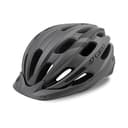
Your crash profile shifts toward angled impacts. At higher speed you are more likely to be hit from the side, clipped by a door, or to slide rather than drop straight down. That is the case for MIPS or an equivalent rotational system: a low-friction layer that lets the shell move a few millimeters relative to your head, reducing the twist transmitted to the brain. It is the single feature here with a physical mechanism aimed at the kind of crash an e-bike makes more likely, which is why the Giro leads this page.
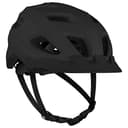
You arrive faster than drivers expect.A driver judging a gap reads a bicycle as a 12 mph object. Arriving at 20 breaks that judgement, and it is why e-bike commuters report more pull-out near misses than they did on a pedal bike. That is a visibility problem as much as a helmet one - which is what the Retrospec Lennon’s integrated rear LED is really for, and why the lighting case for an e-bike is a separate, stronger one: best bike lights for e-bikes and best daytime running lights.
What does not change: fit beats everything. A helmet that sits back on the head, or whose straps are slack enough to let it rotate, protects a fraction of what a well-fitted one does. All four helmets here use a dial or adjustable retention system, and all four are worth more time in front of a mirror than any spec on this page.
How we picked
Four criteria, in the order they decide an e-bike purchase.
1. Rotational protection, where it exists. MIPS is listed on exactly one helmet here, the Giro Register MIPS, and that is why it is first. The other three do not have it and we do not imply otherwise. MIPS is not a guarantee and it is not the only system of its kind; it is, however, a checkable claim on a listing rather than an adjective.
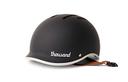
2. Coverage and shape at the back of the head. The real difference in the European speed-pedelec standard is how far the shell comes down at the rear. None of these is certified to it, but a low-profile commuter shell that drops further behind the ears is still a better-shaped object for a faster crash than a vented sports lid. The Thousand Heritage 2.0 is a low-profile retro shell for that reason as much as an aesthetic one.
3. Whether you will actually wear it. This is not a soft criterion - it is the one that decides whether the helmet is on your head on a Tuesday. An e-bike gets ridden in normal clothes to normal places, and a helmet that looks like race kit gets left on the hook. The Thousand earns its place here on exactly this, and it carries two features built for locking up in a city: a PopLock slot that lets you secure the helmet with your U-lock and a magnetic mount for a light.
4. Visibility built in, or added. The Retrospec Lennon has a rear LED in the shell, which puts a light at head height where drivers look first - genuinely useful, and not a substitute for a tail light on the bike. If your helmet has no light, read best rear bike lights and treat that as the non-negotiable half.
Price, and what the $100 band buys
Helmet price buys comfort, looks, vents and fit refinement far more than it buys certification - every certified helmet on a US shelf has passed the same CPSC test, from the cheapest to the most expensive. What rises with price is the chance you wear it daily and the chance it fits your head shape properly.
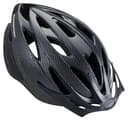
That is why the Schwinn Thrasher is named the budget pick rather than the bad one: it is a certified helmet with 20 vents and a dial fit at the lowest price on this page, and for an occasional rider or a spare for a guest, it is the right answer. If you ride every day, spend the extra on MIPS or on a shell you like looking at. The whole field sorted by price is in best bike helmet under $100 and best bike helmet under $50, and the general commuter ranking is in best commuter bike helmet.
Two spending notes specific to e-bikes. First, replace the helmet after any impact, even one that leaves no visible mark - the foam crushes once and does not recover, and an e-bike impact is a harder one. Second, if your bike is a Class 3 or you have derestricted it, you are riding at speeds the CPSC standard was not written for, and the honest options are to buy a genuine NTA-8776 helmet from a European retailer or to ride slower. We are not going to pretend a $40 lid closes that gap. The question in full is in do you need a special helmet for an e-bike.