Do You Need Insurance for an E-Bike?
Legally, almost certainly not. Practically, the gap worth knowing about is in the policy you already have — and for a lot of commuters the cheaper answer is better hardware rather than a premium.
How this is funded:we earn a commission if you buy through our links, at no extra cost to you. It never changes which product we recommend, and we’ll tell you when we’d skip one. Full disclosure.
Almost certainly not as a legal requirement — but the policy you already have may not cover the bike where it actually gets stolen.On the law, Progressive’s own published guidance is that “most states treat e-bikes as bicycles, so you typically don’t need liability coverage that states usually mandate for cars, motorcycles, and other vehicles”. That is the general US picture; a few states have moved toward registration for faster classes, so verify your own.
The question that matters more is what your homeowners or renters policy does. The same insurer states that such a policy “may cover your e-bike while it’s at home, but that coverage often doesn’t extend to when you’re riding”, and that it “often comes with sub-limits, deductibles, and restrictions”. Two specific traps: a motorized-vehicle exclusion (an e-bike has a motor), and an off-premises property cap that can sit well below the bike’s value.
For a sub-$1,000 commuter e-bike, our honest recommendation is usually hardware before premiums— a lock that matches the bike, a tracker so recovery is possible, and the battery coming indoors. The three picks below are that setup. Above roughly two thousand dollars, or if you want liability cover nothing else provides, a dedicated policy starts to make sense; the specialist insurer Markel advertises policies “as low as $100 per year”. The legal detail, the three clauses to check in your own policy, and what a dedicated policy adds follow underneath.
Quick picks
Ranked on published specs, real security and safety standards, and buyer fit.We have not tested these products — here is exactly what we do instead.
| # | Product | Best for | Price |
|---|---|---|---|
| 1 | 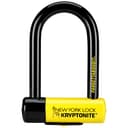 Kryptonite New York Fahgettaboudit Mini U-Lock The heaviest-duty U-lock most commuters can practically carry: an 18mm hardened shackle that Kryptonite rates 10/10, the closest thing to grinder-resistance in a lock you can still fit in a bag. | Best lock for a high-value e-bike | |
| 2 |  Apple AirTag (2nd Generation) The default bike tracker for anyone on an iPhone, because the thing that finds it isn't the tag — it's the enormous Find My network of other people's Apple devices quietly reporting its location as it passes them. | Cheapest recovery chance | |
| 3 | 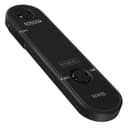 Knog Scout Bike Alarm & Finder The one device here that does both jobs — an 85 dB motion alarm that makes a thief stop and look around, plus Apple Find My so the same unit helps you get the bike back if they carry on anyway. | Best alarm plus finder | $64.95 · View on Amazon Price as of October 21, 2026. #ad How we’re funded |
The legal question, which is the easy one
In most of the United States an e-bike that fits the standard three-class definition is treated as a bicycle, not as a motor vehicle, which means the liability insurance a state mandates for cars and motorcycles does not apply to it. Progressive — an insurer, writing about its own product — states it plainly: “Most states treat e-bikes as bicycles, so you typically don’t need liability coverage that states usually mandate for cars, motorcycles, and other vehicles.”
Two caveats on that. “Typically” is doing real work — a small number of states have moved toward registration or licensing for the faster classes, and the rules are being rewritten more often than they used to be. And the class your bike falls into changes the picture: Class 3 bikes carry extra restrictions in several states. The framework is on e-bike classes explained and the licensing question on do you need a license for an e-bike. Verify your own state rather than trusting any summary, including ours.
The gap in the policy you already have
This is the part most riders get wrong, and it is worth reading your own policy document for. Progressive’s published wording is that a “homeowners, renters, or condo policy may cover your e-bike while it’s at home, but that coverage often doesn’t extend to when you’re riding”, and that it “often comes with sub-limits, deductibles, and restrictions that limit what you can claim”. Markel’s own comparison describes standard homeowners coverage for e-bikes as limited, and paying actual cash value rather than full replacement value.
Three things to actually check in your policy, in this order:
- The motorized-vehicle exclusion. Many property policies exclude motorized vehicles outright. An e-bike has a motor. Whether your insurer reads that exclusion as covering an e-bike is the single most important thing to establish, and you want the answer in writing before a claim, not after.
- The off-premises sub-limit.Personal property stolen away from your home is frequently capped well below your overall contents limit. If that cap is lower than your bike’s value, the bike is effectively uninsured at the bike rack — which is where it will be stolen.
- The deductible, against the bike’s value. A typical property deductible can be most of the way to the value of a budget e-bike. A claim that nets you a couple of hundred dollars and a premium increase is not a claim worth making.
If the answers are bad and you want to stay with your existing insurer, ask about a scheduled personal property endorsement: adding the bike as a scheduled item gives it its own limit and usually broader terms than the standard contents provision. It is the middle option between doing nothing and buying a dedicated policy.
What a dedicated policy adds
Markel, a specialist in this market, advertises e-bike policies “as low as $100 per year”— with an asterisk noting that as of December 2023 rates may exceed that depending on coverage and bike value. Its published policy summary covers theft at or away from home, crash damage repair or replacement, spare parts and accessories up to $500 each per claim, and transit within the US and Canada, with optional bicycle liability from $25,000 to $300,000, vehicle contact protection from $10,000 to $25,000, and medical payments from $1,000 to $10,000.
Two of those line items are the honest reason to buy. Theft away from home is the loss that actually happens and the one home policies are least likely to cover. And liabilityis the one nothing else gives you: a 60-pound e-bike at 20 mph has real energy, and if you injure a pedestrian there is no bicycle equivalent of auto liability cover standing behind you. For riders on busy shared paths, that is the coverage worth more than the theft protection.
The cheaper answer, for most commuters
Insurance pays out after a loss. Hardware reduces the chance of the loss, and on a sub-$1,000 e-bike the hardware is usually the better spend — which is the honest recommendation for most readers of this site.
A lock that matches the bike.An e-bike is heavier, more valuable and a known target, so the lock budget is part of the bike budget. The Kryptonite New York Fahgettaboudit Mini is the heaviest-duty U-lock most commuters can practically carry — an 18 mm hardened shackle that Kryptonite rates 10/10 on its own scale — and the compact body leaves little room for a jack. Our e-bike locks page has the range.
A tracker, because recovery is the only thing that gets the bike back. An AirTag in the frame is the cheapest access to the widest finding network there is, and it is the difference between a police report and an address. See where to put an AirTag on a bike and AirTag vs GPS tracker.
An alarm, for the deterrent.The Knog Scout combines a siren with Apple Find My tracking, which covers both halves — scare them off first, find it second. More options on bike anti-theft devices.
And the free one: bring the battery inside. A removable pack is the most stealable valuable part of the bike and the most expensive to replace. Securing the battery covers it, and storing an e-bike covers where the bike itself should sleep.
So: who should buy a policy?
Buy one if the bike cost a couple of thousand dollars or more, if you park it outdoors regularly, if it is how you get to work and a month without it is a serious problem, or if you ride busy shared paths and want liability cover. Skip it if the bike is a sub-$1,000 commuter that lives indoors and the money would otherwise go on a better lock, a tracker and a second lock. Ask your existing insurer about a scheduled endorsementif you are in between — it is cheaper than a standalone policy and fixes the sub-limit problem, which is the real gap.
One last thing worth saying because it is easy to miss: none of this is advice about your specific policy, and insurers’ own wording is the only thing that binds them. Get the motorized-vehicle question and the off-premises limit answered in writing by your insurer before you decide. If the economics of e-bike ownership generally are what you are weighing, that is on e-bike vs car cost.
General guidance, not professional advice. Chain & Charge is written by an enthusiast, not a bike mechanic, and we do not run a test lab. Laws, security ratings and specs change — verify your state’s current e-bike rules and a lock’s current security rating before you rely on them, and set any new gear up per the maker’s instructions.
Frequently asked questions
Do you need insurance for an e-bike?
Legally, in most of the US, no. Progressive's own published guidance puts it this way: "Most states treat e-bikes as bicycles, so you typically don't need liability coverage that states usually mandate for cars, motorcycles, and other vehicles." That is the general picture and not a guarantee for your state — a handful of states have moved toward registration or licensing requirements for faster classes, and local rules change, so check your own state code. Whether you should carry insurance anyway is a separate question, and it depends almost entirely on what your bike cost.
Does homeowners insurance cover an e-bike?
Sometimes, with limits that often do not match the bike. Progressive's own wording is that "your homeowners, renters, or condo policy may cover your e-bike while it's at home, but that coverage often doesn't extend to when you're riding", and that such coverage "often comes with sub-limits, deductibles, and restrictions that limit what you can claim." Two specific traps: many property policies exclude motorized vehicles, and a motor is a motor; and off-premises personal property is frequently capped well below the value of a mid-priced e-bike. Read your own policy's motorized-vehicle exclusion and its off-premises sub-limit before assuming you are covered.
How much does e-bike insurance cost?
The specialist insurer Markel advertises e-bike policies "as low as $100 per year", with an asterisk noting that as of December 2023 rates may exceed $100 depending on coverage options and bike value. That is the published entry price from one insurer rather than a market average, and your quote depends on the bike's value, where you live and what you add. The useful way to think about it: compare an annual premium against the deductible and sub-limit your existing policy would apply, because a policy that pays $500 on a $2,000 bike is not really coverage.
What does e-bike insurance actually cover?
On Markel's published policy summary: theft at or away from home, crash damage repair or replacement, spare parts and accessories up to $500 each per claim, and transit within the US and Canada — with optional bicycle liability limits from $25,000 to $300,000, vehicle contact protection from $10,000 to $25,000, and medical payments from $1,000 to $10,000. Two of those are the real reason people buy: theft away from home, which home policies often will not cover, and liability, which matters because a 60-pound bike at 20 mph can genuinely injure someone and a bicycle has no liability coverage by default.
Is e-bike insurance worth it?
It depends on one number: what the bike cost. Below roughly a thousand dollars, a strong lock, a tracker and indoor storage are usually the better spend — they reduce the chance of the loss rather than paying out after it. Above a couple of thousand dollars, or if the bike is how you get to work and losing it for a month is a real problem, a dedicated policy starts to look like the right tool, especially for the liability cover that nothing else gives you. The in-between case is a scheduled personal property endorsement on your existing policy, which gives the bike its own limit.
Does insurance cover an e-bike battery fire?
Do not assume it does, and do not treat this page as an answer about your policy — it is the question to ask your insurer directly, in writing. Lithium battery fires sit at the intersection of several exclusions insurers care about: motorized vehicles, aftermarket modification, and use of non-manufacturer parts or chargers. The practical step that protects you regardless is following the manufacturer's and the CPSC's charging guidance precisely, because using a non-approved charger or a reworked pack is exactly the behavior an insurer would look at after a claim.
Sources
- Progressive — Do you need e-bike insurance? — The insurer's own published guidance. On whether coverage is mandatory: "Most states treat e-bikes as bicycles, so you typically don't need liability coverage that states usually mandate for cars, motorcycles, and other vehicles." On home policies: "Your homeowners, renters, or condo policy may cover your e-bike while it's at home, but that coverage often doesn't extend to when you're riding", and that such coverage "often comes with sub-limits, deductibles, and restrictions that limit what you can claim" (accessed October 17, 2026)
- Markel — Electric bike insurance (US personal insurance) — A specialist e-bike insurer's published policy summary: "E-bike insurance policies as low as $100 per year", with an asterisk noting that as of December 2023 rates may exceed $100 depending on coverage options and bike value. The listed policy covers theft at or away from home, crash damage repair or replacement, spare parts and accessories up to $500 each per claim, and transit within the US and Canada; optional bicycle liability limits run $25,000-$300,000, vehicle contact protection $10,000-$25,000 and medical payments $1,000-$10,000. Markel's own comparison table describes standard homeowners coverage for e-bikes as limited, at actual cash value rather than full replacement value (accessed October 17, 2026)
- PeopleForBikes — Electric bike policies and laws — The 3-class e-bike system (Class 1 pedal-assist to 20 mph, Class 2 throttle to 20 mph, Class 3 pedal-assist to 28 mph) and the 750W federal power limit (accessed July 23, 2026)
Keep reading
Best E-Bike Locks
The locks that match an e-bike's value and weight — and what each maker actually publishes.
See the picksBike Anti-Theft Devices
Tags, GPS and sirens, ranked — the layer that works after the lock has been defeated.
See the picksE-Bike Classes 1, 2 and 3 Explained
What class your bike is, and why it changes the legal answer in several states.
Read the guideWhat to Do if Your Bike Is Stolen
The first hour, the paperwork, and the registration step that makes recovery possible.
Read the guide