How to Carry Work Clothes on a Bike
There are only three real answers: roll them, lay them flat, or stop carrying them at all. Which one you pick depends less on the bag than on how formal the clothes are.
How this is funded:we earn a commission if you buy through our links, at no extra cost to you. It never changes which product we recommend, and we’ll tell you when we’d skip one. Full disclosure.
Roll soft clothes, lay structured ones flat, and if you wear a suit, keep it at the office and cycle the shirts. For laying things flat the Topeak MTX TrunkBag DXPis the bag we would point at — a 19.4 litre rack-top bag whose footprint lets a shirt lie unfolded, with side panels that drop into full panniers when you need more room. For a wet climate, the Ortlieb Back-Roller Classic, because nothing ruins work clothes faster than a bag that lets water in.
The reason this question is harder than it looks is that it is really three questions depending on what “work clothes” means. A cotton shirt and chinos is a solved problem. A suit jacket is a genuinely awkward object to put on a bicycle. And scrubs, a uniform or anything you change into on site may not need carrying at all.
The three methods, honestly compared
1. Roll it. The default, and the right answer for the large majority of clothing. Rolling a shirt, a pair of chinos, a knit top or jeans tightly around itself produces soft rounded creases rather than sharp folded ones, and those hang out within minutes of being put on a hanger. Rolling is also more space-efficient than folding, which matters in a pannier. The limitation is structure: anything with a shaped shoulder, a stiff collar or pressed pleats does not want to be a cylinder.
2. Lay it flat.The answer for structured garments. A rack-top trunk bag has a broad flat footprint, so a shirt or a jacket can lie unfolded with nothing pressing a line across it. This is the single biggest advantage trunk bags have over side panniers for this specific cargo, and it is why the ranking below does not match our general cargo rankings. The limitation is capacity — a flat footprint is not a large volume — and fitment, which we come back to.
3. Do not carry them. The answer experienced commuters converge on, and the one nobody writes guides about. Take a week of shirts in on Monday by car, transit or on foot, leave shoes and a jacket at the office permanently, and then ride four days with nothing but a laptop and a lunch. It has no wrinkle risk, no packing technique and no bag requirement. If your workplace gives you a drawer or a hook, this is strictly better than anything else on this page.
What to look for in a bag for clothes
Four things, in this order — and note how different this list is from what you would look for in a laptop bag or a grocery bag.
1. A flat internal footprint, or enough depth to roll into. This is the whole ballgame. A tall narrow pannier forces at least one fold across anything shirt-sized; a rack-top bag does not. If you are buying a side pannier for clothes, buy the one with the widest, least-tapered body.
2. Waterproofing by construction, not by a cover you must remember. Work clothes are the cargo where getting wet is total failure rather than an inconvenience. A welded roll-top is dry because of what it is; a rain cover is dry only on the days you stopped to fit it.
3. Separation.Either two compartments or two bags, so that yesterday’s damp ride kit, a greasy lock and a pair of shoes are not sharing space with a clean shirt. This is the clearest argument for a pair of panniers that exists — see one pannier or two.
4. Honest fitment.Rail-system rack-top bags — Topeak MTX QuickTrack, Ibera PakRak — attach only to that brand’s own rack, not to a plain rack deck. Universal strap bags fit anything. Check which world your rack is in before you order; our rack and pannier compatibility page lists the systems, and best bike trunk bags sorts the category on exactly that line.
Quick picks
Ranked on published specs, real security and safety standards, and buyer fit.We have not tested these products — here is exactly what we do instead.
| # | Product | Best for | Price |
|---|---|---|---|
| 1 | 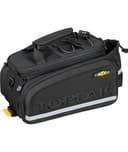 Topeak MTX 2.0 TrunkBag DXP The trunk bag that stops being a trunk bag when you need it to: the side panels drop down into full panniers, so one purchase covers the daily laptop-and-lunch load and the unplanned grocery run. | Best for laying clothes flat | $122.95 · View on Amazon Price as of October 5, 2026. #ad How we’re funded |
| 2 | 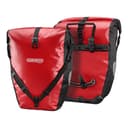 Ortlieb Back-Roller Classic Panniers (Pair) The waterproof pannier every other pannier is measured against: a fully welded, roll-top pair (40L total) that keeps a laptop dry in a downpour, on the QL2.1 hooks that click on and off in a second. | Best for a wet climate | $199.00 · View on Amazon Price as of October 5, 2026. #ad How we’re funded |
| 3 | 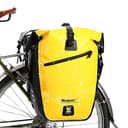 Rhinowalk Waterproof Pannier 27L A single 27L waterproof pannier that carries a laptop and converts to a shoulder bag for the walk into the office — the one-bag commuter's pick when you don't need a matched pair. | Best single bag for an office load | $49.99 · View on Amazon Price as of October 5, 2026. #ad How we’re funded |
| 4 | 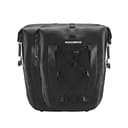 RockBros Waterproof Panniers (2-Pack, 30L) Most of the Ortlieb's waterproofing at a fraction of the price: a roll-top pair rated to 30L that shrugs off rain and doubles as a shoulder bag. The value pick for wet-weather commuting. | Best value pair | $99.99 · View on Amazon Price as of October 5, 2026. #ad How we’re funded |
The packing order that works
Build the bag in layers, bottom to top, and the clothes come out the same shape they went in:
- Bottom: shoes, in a bag of their own. They are the heaviest and dirtiest thing you carry, and they want to be low and forward for handling reasons as well as hygiene ones.
- Middle:rolled soft items — trousers, knitwear, underwear, socks. These also act as the cushion for everything above.
- Top: the shirt, rolled last so it has the least pressure on it, or laid flat if you are using a rack-top bag.
- Against the rack-side wall, vertical: the laptop, which needs the stiffest face of the bag and should never lie flat under clothes. The full method is in how to carry a laptop on a bike.
- Never on top of fabric:the lock. A U-lock resting on a shirt for a 40-minute ride presses a line into it that will not hang out. Carry it on the frame or in the other bag — how to carry a bike lock covers the four methods that work.
At the other end
Two minutes of effort at the office does more than any amount of packing technique. Hang the shirt immediately — a hanger on the back of a door releases most roll creases in the time it takes to change. If a crease is stubborn, a hanger in a steamy bathroom works and an iron is almost never needed. And take the ride clothes out of the bag rather than leaving them sealed in it all day; that is the only genuinely unpleasant failure in this whole routine, and it is entirely avoidable.
Choose the fabrics with the commute in mind too. Merino wool, technical synthetics and heavier cottons all travel far better than linen or a crisp poplin, and a dark pattern forgives a soft crease that a pale solid broadcasts. This is not a cycling-specific insight, it is just the same thing people who travel for work already know.
What about the weather?
A waterproof bag is not optional for this particular cargo. Water in a pannier does not ruin a laptop in a sleeve, but it absolutely ruins a shirt for the day, and a bag that relies on a rain cover you have to remember will fail you on exactly the morning you are late. The honest hierarchy — welded roll-top, stitched roll-top, rain cover, nothing — is in best waterproof panniers, and the rest of the wet-weather problem is in bike commuting in the rain.
One upstream fix is worth more than any bag here: a rear fender. Most of what lands on a pannier is thrown up by your own back tire, and a mudguard removes the source rather than resisting it — see best bike fenders.
Frequently asked questions
How do you carry work clothes on a bike without wrinkling them?
Roll soft items and lay structured ones flat. Rolling a cotton shirt, chinos, a knit top or jeans tightly around themselves produces soft creases that hang out in minutes, and it is more space-efficient than folding. Anything with a built structure — a suit jacket, a stiff collar, a pleated skirt, a blazer — creases along the fold line instead and should be laid flat on a rack-top bag or carried in a garment bag. The single biggest improvement for most people is not technique at all: a fully packed bag wrinkles far less than a half-empty one, because the clothes cannot move.
How do you carry a suit on a bike?
Honestly, mostly by not carrying it. A commuter who needs a suit at work is best served by keeping the suit at the office and cycling the shirts, which is both the least effort and the only method with no wrinkle risk at all. If it has to travel, the order of preference is: a dedicated garment bag strapped flat across a rack deck; a suit jacket laid flat and unfolded on a large rack-top bag; a jacket rolled inside-out around a soft core as a last resort. Never fold a jacket into a side pannier — the bag's shape forces a crease exactly across the shoulders and lapels.
Will my clothes smell sweaty if I carry them in a pannier?
The clothes you carry will not, because they are not the ones you rode in. The thing to plan for is the ride clothes on the way home: a damp jersey or base layer sealed in a waterproof pannier for eight hours comes out considerably worse than it went in. Keep ride kit in a separate mesh or plastic bag, or in the second pannier if you run a pair, and hang it somewhere airy at work if you can. Our guide on not arriving sweaty covers the upstream half of this problem.
Should I carry work clothes in a backpack instead?
A backpack is the worst container for work clothes of the three options. The pack presses the contents against your back for the whole ride, which is both the hottest and dampest part of you, so a shirt arrives creased and slightly humid even on a cool day. It also makes you sweat more, which is the thing you were trying to avoid. If you are multi-modal or park somewhere you cannot leave a bag, a backpack may still be the practical choice — in which case roll everything and accept that the shirt needs hanging up for ten minutes.
How many days of clothes should I take at once?
Take a week's worth on Monday, if your workplace has anywhere to hang them. This is the strategy experienced commuters converge on because it removes the problem rather than solving it: one car, transit or walking trip on Monday with five shirts, then four days of riding with nothing but a laptop and a lunch. If storage at work is limited to a drawer, a compromise that works well is leaving shoes and a jacket permanently and carrying only shirts, which are the lightest and most roll-tolerant part of the outfit.
Do I need a trunk bag to keep clothes flat?
Not necessarily, but it is the easiest way. A rack-top bag has a flat footprint roughly the width of the rack deck, so a shirt or jacket can lie unfolded in it, where a side pannier is a tall narrow bucket that forces at least one fold. The trade-offs are capacity, a higher load position, and fitment — rail-system trunk bags only attach to that brand's rack, while universal strap bags fit any deck. Some convertible bags give you both: a flat rack-top shape whose side panels drop down into panniers for a bigger load.
Sources
- Topeak — MTX TrunkBag DXP (MTX 2.0) — Topeak's published specs for the MTX TrunkBag DXP 2.0: 19.4 L capacity with an expandable top section, 1,185 g, 36 x 25 x 21.5-29 cm, 600 denier polyester over rigid EVA foam, MTX QuickTrack 2.0 mounting, side panels that expand to full panniers, and the note that MTX Dual Side Frames are required when using the panniers on MTX BeamRacks (accessed September 15, 2026)
Keep reading
What to Wear Bike Commuting
The other side of the question: what you ride in, and whether you need to change at all.
Read the guideHow to Not Arrive Sweaty
Pace, layers and timing — the upstream fix that makes the whole changing-at-work question smaller.
Read the guideBest Panniers for Carrying a Laptop
The other half of the office load, and how to pack it so the screen survives the year.
See the picksOne Pannier or Two?
Clothes in one bag and gear in the other is the clearest case for a pair. Here is the rest of it.
Read the answer