How we matched these
Four tests, and a bag had to pass at least one of them clearly to be on this page. We have deliberately not scored anything against the Ortlieb overall, because an overall score would be us pretending to have soaked five bags.
1. Does it answer the waterproofing question the same way?The Back-Roller’s seal comes from a roll-top closure on a coated body with no zip to leak through. Two bags here use the same design answer; both publish a waterproof body and a roll-top rather than a protection class, which is less evidence than Ortlieb gives you and is still the right construction. Two others take a different route — a water-resistant body with an included rain cover— which is a real solution for showers and a weaker one against hours of road spray thrown up by traffic.
2. Does the mount publish anything specific?Ortlieb publishes a tube range and ships reducers. The best alternative on this test is the Ibera clip-on system, which is faster to use and holds more firmly than hooks — and is designed around Ibera’s own racks, which is a real constraint rather than a detail. One pick publishes a three-point lock-down mount, which exists because an e-bike puts far more force through the hooks over a curb. Before you buy any of them, do the two-minute check in will these panniers fit my rack.
3. Does it carry it inside? A commuting pannier gets carried into a building twice a day, and Ortlieb includes two 75 cm shoulder straps for exactly that. Two alternatives here convert into a shoulder bag outright, which is arguably a better answer to the same problem than a strap clipped onto a cylinder.
4. Does it do something the original does not?This is where the cheaper bags genuinely win rather than merely cost less. A bag that stands up on its own and holds a paper grocery sack upright is a different tool from a tapered roll-top, and no amount of sealing makes the Back-Roller good at it. A lockable or bolt-down mount is a security feature Ortlieb’s quick-release deliberately trades away. Pockets are pockets.
What you give up by not buying the original
Three things, stated plainly, so nobody buys down and feels misled.
A published load rating.The 9 kg per bag figure is unusual and useful: it tells you whether the bag or your rack is the limiting factor. None of the alternatives on this page publishes an equivalent number, which does not mean they are weak — it means your rack’s own rating becomes the only figure you have, so respect it. Start at how much weight a bike rack can hold.
A stated protection class.IP64 with a documented closure condition is a testable claim. “Waterproof body” on a listing is a description. In practice a roll-top on a coated fabric keeps commuting rain out well; in a two-hour downpour behind traffic the difference between a documented seal and an undocumented one is the sort of thing you find out with a laptop in the bag. If that is your load, this is the reason to buy the original. Our waterproof pannier roundup sorts the whole category on exactly this.
Serviceability and spares.The practical reason the expensive bags last is that the hardware is replaceable: hooks, clips and inserts are parts rather than moulded-in features. On a cheaper bag, a broken clip is more often the end of the bag. Nothing on either side publishes a spares policy we can cite, so we are flagging this as the mechanism to inspect rather than as a scored claim — check the hooks for play every few months whatever you buy.
Which alternative is right for you
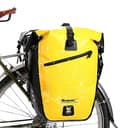
Buy the like-for-like waterproof pairif you want the Back-Roller’s answer at a lower price and you carry enough that a pair makes sense. You get the roll-top construction, more total volume than the Ortlieb pair, and a shoulder-bag conversion, and you give up the published rating and the documented mount range. For most year-round commuters who are not carrying a laptop in a monsoon, this is the rational purchase.
Buy the single 27 L bag if you are one of the many riders who does not need two panniers at all. One bag on the drive side carries a laptop, a lunch, a change of clothes and a lock, costs a fraction of a pair, and is the bag you will actually take off and carry inside. The case is made in full in one pannier or two.
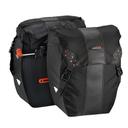
Buy the clip-on system if mounting is what frustrates you about panniers. A positive clip that locks onto a matched rack is faster and more secure than hooks over a tube, and if you are buying the rack at the same time there is no downside to tying yourself to one brand. The pairing is the subject of our rack and pannier combos page.
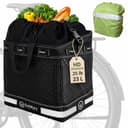
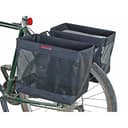
Buy a grocery pannier if your cargo is shopping rather than work kit. This is the clearest case on the page for not buying the original at all: a bag that folds flat when empty and holds a sack upright when full is a better grocery tool than any roll-top, at a third of the price. See best grocery panniers and how to carry groceries on a bike.
A closing note on the brand comparisons you will find elsewhere. We have two head-to-head pages that go deeper than this one on specific pairings — Ortlieb vs Rhinowalk and Ortlieb vs RockBros— and the full spec reading of the original is in our Back-Roller Classic review. If you have not settled on panniers as the format at all, start further back at are panniers worth it.